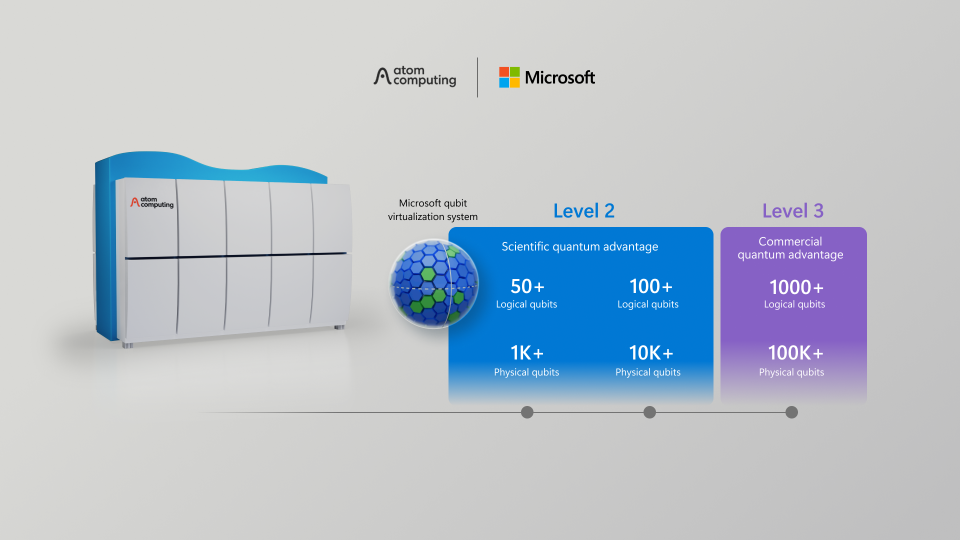
Researchers at the University of Trento have collaborated with Google’s Quantum Artificial Intelligence Lab to study confinement in lattice gauge theory using quantum computers. The team, led by Professor Philipp Hauke, utilized Google’s powerful quantum computers in California to conduct their research, which has been published in Nature Physics. Gauge theories are crucial in understanding the fundamental forces in particle physics and condensed matter physics.
By leveraging the quantum properties of matter, such as superposition and entanglement, the researchers were able to explore complex operations that classical computers cannot handle. Professor Hauke’s team wrote an algorithm that was run on Google’s quantum supercomputers, which have the potential to process an exponentially greater number of particles than classical instruments. This research has implications for theoretical and experimental physics, with potential future applications in industries such as materials science and pharmaceuticals.
Introduction to Quantum Computing and Lattice Gauge Theory
The pursuit of advanced computing power and efficient tools has led scientists to explore the realm of quantum computers, which leverage the unique properties of matter, such as superposition and entanglement, to perform complex operations. A research team from the University of Trento’s Department of Physics had the opportunity to collaborate with Google‘s Quantum Artificial Intelligence Lab, utilizing their powerful quantum computers to conduct a study on confinement in lattice gauge theory. This research has been published in Nature Physics, highlighting the potential of quantum simulators in addressing phenomena that are not yet fully understood.
The study focused on gauge theories, which describe the fundamental forces in the standard model of particle physics and play a crucial role in condensed matter physics. The constituents of gauge theories, including charged matter and electric gauge fields, are governed by local gauge constraints, leading to key phenomena that require further investigation. Quantum simulators offer a promising solution, as they can process complex systems that conventional computers struggle to handle. The research team, led by Professor Philipp Hauke, chose to explore the question of how electrons, positrons, and quarks interact to form particles and matter, using lattice gauge theory as their framework.
The collaboration between the University of Trento and Google’s Quantum Artificial Intelligence Lab was made possible through a call for projects launched by Google in 2019. The University of Trento was among the eight winners worldwide, and the only institution in the European Union, to be selected for this opportunity. The research team developed an algorithm that was sent to Google’s quantum computers, which performed the computations remotely. These quantum supercomputers use the quantum properties of matter to describe quantum objects in a natural way, surpassing the capabilities of classical “bits” based on binary opposition.
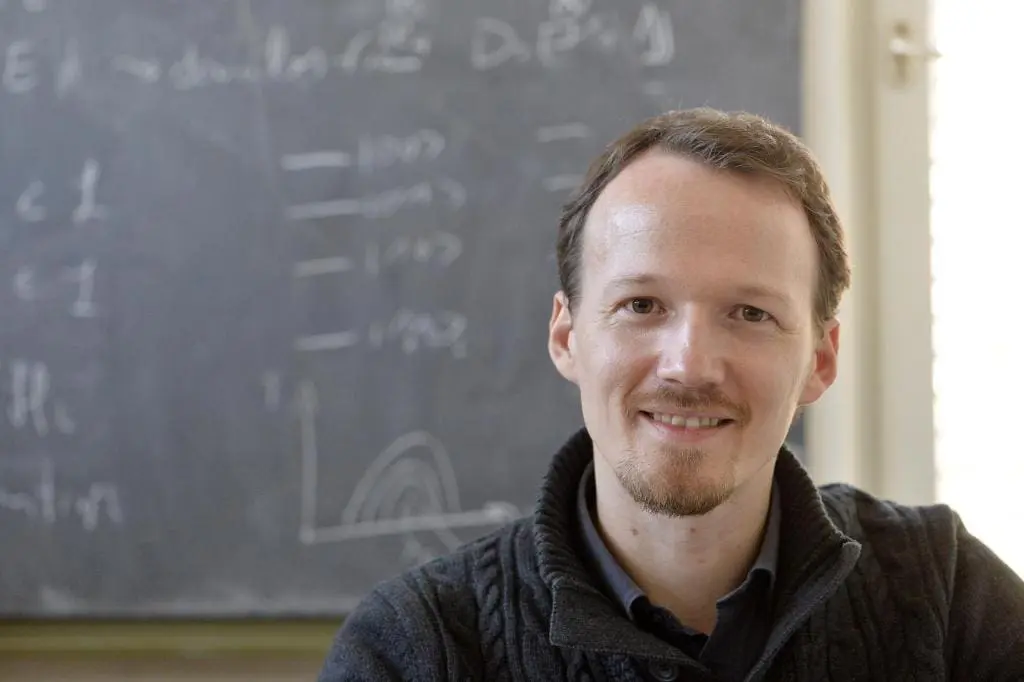
The potential of quantum computers is significant, as they can process an exponentially greater number of particles compared to classical instruments. However, achieving this goal requires working at the interface between fundamental physics and engineering. The research team’s work is located at this intersection, with implications for both theoretical and experimental physics. In the future, this research could have various applications, such as studying new materials in the industrial sector or analyzing chemical compounds in the pharmaceutical sector.
Quantum Computing and Lattice Gauge Theory: A Deeper Dive
Lattice gauge theory is a framework used to describe the behavior of particles in a discretized spacetime, typically represented as a hypercubic lattice of points. This approach allows researchers to study the interactions between particles, such as electrons, positrons, and quarks, and understand how they form matter. The research team’s algorithm was designed to explore the confinement phenomenon in ℤ2 lattice gauge theory, which is a fundamental aspect of quantum field theory.
The use of quantum computers in this study enabled the researchers to simulate complex systems that would be challenging or impossible to model using classical computers. Quantum computers can process a large number of particles and interactions, allowing for a more accurate representation of the physical system. The results of the simulation provide valuable insights into the behavior of particles in lattice gauge theory, which can help scientists better understand the fundamental forces of nature.
The collaboration between the University of Trento and Google’s Quantum Artificial Intelligence Lab demonstrates the potential of quantum computing in advancing our understanding of complex systems. By leveraging the power of quantum computers, researchers can explore new areas of physics and develop innovative solutions to long-standing problems. The study published in Nature Physics highlights the importance of interdisciplinary research, combining expertise from physics, engineering, and computer science to push the boundaries of human knowledge.
The research team’s work on confinement in ℤ2 lattice gauge theory has implications for our understanding of quantum field theory and the behavior of particles at the fundamental level. The use of quantum computers in this study demonstrates the potential of these machines in simulating complex systems and providing new insights into the nature of reality. As quantum computing continues to evolve, we can expect to see further breakthroughs in our understanding of the physical world and the development of innovative technologies.
Applications of Quantum Computing in Physics and Beyond
The research conducted by the University of Trento and Google’s Quantum Artificial Intelligence Lab has significant implications for various fields, including physics, materials science, and chemistry. The use of quantum computers in simulating complex systems can help scientists develop new materials with unique properties, such as superconductors or nanomaterials. Additionally, quantum computing can be applied to the study of chemical compounds, enabling researchers to design new molecules with specific properties, such as pharmaceuticals or catalysts.
The potential applications of quantum computing extend beyond physics and chemistry, with implications for fields like optimization, logistics, and machine learning. Quantum computers can process complex algorithms and optimize solutions more efficiently than classical computers, leading to breakthroughs in areas like cryptography, finance, and transportation. As quantum computing continues to evolve, we can expect to see innovative solutions to real-world problems, from improving the efficiency of supply chains to developing new medical treatments.
The collaboration between academia and industry is crucial for advancing the field of quantum computing and exploring its applications. The partnership between the University of Trento and Google’s Quantum Artificial Intelligence Lab demonstrates the potential of such collaborations, where researchers can leverage each other’s expertise and resources to push the boundaries of human knowledge. As quantum computing continues to grow, we can expect to see more partnerships between academia, industry, and government, driving innovation and advancing our understanding of the physical world.
The future of quantum computing holds much promise, with potential applications in various fields and industries. However, significant challenges remain, such as developing more robust and reliable quantum computers, improving the accuracy of simulations, and addressing the issue of quantum noise. Researchers must continue to work together to overcome these challenges and unlock the full potential of quantum computing.
External Link: Click Here For More