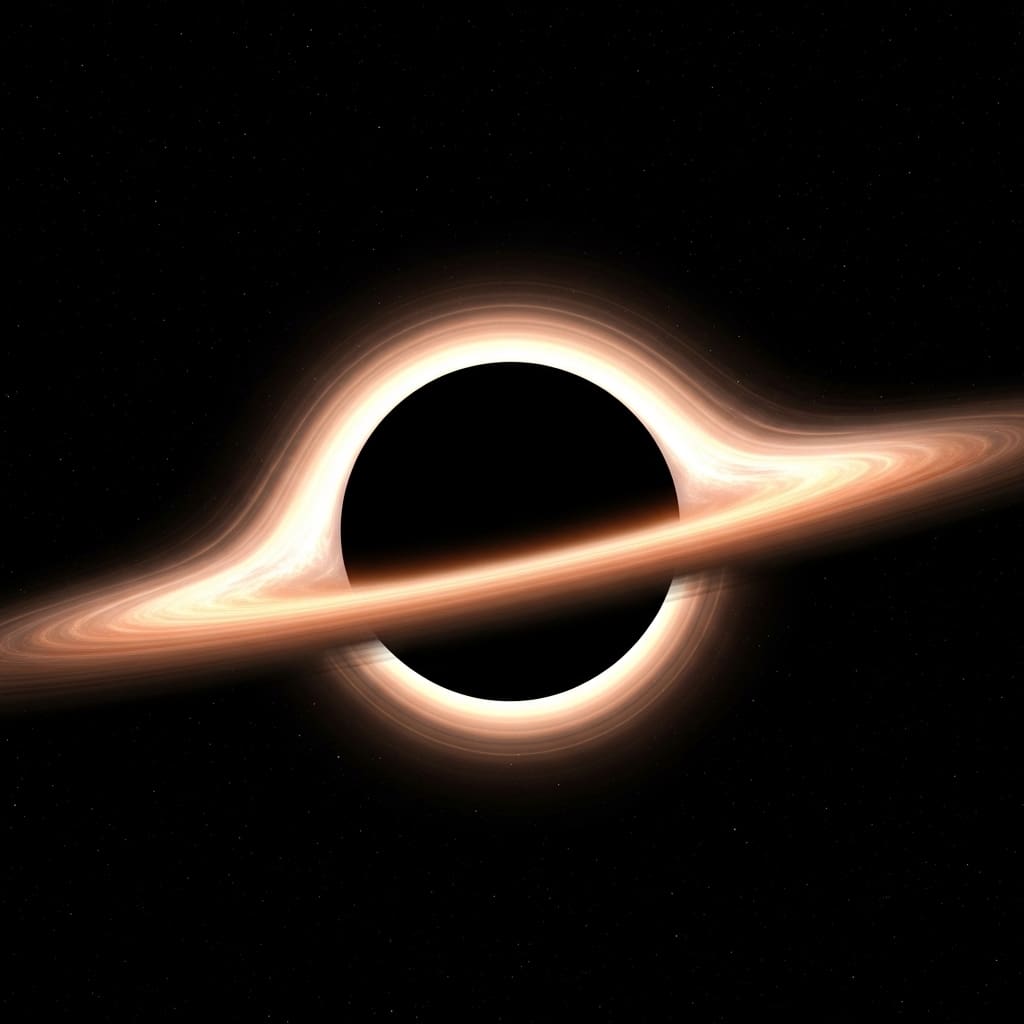
Researchers are increasingly focused on understanding how quantum gravity might modify the behaviour of black holes, and a new study delves into these effects using the Generalized Extended Uncertainty Principle (GEUP). Nikko John Leo S. Lobos from the University of Santo Tomas, alongside colleagues, investigate how minimal and large-scale quantum corrections alter the thermodynamics and gravitational signatures of rotating black holes. Their work, employing the Newman-Janis algorithm, reveals a potentially dramatic impact on black hole lifetimes, with supermassive black holes cooling more slowly than previously thought. Significantly, the team demonstrate how observations from the LIGO/Virgo collaboration and the Event Horizon Telescope can constrain the parameters governing these quantum corrections, offering a pathway to test the fundamental nature of spacetime itself.
Lacking a complete non-perturbative formulation of quantum gravity, the team adopted a metric-based approach, constructing a stationary, axisymmetric spacetime using the Newman-Janis algorithm to model the kinematic features of a rotating black hole subject to GEUP corrections. The study reveals that in the infrared-dominated regime, the Hawking temperature of these black holes scales as TH ∼M−3, leading to a significantly prolonged lifetime for supermassive black holes due to a rapid cooling phase.
The research establishes a modified Teukolsky Master Equation for gravitational perturbations, demonstrating that the background geometry preserves the isospectrality between axial and polar modes, a crucial consistency check for the model. In the eikonal limit, experiments show that the quasinormal mode (QNM) spectrum exhibits orthogonal shifts, meaning the minimal length parameter induces a spectral blueshift and enhanced damping, while the large-scale parameter induces a spectral redshift and suppressed damping. This places stringent bounds on the EUP parameter, while gravitational wave spectroscopy provides complementary constraints on the GUP sector. This work opens new avenues for exploring quantum gravity phenomenology and offers a promising framework for testing these theories against real-world astrophysical observations. The research highlights the importance of considering both ultraviolet and infrared modifications to the uncertainty principle when modelling black holes and their interactions with the surrounding spacetime.
This breakthrough reveals a compelling connection between theoretical predictions and observational constraints, paving the way for future investigations into the fundamental nature of gravity and quantum mechanics. By constructing a physically motivated geometry, the scientists have bypassed the ambiguity of deriving solutions from specific modified Lagrangians, allowing for a more direct comparison between theory and experiment. The thermodynamic analysis presented in the study demonstrates how the interplay between the GUP and EUP parameters shifts the phase transition critical points, providing insights into the stability of these exotic black holes. This innovative technique allowed them to explore how these corrections influence the black hole’s behaviour. The analysis revealed that in the infrared-dominated regime, the Hawking temperature scales as 1/(32παM³), leading to a rapid cooling phase and significantly prolonging the lifetime of supermassive black holes.
Researchers derived the modified Teukolsky Master Equation for gravitational perturbations, demonstrating that the background geometry preserves the isospectrality between axial and polar modes, a crucial consistency check for the model. This preservation of isospectrality indicates that the fundamental vibrational properties of the black hole are maintained despite the GEUP modifications. In the eikonal limit, the quasinormal mode (QNM) spectrum exhibited orthogonal shifts; the minimal length parameter induced a spectral blueshift and enhanced damping, while the large-scale parameter induced a spectral redshift and suppressed damping. This nuanced behaviour of the QNM spectrum provides a sensitive probe of the underlying GEUP parameters.
Experiments employed a parametric system to capture how the renormalization of mass modifies phase transitions relative to the observable horizon size, defined by r+ = GM + √(G²M² − a²), where ‘a’ represents the specific angular momentum. The study pioneered a method for calculating heat capacity at constant angular momentum, CJ = TH ∂S/∂TH J, identifying divergences as signals of phase transitions. Figure 1 illustrates how GEUP corrections shift these critical points, extending the domain of stability compared to the standard Kerr metric. This scaling indicates a rapid cooling phase, substantially prolonging the lifetime of supermassive black holes compared to predictions from General Relativity. Experiments revealed that the event horizon radius expands relative to the General Relativistic prediction for a fixed bare mass M, due to the EUP correction dominating in the regime of supermassive black holes, specifically, M ≈ M(1 + εEUP).
Consequently, the Bekenstein-Hawking entropy, proportional to the horizon area AH = 4π(r2+ + a2), is enhanced by large-scale uncertainty correlations, indicating the horizon can encode significantly more information than previously thought. Tests prove that the volume of the ergosphere is also sensitive to the mass parameter, with GEUP corrections enlarging it and implying an increased capacity for energy extraction via the Penrose process. Data shows that the extremal limit for the spin parameter is shifted to amax = GM, meaning a GEUP black hole can support a higher angular momentum than a standard Kerr black hole of identical baryonic mass without violating the cosmic censorship conjecture. The team derived the modified Teukolsky Master Equation for gravitational perturbations, demonstrating that the background geometry preserves the isospectrality between axial and polar modes, a crucial consistency check for the model.
Measurements confirm that in the eikonal limit, the quasinormal mode (QNM) spectrum exhibits orthogonal shifts; the minimal length parameter induces a blueshift and enhanced damping, while the large-scale parameter induces a redshift and suppressed damping. Furthermore, the research established that the shadow of M87* is approximately 10times more sensitive to large-scale corrections than Sgr A*, placing stringent bounds on the EUP parameter. Gravitational wave spectroscopy provides complementary constraints on the GUP sector, offering a multi-messenger approach to probing these quantum gravity effects. The Hawking temperature for supermassive black holes, in the EUP regime, is calculated to be approximately 1/32παM3, demonstrating a significantly colder temperature than predicted by standard General Relativity.
👉 More information
🗞 Thermodynamics and Gravitational Signatures of Rotating Black Holes in the Generalized Extended Uncertainty Principle
🧠 ArXiv: https://arxiv.org/abs/2601.13725