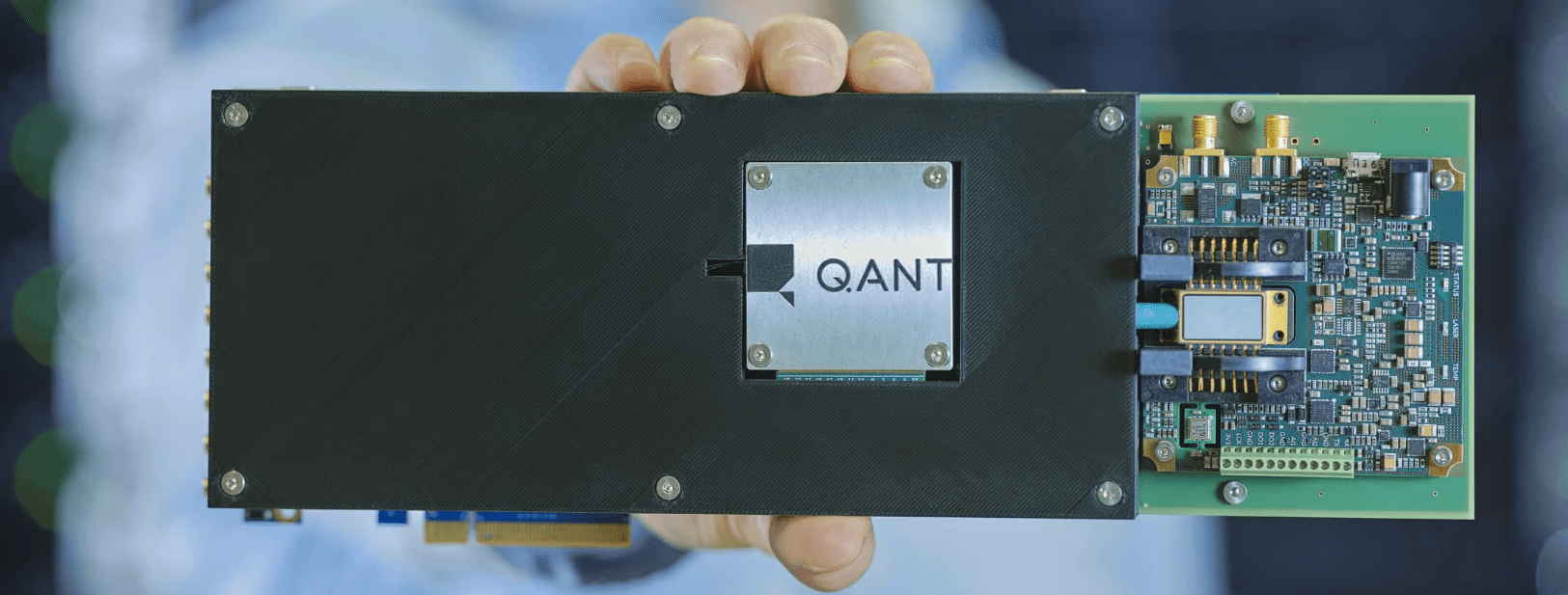
In a breakthrough development, Q.ANT, a leading photonic computing startup, has launched the world’s first commercially available photonic processor for artificial intelligence (AI) and high-performance computing (HPC). This innovation holds significant strategic and geopolitical importance, offering Germany a unique opportunity to regain a leading position in the global technology competition.
The Native Processing Unit (NPU) developed by Q.ANT performs complex calculations using light instead of electrons, promising substantial improvements in computing speed compared to conventional processors.
This technological advancement will boost computationally intensive applications such as AI inference, machine learning, and physics simulations. Moreover, energy efficiency increases by at least a factor of 30, making Q.ANT’s photonic chip a crucial step towards reducing power consumption in AI-driven industries and data centers, with potential implications for the global CO2 balance.
Photonic Computing: A New Frontier in AI and High-Performance Computing
The advent of photonic computing has the potential to revolutionize artificial intelligence (AI) and high-performance computing (HPC). Q.ANT, a pioneering startup in the field of photonic computing, has recently launched the world’s first commercially available photonic processor for AI and HPC applications. This development is significant for computationally intensive applications and holds strategic and geopolitical importance.
The Native Processing Unit (NPU) developed by Q.ANT performs complex calculations using light instead of electrons, promising significant improvements in computing speed compared to conventional processors. This technology has the potential to provide a substantial performance boost to computationally intensive applications such as AI inference, machine learning, and physics simulations. The use of light instead of electrons also leads to increased energy efficiency, with estimates suggesting an improvement of at least a factor of 30. This reduction in power consumption could have a significant impact on the global CO2 balance, particularly in AI-driven industries and data centers.
The significance of Q.ANT’s development extends beyond the technical realm, as it provides Germany with an opportunity to regain a leading position in the global technology competition. As the only company outside of China that controls the entire manufacturing process, from wafer production to the processor, Q.ANT is well-positioned to capitalize on the growing demand for photonic computing solutions.
According to Yole Intelligence, the silicon photonics market is expected to grow from USD 68 million in 2022 to over USD 600 million by 2028, with an annual growth rate of 44 percent. As a pioneer in this emerging market, Q.ANT is poised to play a key role in shaping the future of photonic computing.
The Advantages of Photonic Computing
One of the primary advantages of photonic computing is its potential to improve computing speed significantly. By using light instead of electrons, photonic processors can perform complex calculations faster than conventional processors. This increased processing power has significant implications for computationally intensive applications such as AI inference, machine learning, and physics simulations.
In addition to improved computing speed, photonic computing also offers substantial energy efficiency gains. The use of light instead of electrons reduces the amount of power required to perform calculations, leading to estimates suggesting an improvement of at least a factor of 30. This reduction in power consumption has significant implications for AI-driven industries and data centers, which are notorious for their high energy demands.
The increased energy efficiency of photonic computing also has broader implications for the global CO2 balance. As the world continues to grapple with the challenges posed by climate change, reducing energy consumption is becoming increasingly important. The development of photonic computing solutions that can significantly reduce power consumption could play a key role in mitigating the environmental impact of AI-driven industries and data centers.
The Strategic Significance of Photonic Computing
The development of photonic computing has significant strategic and geopolitical implications. As a pioneer in this emerging market, Q.ANT is well-positioned to capitalize on the growing demand for photonic computing solutions. This provides Germany with an opportunity to regain a leading position in the global technology competition, particularly in the field of AI and HPC.
Controlling the entire manufacturing process, from wafer production to the processor, also gives Q.ANT a significant advantage over its competitors. As the only company outside of China that controls the entire value chain, Q.ANT is well-positioned to shape the future of photonic computing and capitalize on the growing demand for these solutions.
The strategic significance of photonic computing extends beyond the commercial realm, as it also has implications for national security and global politics. The development of photonic computing solutions could provide countries with a significant advantage regarding AI capabilities, which are becoming increasingly important in modern warfare.
The Market Potential of Photonic Computing
The market potential of photonic computing is substantial. Estimates suggest that the silicon photonics market will grow from USD 68 million in 2022 to over USD 600 million by 2028. This represents an annual growth rate of 44 percent, making it one of the fastest-growing markets in the technology sector.
Q.ANT’s positioning as a pioneer in this emerging market gives it a significant advantage over its competitors. As the demand for photonic computing solutions continues to grow, Q.ANT is well-positioned to capitalize on this trend and establish itself as a leader in the field of photonic computing.
The growth of the silicon photonics market also has broader implications for the technology sector. The development of photonic computing solutions could lead to significant advancements in AI capabilities, which are becoming increasingly important in modern industries such as healthcare, finance, and transportation.
The Future of Photonic Computing
As the demand for photonic computing solutions continues to grow, we will likely see significant advancements in this field. Q.ANT’s development of the world’s first commercially available photonic processor for AI and HPC applications marks a significant milestone in this development.
In the future, we can expect to see further improvements in computing speed and energy efficiency and the development of new applications for photonic computing solutions. The strategic significance of photonic computing also means that it will likely play an increasingly important role in national security and global politics.
As the world continues to grapple with the challenges posed by climate change, developing photonic computing solutions could play a key role in reducing energy consumption and mitigating the environmental impact of AI-driven industries and data centers. The future of photonic computing holds significant promise, and it will be exciting to see how this technology continues to evolve and shape the world around us.
External Link: Click Here For More