
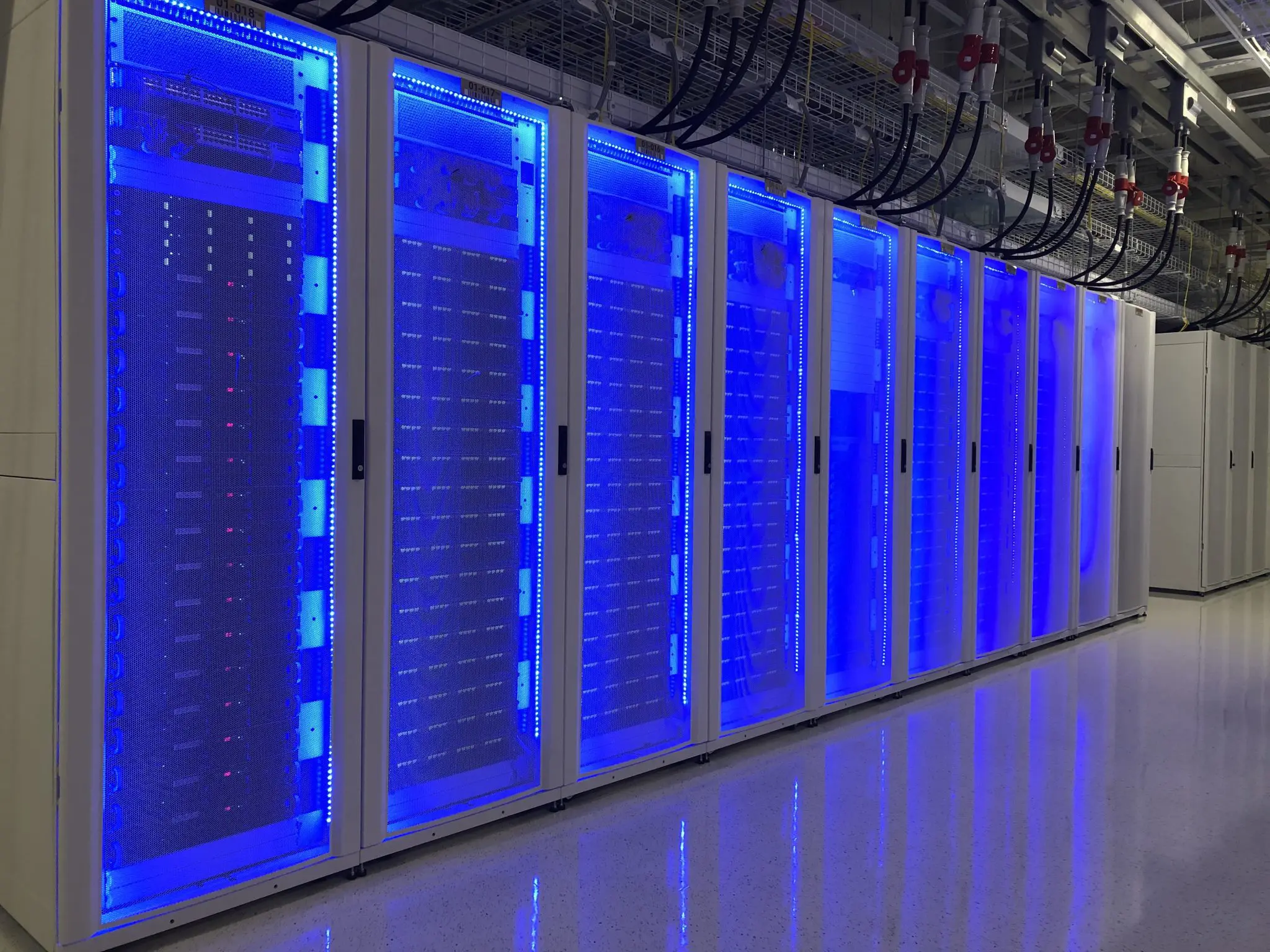
The newly funded supercomputer, Nexus, will combine the capabilities of artificial intelligence and high-performance computing with 330 trillion bytes of memory to address computationally intensive research challenges. The system will incorporate 10 quadrillion bytes of flash storage – equivalent in volume to approximately 10 billion reams of paper – and be connected via high-speed networks to facilitate data transfer.
Nexus is intended to broaden access to advanced computing resources, as such infrastructure has largely been unavailable to many research institutions. The project is a collaborative effort between Georgia Tech and the National Center for Supercomputing Applications at the University of Illinois Urbana-Champaign, linking their systems to create a national research infrastructure.
Construction of Nexus is scheduled to commence this year, with completion anticipated in spring 2026. Georgia Tech will manage the system and allocate up to 10% of its capacity for internal research, while the remaining capacity will be available to scientists from any U.S. institution through an NSF review process. The system is capable of performing over 400 quadrillion operations per second, representing a significant step in the provision of AI supercomputing infrastructure.
National Collaboration for Scientific Advancement
The impetus for Nexus stems from the evolving landscape of scientific investigation, where artificial intelligence is increasingly used to analyse massive datasets and model complex systems.
This collaboration between Georgia Tech and the National Center for Supercomputing Applications at the University of Illinois Urbana-Champaign builds on previous NSF-funded projects, including HIVE, a precursor supercomputer at Georgia Tech.
Scientists from any U.S. institution can apply for access to Nexus through an NSF review process. Georgia Tech will manage the system and reserve up to 10% of its capacity for campus research.
Projected Capabilities and Timeline
Construction of Nexus is scheduled to begin this year, with expected completion in spring 2026. Georgia Tech will manage the system and reserve up to 10% of its capacity for campus research. The system is capable of performing over 400 quadrillion operations per second, representing a significant step in the provision of AI supercomputing infrastructure. This collaboration builds on previous NSF-funded projects, including HIVE, a precursor supercomputer at Georgia Tech.
More information
External Link: Click Here For More