Researchers at the Institute of Science Tokyo have developed an AI model called OGDiffusion, which automates fragrance creation by analysing mass spectrometry data of essential oils and corresponding odour descriptors. This innovation, published in IEEE Access on March 27, 2025, enables rapid and scalable production of fragrances without trial-and-error methods or expert input. The system generates scent profiles based on user-defined characteristics, validated through human sensory tests that confirmed the scents met expectations. This advancement represents a significant shift towards efficient and automated fragrance design across various industries.
Fragrance design plays a pivotal role across various industries, significantly influencing consumer experiences in perfumery, food, and home products. However, the traditional approach to creating new fragrances is fraught with challenges. The process heavily relies on skilled perfumers, making it both time-consuming and labor-intensive. This dependency often leads to numerous trial-and-error attempts, which not only prolongs development but also increases costs.
The inefficiency of these methods becomes particularly evident when scaling production. The reliance on manual processes hinders rapid iteration and adaptation, thereby limiting the ability to meet market demands swiftly. These challenges underscore the need for more efficient and scalable solutions in fragrance design, aiming to reduce dependency on expert labor while enhancing production speed and adaptability.
Introduction of OGDiffusion Model
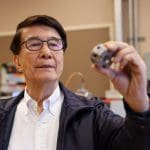
The OGDiffusion model represents an innovative approach to fragrance generation, leveraging advanced AI technology to streamline the creation process. Developed by Professor Takamichi Nakamoto and his team at Institute of Science Tokyo, this model employs generative diffusion networks, which are based on mass spectrometry data of essential oils.
At its core, OGDiffusion operates by analyzing chemical profiles of essential oils and using user-defined scent descriptors to generate corresponding chemical profiles. This process involves creating a mass spectrum that aligns with the desired fragrance characteristics. Subsequently, the model calculates the precise blend of essential oils required to achieve the specified scent, eliminating the need for manual intervention and reducing production time.
A key advantage of OGDiffusion is its efficiency. By automating the fragrance creation process, it minimizes reliance on human expertise, thereby accelerating development cycles and lowering costs. This automation not only enhances scalability but also allows for greater precision in scent creation.
System Functionality Explained
The functionality of the OGDiffusion model revolves around its ability to interpret user-defined scent descriptors and translate them into precise chemical profiles. By leveraging mass spectrometry data, the model identifies the optimal combination of essential oils required to achieve the desired fragrance. This process is both time-efficient and cost-effective, making it a valuable tool for fragrance designers.
The model’s use of generative diffusion networks ensures that the resulting fragrances are not only accurate but also innovative. By exploring a wide range of chemical combinations, OGDiffusion can create unique scents that may not have been previously considered. This capability is particularly beneficial in industries where differentiation and innovation are key competitive advantages.
Human Sensory Tests
To validate the effectiveness of the OGDiffusion model, human sensory tests were conducted to assess whether participants could accurately match AI-generated fragrances with their intended odor descriptors. The process involved presenting participants with a set of scents created by the model, each associated with specific descriptive attributes. Participants were then asked to identify and categorize these scents based on the provided descriptors.
The results demonstrated that participants were able to successfully match the AI-generated fragrances with their intended descriptors. This outcome highlights the model’s capability to produce scents that align closely with user expectations, thereby validating its effectiveness in fragrance generation. The sensory tests underscore the reliability of OGDiffusion in creating scents that resonate with human perception and descriptive criteria.
These findings provide empirical evidence supporting the practical application of the OGDiffusion system. By ensuring that generated fragrances meet user-defined descriptors, the model demonstrates its potential for integration into various industries where fragrance design plays a significant role.
Implications
Successfully validating the OGDiffusion model through human sensory tests has important implications for various industries. The ability to generate accurate and innovative fragrances efficiently can benefit sectors such as perfumery, food production, and home products. By reducing reliance on manual processes and skilled perfumers, the model offers a scalable solution for fragrance creation.
Moreover, the precision and innovation offered by OGDiffusion can enhance product differentiation in competitive markets. Industries that prioritize unique and appealing fragrances can leverage this technology to develop new scents that capture consumer attention and preference.
In conclusion, the implications of the OGDiffusion model extend beyond traditional fragrance design applications. Its potential for integration into diverse industries highlights its versatility and value as a tool for efficient and accurate scent creation.
More information
External Link: Click Here For More