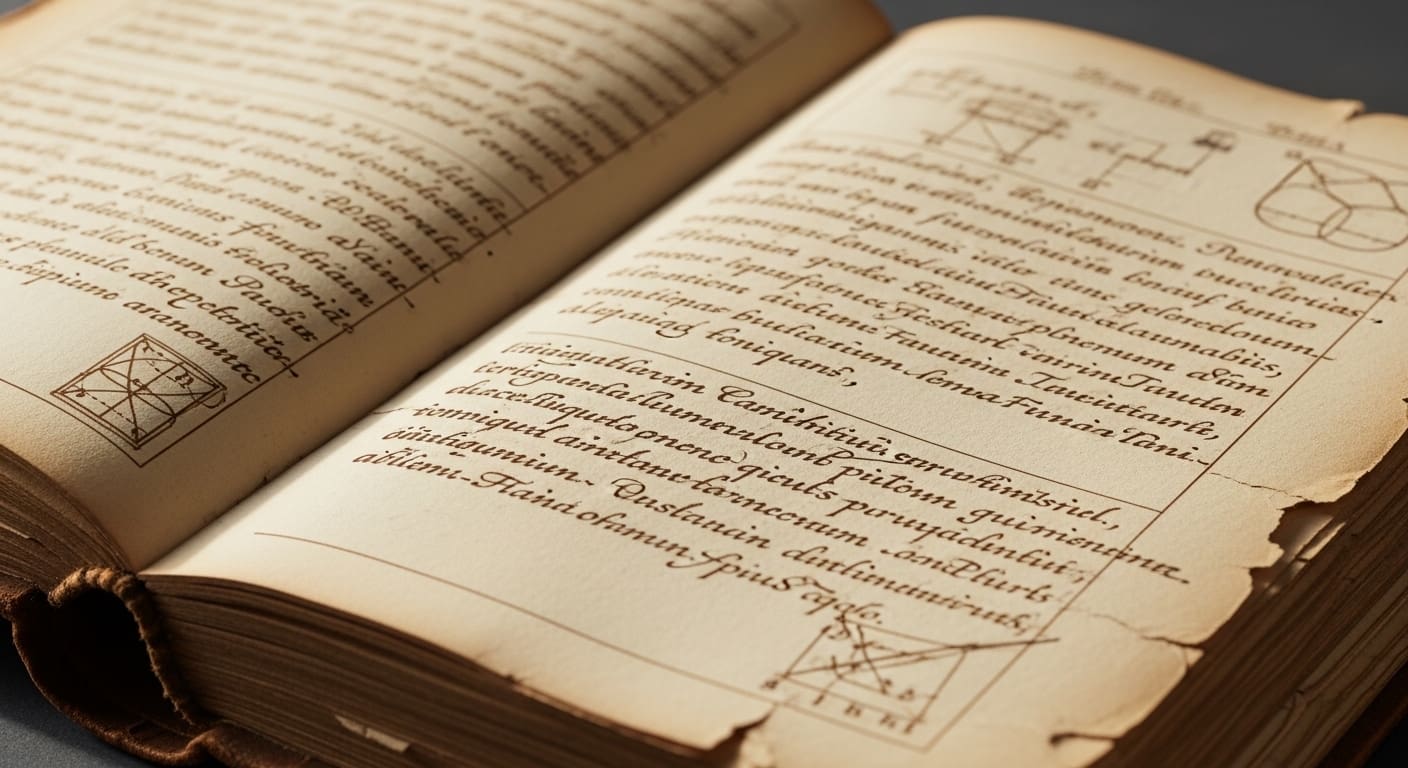
Newly discovered annotations in a 16th-century copy of Ptolemy’s Almagest suggest a more complex intellectual journey for Galileo Galilei than previously understood, revealing the astronomer’s deep engagement with the ancient text he ultimately challenged. Historian Ivan Malara identified the handwriting, likely penned around 1590, while examining copies in Italy’s National Central Library of Florence; the book contains extensive marginal notes and a transcribed Psalm 145 reminiscent of Galileo’s script. This finding, detailed in a paper under review at the Journal for the History of Astronomy, implies Galileo’s shift toward heliocentrism stemmed from a rigorous mastery of Ptolemaic reasoning, rather than solely from philosophical or political motivations. “He has been presented as a big-picture sort of guy—not interested in the nitty-gritty technical details of astronomy,” says James Evans, a historian of astronomy at the University of Puget Sound, a perspective Malara’s research challenges.
Galileo’s Annotated Almagest Discovered in Florence
The annotations, likely penned around 1590, approximately two decades before his telescopic observations, demonstrate Galileo’s simultaneous reverence for and critical dissection of Ptolemy’s work. Malara argues that Galileo’s eventual embrace of heliocentrism stemmed not from philosophical or political motivations, but from a deep understanding of Ptolemaic reasoning; he suggests Galileo believed a heliocentric system would more logically fulfill Ptolemy’s mathematical framework. Further bolstering the attribution, handwriting specialists at the Galileo Museum and the National Central Library have confirmed the annotations’ stylistic and abbreviation similarities to Galileo’s known handwriting. Intriguingly, the inclusion of Psalm 145 within the Almagest copy aligns with historical accounts suggesting Galileo offered a prayer before studying the text; a 1673 letter by Alessandro Marchetti states Galileo “prayed each time he sat down with The Almagest.” Malara emphasizes the importance of understanding how Galileo arrived at his revolutionary stance, stating, “The big problem, is how? Why?”
Handwriting & Textual Evidence Confirms Galileo’s Annotations
The study of Galileo Galilei’s surviving manuscripts and documented work is a well-established field, with scholars continually refining understandings of his scientific process and intellectual development; however, recent work has expanded the scope of available textual evidence, offering a fresh perspective on the astronomer’s early thinking. Historian Ivan Malara’s investigation of 16th-century copies of Ptolemy’s Almagest at Italy’s National Central Library of Florence yielded a remarkable find: extensive annotations in a handwriting strongly suggestive of Galileo himself. The annotated Almagest is particularly significant because it represents a previously unknown depth of engagement with the very cosmological model Galileo would later challenge; if “Galileo today is often praised for rejecting the authority of ancient wisdom and helping make it obsolete,” this copy reveals a young scholar meticulously dissecting that same wisdom. Further bolstering the attribution are critical comments within the margins that echo passages from Galileo’s contemporary writings.
He has been presented as a big-picture sort of guy, not interested in the nitty-gritty technical details of astronomy.
James Evans, a historian of astronomy at the University of Puget Sound
Early Notes Link Galileo’s Logic to Heliocentric Shift
The discovery is significant because The Almagest represented the dominant cosmological framework for 14 centuries, and its detailed examination by a young Galileo offers a new perspective on his intellectual development. These notes reveal that Galileo didn’t simply dismiss Ptolemy’s work, but rather engaged with it critically, demonstrating both reverence and rigorous dissection of its mathematical foundations. Malara, a postdoctoral scholar at the University of Milan, spent years compiling instances of Galileo referencing Ptolemaic details to challenge contemporaries, fueling his search for direct evidence of this intellectual link. Why?”
I regard the attribution of the marginal notes to Galileo as fully secure.
Michele Camerota at the University of Cagliari