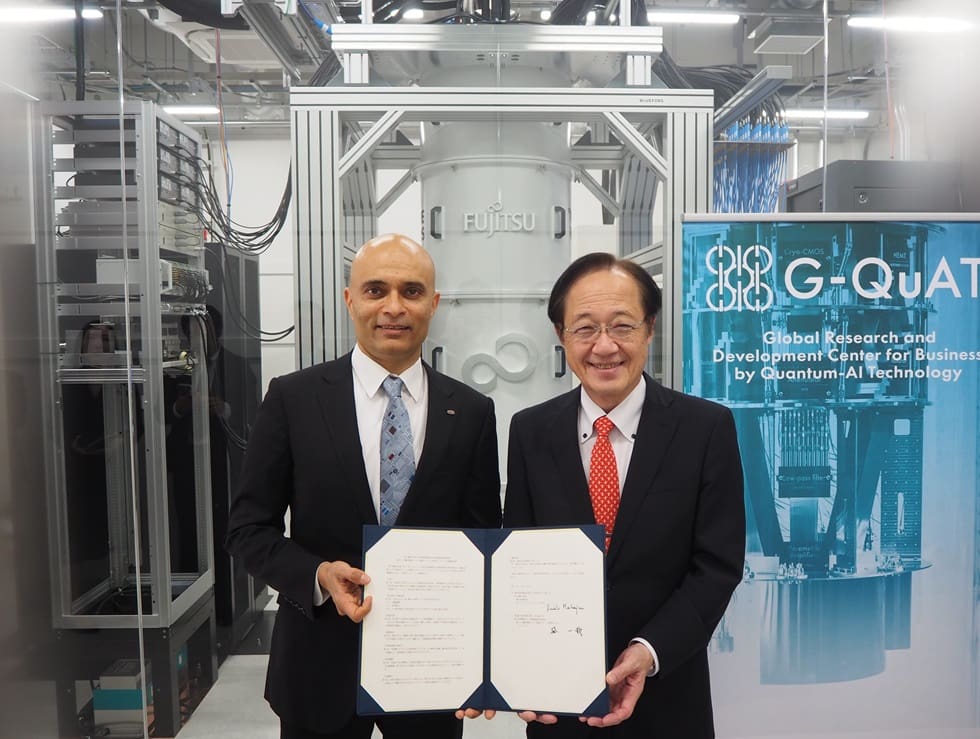
Quantum computing has long promised to reshape industries from pharmaceuticals to finance, yet turning theory into practice remains a formidable engineering challenge. In late September, two of Japan’s most influential technology players—Fujitsu Limited and the National Institute of Advanced Industrial Science and Technology (AIST)—announced a partnership that could accelerate the country’s leap into this frontier. By pooling Fujitsu’s commercial scale and AIST’s research prowess, the alliance aims to create a fully integrated ecosystem for building, testing, and deploying large‑scale superconducting quantum processors.
Bridging Research and Manufacturing
The collaboration hinges on a unique blend of academia‑industry synergy. AIST’s Global Research and Development Center for Business by Quantum‑AI technology (G‑QuAT) already hosts state‑of‑the‑art facilities for quantum hardware prototyping, from cryogenic test benches to error‑correction software suites. Fujitsu, meanwhile, brings a decade of experience in mass‑producing complex electronic systems, a talent pool of over 113,000 engineers, and a global supply chain that spans semiconductors, cryogenic components, and high‑precision optics.
Together, they will conduct joint research programmes that move beyond isolated experiments. For instance, Fujitsu’s existing superconducting qubit fabrication lines—originally designed for classical processors—will be retrofitted to accommodate the tighter tolerances required for quantum coherence. Meanwhile, G‑QuAT’s simulation tools will be used to model the behaviour of these new devices under realistic operating conditions, allowing rapid iteration. This bidirectional flow of knowledge mirrors the “lab‑to‑factory” model that has proven successful in semiconductor manufacturing but has yet to be applied at the scale required for quantum hardware.
Scaling the Quantum Frontier
Quantum processors must be both highly coherent and densely integrated. Scaling up to hundreds of qubits involves not only refining individual components but also ensuring that the entire system—from cryostats to control electronics—works harmoniously. The partnership’s roadmap includes the development of a “system‑on‑chip” architecture that integrates superconducting qubits, microwave resonators, and classical control circuits onto a single substrate. By leveraging Fujitsu’s expertise in integrated circuit design, the team aims to reduce the physical footprint of each qubit module, thereby easing the cryogenic cooling burden.
A key technical milestone is the demonstration of fault‑tolerant error correction across a multi‑qubit array. G‑QuAT’s researchers will supply the necessary pulse‑shaping algorithms and real‑time feedback mechanisms, while Fujitsu will provide the high‑bandwidth, low‑latency control hardware. Early prototypes could see 50‑qubit clusters operating at error rates below the threshold required for practical quantum advantage. Such a breakthrough would position Japan as a leader in the nascent quantum‑software ecosystem, where algorithm developers rely on reliable hardware to test new cryptographic protocols and optimisation routines.
Implications for Global Markets
Beyond technical achievements, the alliance carries significant commercial and geopolitical implications. Japan has historically dominated the manufacturing of precision instruments—cryostats, vacuum pumps, and superconducting magnets—yet its quantum‑hardware exports have lagged behind those of the United States and China. By showcasing a vertically integrated supply chain that can deliver end‑to‑end quantum solutions, Fujitsu and AIST aim to attract foreign investment and secure contracts with multinational corporations seeking quantum‑enabled analytics.
Moreover, the partnership dovetails with broader policy initiatives that view quantum technology as a national security asset. A robust domestic quantum industry reduces reliance on imported components that could be subject to export controls. The collaboration also sets a precedent for public‑private partnerships in high‑tech sectors, potentially inspiring similar models in Europe and the United States, where governments are increasingly funding quantum research to maintain a strategic edge.
A Forward‑Looking Vision
The Fujitsu–AIST agreement is more than a joint research grant; it is a blueprint for how a nation can transform a cutting‑edge scientific discipline into a competitive industrial sector. By marrying rigorous academic inquiry with commercial manufacturing discipline, Japan is positioning itself to not only participate in the global quantum race but to shape its trajectory. As quantum computers edge closer to practical utility, the country’s ability to deliver reliable, scalable hardware will determine whether it remains a silent partner or becomes a dominant force in the next technological revolution.