

Fujitsu Research is accelerating progress towards practical quantum computing through its collaboration with Osaka University, developing two new technologies for space-time efficient analog rotation quantum computing architecture. This initiative aims to demonstrate quantum advantage, where quantum computers can solve problems faster than classical computers, expected to arrive around 2030.
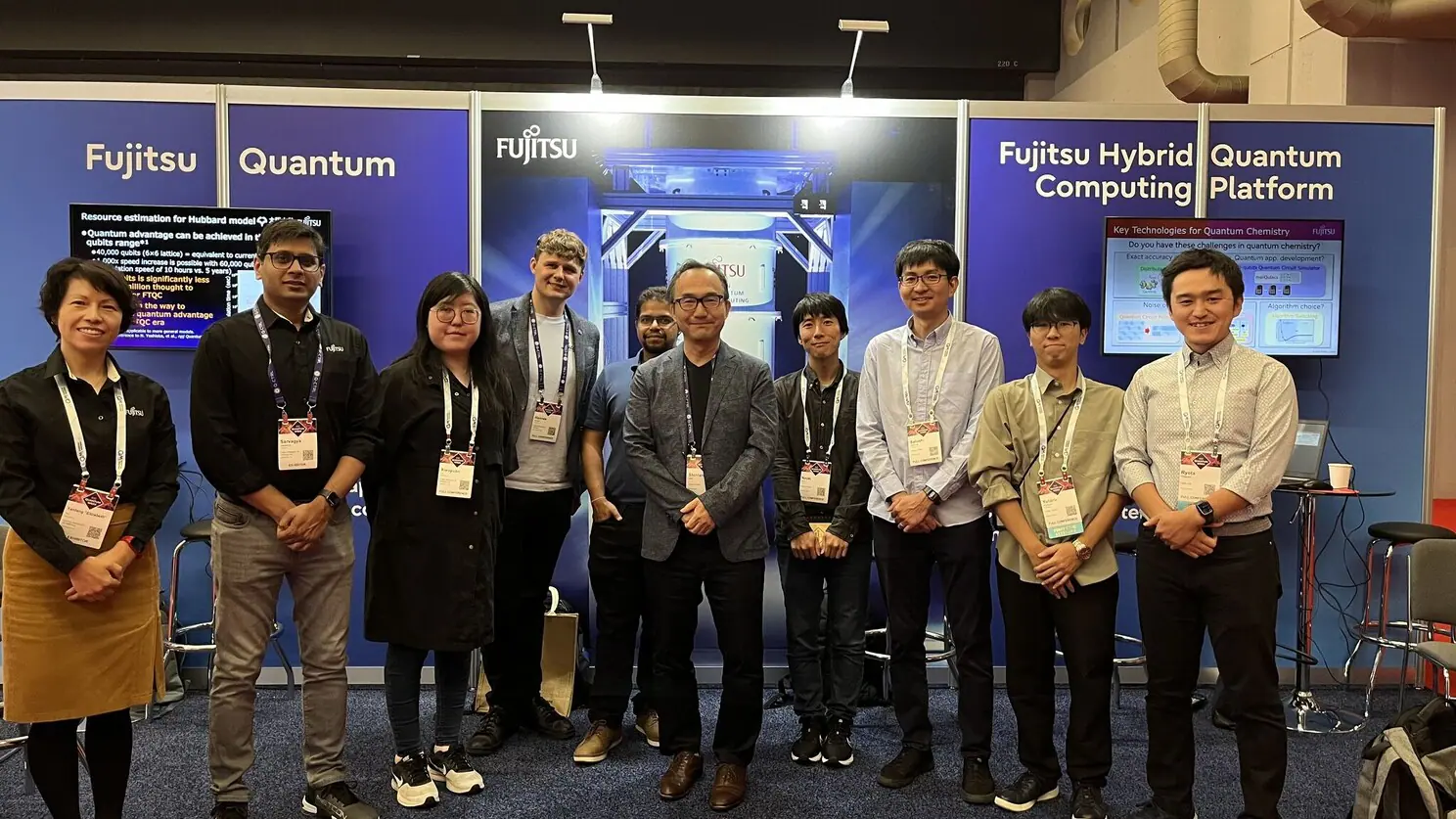
At the IEEE Quantum Week in Montreal, Canada, Fujitsu’s research team shared their latest technological advances in quantum error correction, qubit technology, and diamond spin qubits. Head of the Fujitsu Quantum Laboratory, Shintaro Sato, will deliver a keynote presentation on “Global Quantum Technological Challenges” at the International Quantum Business Conference in Santiago de Compostela, Spain. Additionally, Fujitsu is working with MoBagel to integrate its AI technologies into their no-code AI/machine learning platform, enabling businesses to build more efficient and cost-effective AI models.
Advancing Quantum Computing: Collaborations and Breakthroughs
Fujitsu’s research team is working closely with partners around the world to unlock the potential of quantum computing. In Japan, Fujitsu and Osaka University recently announced a joint initiative involving the development of two new technologies for the space-time efficient analog rotation quantum computing architecture. This collaboration aims to accelerate the realization of practical quantum computing and demonstrate quantum advantage, where quantum computers can solve problems faster than current classical computers.
The joint initiative focuses on developing error impact reduction in quantum computing architecture, which is crucial for achieving practical quantum computing. By reducing errors, the computing scale can be significantly increased, paving the way for early-FTQC (Fault-Tolerant Quantum Computing) era, expected to arrive around 2030. This breakthrough has the potential to revolutionize various industries and fields, such as chemistry, materials science, and optimization problems.
Fujitsu’s research team also participated in the IEEE Quantum Week in Montreal, Canada, where they shared their latest technological advances in quantum error correction, qubit technology, and diamond spin qubits. The event brought together the international quantum community to share the latest breakthroughs and bridge the gap between the science of quantum computing and the development of an industry surrounding it.
AI Co-Creation: Integrating Fujitsu’s Technologies with MoBagel
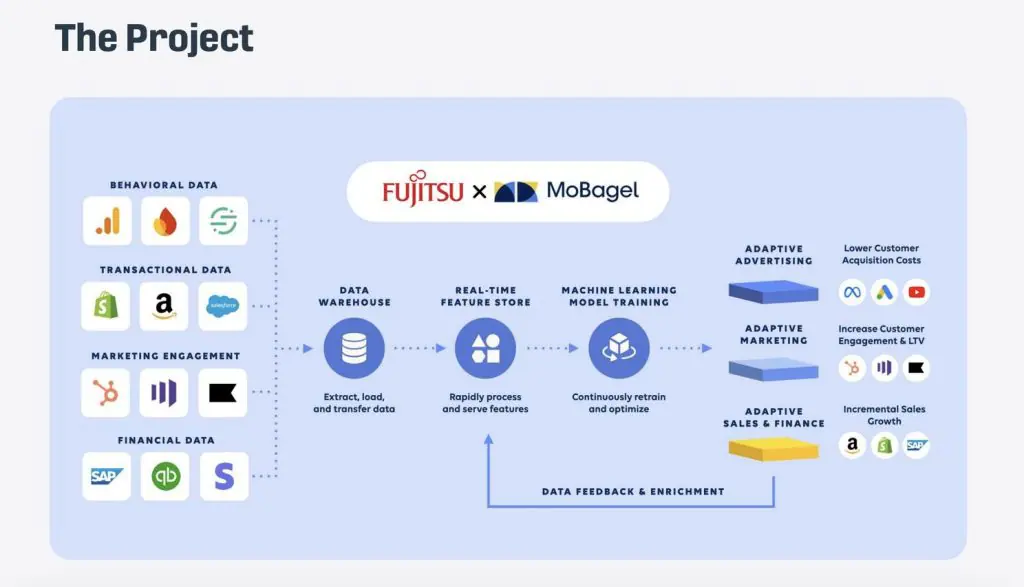
Fujitsu has collaborated with MoBagel, a leading vendor of no-code AI/machine learning platforms, to integrate its AI technologies. The integration enables users to leverage Fujitsu’s expertise in AI and machine learning, enhancing the capabilities of MoBagel’s platform. This co-creation is expected to have significant implications for various industries, such as healthcare, finance, and customer service.
The collaboration demonstrates Fujitsu’s commitment to advancing AI research and development, making it more accessible and user-friendly. By integrating its technologies with MoBagel’s platform, Fujitsu aims to accelerate the adoption of AI solutions across various sectors.
Sustainability and Digital Twin Technology
Fujitsu has been actively contributing to sustainability initiatives, leveraging its expertise in digital twin technology. At the WBCSD’s Climate Week event in New York, Fujitsu’s European CTO John Walsh presented a case study on decarbonizing transport using Fujitsu’s social digital twin technology.
The presentation highlighted the potential of digital twin technology in reducing CO2 emissions and promoting sustainable development. By creating virtual replicas of physical systems, digital twin technology enables real-time monitoring, simulation, and optimization, leading to significant reductions in energy consumption and emissions.
Fujitsu’s research team has also been working on novel technologies to enhance object detection model security. At the ECML-PKDD24 event in Vilnius, Lithuania, Fujitsu Research of Europe’s Omer Hofman presented the “X-Detect” system, jointly developed with CBG – Cyber@Ben Gurion University Labs. X-Detect offers a solution designed to provide explainable, real-time alerts and is compatible with any object detection model.
Cancer Research and AI Algorithm
Fujitsu Research of Europe’s Nooshin Bayat presented the company’s latest R&D on complex gene classification in the ATM gene at the ESMO Congress 2024. The research demonstrated how Fujitsu’s AI algorithm can contribute to cancer research, highlighting its potential in improving diagnosis and treatment outcomes.
The presentation showcased Fujitsu’s commitment to advancing AI research in healthcare, leveraging its expertise in machine learning and data analytics to drive innovation in cancer research.
Research Innovation and Talent Acquisition
Fujitsu has been actively promoting research innovation across various regions. In India, the company welcomed 31 new graduates from premier institutions, joining the Fujitsu Research of India team in Bangalore. This influx of fresh talent is expected to accelerate innovation in AI, quantum computing, and other emerging technologies.
The company has also been highlighting the work of its researchers and engineers through interviews and feature stories. For instance, Taku Fukui, an artificial intelligence researcher, shared his “Researcher’s Dream” and how he makes the most of his working day.
These initiatives demonstrate Fujitsu’s commitment to fostering a culture of innovation, attracting top talent, and promoting research excellence across its global teams.
External Link: Click Here For More


