

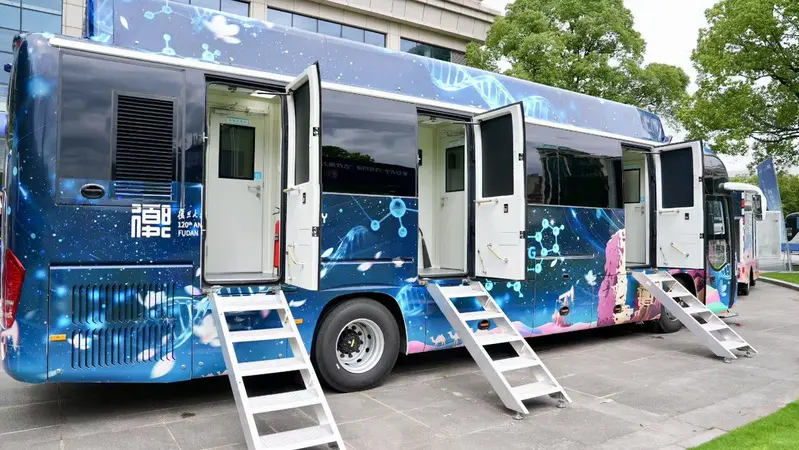
A molecular archaeology team from Fudan University in Shanghai will conduct fieldwork across the Xinjiang Uygur autonomous region from this month to October, supported by three bespoke vehicles designed for on-site analysis. This initiative stems from a collaborative project established in August with Karamay, Xinjiang, resulting in the joint establishment of the Silk Road Digital Economy and Industrial Integration Innovation Research Center. The research prioritises the integration of archaeological findings with modern economic strategies, specifically focusing on Xinjiang’s evolution of human history and the development of digital cultural tourism. This collaborative effort represents an interdisciplinary approach, combining archaeological investigation with economic development planning, and signifies a commitment to integrating scientific research with cultural outreach programmes.
Shanghai’s Fudan University has initiated a significant archaeological undertaking dedicated to exploring and preserving the heritage of the ancient Silk Road, with a particular focus on sites within the Xinjiang Uygur Autonomous Region. The project, commencing this month and scheduled to continue through October, represents a concerted effort to integrate advanced scientific methodologies with cultural heritage management and economic development strategies. Central to the initiative is a molecular archaeology team from Fudan University, poised to conduct fieldwork across key archaeological locations in Xinjiang. This expedition coincides with a broader collaborative project established between the university and the city of Karamay, Xinjiang, aimed at leveraging the region’s rich historical legacy.
The impetus for this undertaking stems from a collaboration formally established in August of the previous year, resulting in the joint establishment of the Silk Road Digital Economy and Industrial Integration Innovation Research Center. This centre serves as a multidisciplinary hub, bringing together archaeologists, economists, and digital technology specialists. The initial phase of the centre’s research prioritises the development of digital cultural tourism initiatives, recognising the potential for archaeological discoveries to drive economic growth. A core component of this strategy involves the meticulous investigation of Xinjiang’s evolution of human history, with a specific emphasis on integrating archaeological findings into modern economic frameworks. The region’s location as a crucial nexus along the historical Silk Road – a network of trade routes facilitating exchange between East and West – necessitates a nuanced understanding of its complex past. This project builds upon decades of Silk Road archaeology, seeking to refine existing chronologies and interpretations through innovative scientific approaches.
The fieldwork will be supported by three specially
The fieldwork will be supported by three specially designed vehicles, engineered for the demands of molecular archaeology. Molecular archaeology, a rapidly evolving field, employs biochemical and genetic analyses of archaeological remains to extract information beyond what is possible through traditional methods. This includes the analysis of ancient DNA (aDNA), proteins, lipids, and stable isotopes. The vehicles are equipped with mobile laboratories capable of processing samples in the field, minimising the risk of contamination and degradation. The team will utilise a range of sophisticated techniques, including next-generation sequencing (NGS) to reconstruct ancient genomes, proteomics to identify ancient proteins, and lipidomics to analyse ancient fats and oils. These analyses will provide insights into the diet, health, ancestry, and migration patterns of past populations.
The researchers anticipate that aDNA analysis will be particularly valuable in tracing the genetic relationships between different groups who inhabited the region, shedding light on the complex demographic history of the Silk Road. Proteomic analysis will allow them to identify the species of animals and plants that were consumed or utilised by ancient communities, providing insights into their subsistence strategies and environmental adaptations. Lipid analysis can reveal information about the types of oils and fats used in cooking, preserving materials, and other aspects of daily life. The integration of these different lines of evidence will create a more holistic and nuanced understanding of the past.
The collaborative framework with Karamay is intended to ensure that archaeological discoveries are translated into tangible economic benefits for the local community. This includes the development of interactive museum exhibits, virtual reality tours of archaeological sites, and the creation of culturally themed tourism products. The project also aims to promote sustainable tourism practices that protect the region’s fragile archaeological heritage. Researchers involved in the project have not yet publicly detailed specific funding sources, but the scale of the undertaking suggests substantial investment from both Fudan University and regional governmental bodies. The project’s success will depend on the ability of the research team to overcome significant technical challenges, including the degradation of aDNA in the harsh environmental conditions of Xinjiang and the contamination of samples with modern DNA. Rigorous quality control measures and the use of advanced analytical techniques will be crucial to ensuring the reliability of the results. Further publications detailing the methodologies and initial findings are anticipated in peer-reviewed scientific journals in the coming months.
More informationExternal Link:Click Here For More
External Link: Click Here For More


