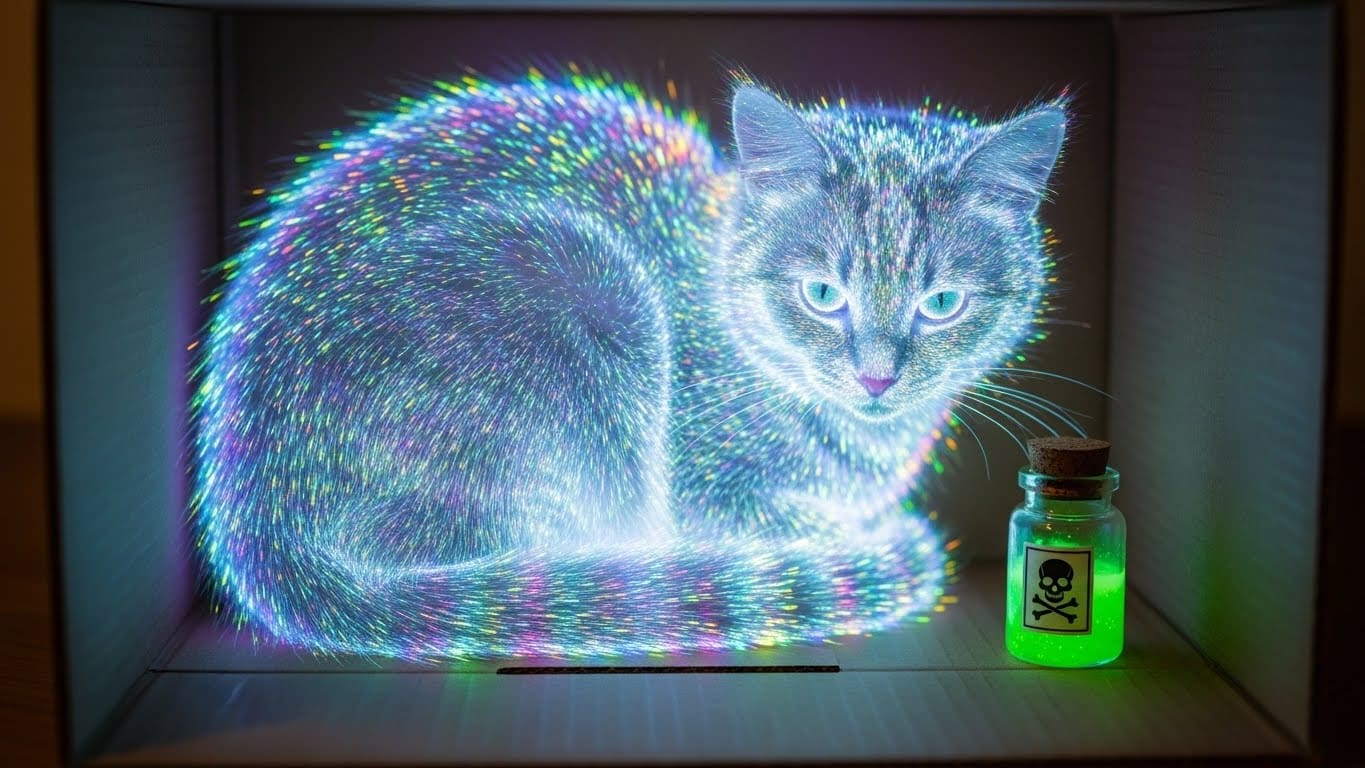
The exploration of quantum mechanics, born in the early 20th century, has consistently challenged our intuitive understanding of reality. From the seemingly paradoxical thought experiments like Schrödinger’s cat to the ambitious visions of Richard Feynman, the field has progressed from abstract theoretical constructs to nascent technological applications. This journey, spanning nearly a century, represents a profound shift in our ability to manipulate and harness the fundamental laws governing the universe. The core of this evolution lies in understanding and controlling the bizarre behaviors of matter at the atomic and subatomic levels, behaviors that defy classical physics. The initial conceptual hurdles, exemplified by the Schrödinger’s cat paradox, highlighted the counterintuitive nature of superposition and entanglement.
These concepts, while initially perplexing, have become cornerstones of quantum information science. Feynman, recognizing the limitations of classical computation in simulating quantum systems, proposed a radically different approach – leveraging quantum phenomena themselves to perform computations. This vision, though initially theoretical, has fueled decades of research culminating in the development of quantum technologies. Today, we stand at the precipice of a new era, where the promise of quantum computation, sensing, and communication is beginning to materialize. This article will delve into the principles, mechanisms, challenges, and current state of this rapidly evolving field, tracing the path from the foundational thought experiments to the emerging technologies that are poised to reshape our world. We will explore the underlying physics, the practical applications, and the hurdles that remain before the full potential of quantum mechanics can be realized.
The Fundamental Principles Behind Quantum Information Science
Quantum information science is predicated on the principles of quantum mechanics, specifically superposition, entanglement, and interference. Superposition allows a quantum system, such as a qubit, to exist in a combination of states simultaneously, unlike a classical bit which can only be either 0 or 1. This “both/and” state is crucial for enabling quantum computation to explore multiple possibilities concurrently. Entanglement, often described as “spooky action at a distance,” links two or more qubits in such a way that their fates are intertwined, regardless of the physical distance separating them. Measuring the state of one entangled qubit instantaneously determines the state of the others. Interference, a wave-like property, allows quantum states to constructively or destructively combine, amplifying desired outcomes and suppressing unwanted ones. These principles are fundamentally different from classical physics, where systems have definite properties and evolve predictably. Quantum systems, however, are described by probabilities, and measurement collapses the superposition into a single definite state. This collapse is not a physical process in the classical sense, but rather a change in our knowledge of the system. The manipulation of these quantum states, through precisely controlled interactions, forms the basis of quantum information processing. The ability to create, control, and measure qubits is paramount to harnessing these quantum phenomena for practical applications.
How Quantum Path Integrals Work in Practice
Richard Feynman’s path integral formulation of quantum mechanics provides a powerful framework for understanding how quantum systems evolve. Instead of focusing on a single trajectory, the path integral considers all possible paths a particle can take between two points. Each path is assigned a complex number, representing its probability amplitude. The total probability amplitude is obtained by summing (integrating) over all possible paths. This summation inherently incorporates the wave-like nature of quantum particles and accounts for interference effects. The path integral approach is particularly useful for understanding complex systems where classical trajectories are not well-defined. It provides a natural way to calculate probabilities and predict the behavior of quantum systems. In the context of Schrödinger’s cat, the path integral can be used to analyze the evolution of the cat’s wave function, demonstrating that the collapse of the wave function can occur without an external observer. The analysis reveals that the system itself, through its internal dynamics, can lead to a definite outcome. This challenges the traditional interpretation of quantum mechanics, which often emphasizes the role of the observer in collapsing the wave function.
Why Maintaining Quantum Coherence Matters for Performance
Quantum coherence is the ability of a qubit to maintain its superposition state. It is a fragile property, easily disrupted by interactions with the environment, a process known as decoherence. Decoherence effectively destroys the quantum information encoded in the qubit, leading to errors in computation or sensing. The rate at which coherence is lost is a critical factor limiting the performance of quantum devices. Longer coherence times allow for more complex quantum operations to be performed before the information is lost. Several factors contribute to decoherence, including electromagnetic noise, temperature fluctuations, and imperfections in the qubit material or fabrication process. Minimizing these sources of noise and isolating the qubits from the environment are essential for preserving coherence. Techniques such as cryogenic cooling, shielding, and error correction are employed to mitigate decoherence and extend coherence times. The pursuit of materials and architectures with inherently longer coherence times is a major focus of current research.
Current Performance Benchmarks and Metrics
Evaluating the performance of quantum devices requires specific metrics that capture their capabilities. Qubit count is a basic measure of the system’s potential computational power, but it is not the sole determinant of performance. Gate fidelity, which measures the accuracy of quantum operations, is a crucial and substantial metric. High-fidelity gates are essential for performing complex quantum algorithms without accumulating excessive errors. Coherence time, as discussed previously, is another critical and advanced parameter. Beyond these individual metrics, overall system performance is often assessed by benchmarking against specific quantum algorithms or tasks. These benchmarks provide a standardized way to compare different quantum devices and track progress over time. Current quantum systems are still in the early stages of development, and their performance is limited by factors such as qubit count, gate fidelity, and coherence time. However, recent advancements have demonstrated significant improvements in these areas, paving the way for more powerful and reliable quantum devices.
Key Industry Players and Commercial Leaders
The quantum technology landscape is rapidly evolving, with a diverse range of companies and research institutions driving innovation. Companies are focusing on different aspects of the quantum ecosystem, including qubit development, control electronics, software, and applications. The field is characterized by a mix of established technology companies, startups, and academic institutions. Competition is fierce, with companies vying to achieve breakthroughs in qubit technology and demonstrate practical quantum advantage. Investment in quantum technology is growing rapidly, driven by the potential for transformative applications in various industries. The development of a robust quantum supply chain and a skilled workforce are crucial for sustaining this growth.
Practical Applications in Medical Imaging
Quantum technologies are beginning to find applications in medical imaging, offering the potential for improved diagnostics and treatment. The DREAM method, an fMRI-to-image reconstruction technique, demonstrates the ability to reconstruct viewed images from brain activity. This approach leverages fundamental knowledge of the human visual system to reverse the neural pathways and decode visual information. While still in its early stages, this technology could potentially be used to assist individuals with visual impairments or to understand the neural basis of perception. Furthermore, quantum sensing techniques could be used to develop more sensitive and precise medical imaging devices, enabling earlier detection of diseases and more accurate monitoring of treatment response.
Practical Applications in Speech Recognition
Quantum-inspired algorithms and techniques are being explored for applications in speech recognition. The CAT toolkit, a CRF-based ASR toolkit, utilizes discriminative training to improve the accuracy and efficiency of speech recognition systems. While not a fully quantum system, CAT demonstrates the potential of leveraging machine learning techniques inspired by quantum principles. Quantum machine learning algorithms could potentially offer significant advantages over classical algorithms for tasks such as pattern recognition and data analysis, leading to more robust and accurate speech recognition systems. The ability to process and analyze large amounts of audio data efficiently is crucial for applications such as voice assistants, transcription services, and automated customer support.
Challenges That Must Be Overcome
Despite the significant progress made in recent years, several challenges remain before quantum technologies can reach their full potential. Scaling up the number of qubits while maintaining high fidelity and coherence is a major hurdle. Building and maintaining the complex control electronics and infrastructure required to operate quantum devices is also a significant challenge. Developing robust error correction techniques is essential for mitigating the effects of decoherence and ensuring the reliability of quantum computations. Furthermore, creating quantum algorithms that can solve practical problems and outperform classical algorithms is a crucial area of research. Addressing these challenges requires a multidisciplinary approach, bringing together experts in physics, engineering, computer science, and materials science.
The Path Forward: Near-Term Developments
In the near term, we can expect to see continued improvements in qubit technology, with a focus on increasing qubit count, gate fidelity, and coherence time. Hybrid quantum-classical algorithms, which combine the strengths of both quantum and classical computation, are likely to play a significant role in early applications. Quantum sensing and metrology are expected to mature rapidly, with applications in areas such as materials science, environmental monitoring, and medical diagnostics. The development of cloud-based quantum computing platforms will provide wider access to quantum resources, enabling researchers and developers to experiment with quantum algorithms and explore potential applications. Standardization of quantum programming languages and tools will also be crucial for fostering innovation and accelerating the adoption of quantum technologies.
The Future of Quantum Simulation and Modeling
Looking further ahead, the future of quantum information science is bright. The development of fault-tolerant quantum computers, capable of performing complex computations without errors, would revolutionize fields such as drug discovery, materials science, and financial modeling. Quantum simulation, the use of quantum systems to simulate other quantum systems, holds immense promise for understanding complex phenomena that are intractable for classical computers. The ability to accurately simulate molecular interactions could lead to the design of new materials with tailored properties, while simulating complex biological systems could provide insights into disease mechanisms and accelerate the development of new therapies. Quantum communication networks, secured by the laws of physics, could provide unbreakable encryption and enable secure data transmission. The convergence of quantum technologies with other emerging fields, such as artificial intelligence and nanotechnology, could unlock even more transformative possibilities. The journey from Schrödinger’s cat to Feynman’s dream is far from over, but the foundations have been laid for a future where the power of quantum mechanics is harnessed to solve some of the world’s most pressing challenges.