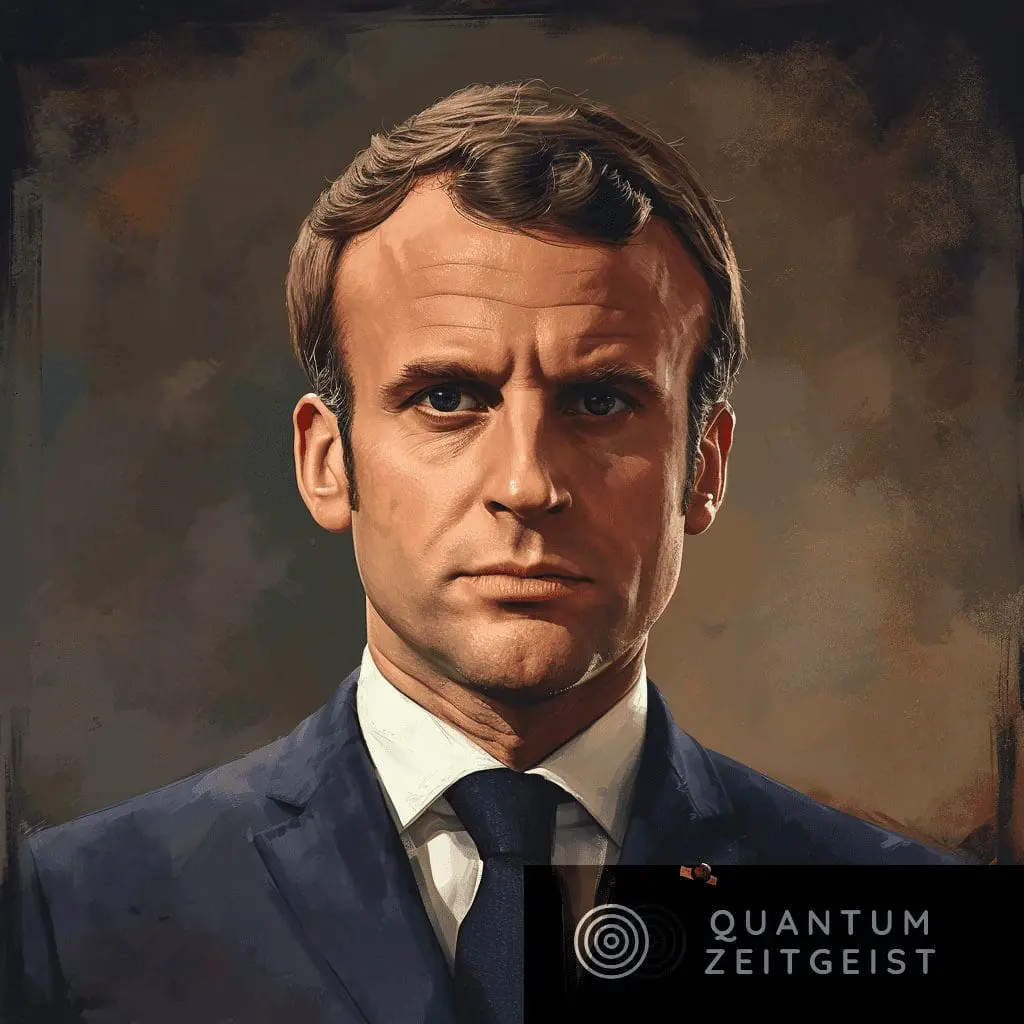
France’s quantum strategy, launched by President Emmanuel Macron in 2021, has resulted in the announcement of the PROQCIMA program, aiming to develop two prototypes of universal quantum computers by 2032. The strategy, backed by a €1.8 billion public-private commitment, focuses on developing quantum computing technologies, mastering quantum sensor technologies, and developing post-quantum cryptography, among others. The government estimates that quantum startups have raised over €350 million, making France a leading European country in quantum fundraising. The PROQCIMA program will be overseen by Sebastien Lecornu, Minister of the Armed Forces, and Sylvie Retailleau, Minister of Higher Education and Research.
France’s Quantum Strategy: Three Years On
Three years after the launch of France’s national quantum strategy and the Proqcima program, the French government has presented the tangible results of their efforts. The presentation took place at the National Library of France, with representatives from various ministries in attendance. The Proqcima program, announced during the event, aims to have two prototypes of universal quantum computers of French design by 2032.
In 2021, the French President initiated an ambitious national strategy on quantum technologies, with a public-private commitment of €1.8 billion over four years, €1 billion of which was financed by the state. This strategy was designed to address the challenges of economic growth and sovereignty, aligning France with the major world powers. The strategy revolves around five strategic objectives: developing technologies and uses of quantum computing, mastering quantum sensor technologies, developing and disseminating post-quantum cryptography, developing quantum communications technologies, and mastering the enabling technologies of quantum.
Quantum Revolution: A New Era of Computing
The ongoing second quantum revolution, which began at the end of the 20th century, promises to drastically enhance our computing capabilities. It will make currently impossible computations accessible, allow us to perceive our environment with unprecedented precision, and explore new ways of transmitting information. These technologies will also enable precise navigation in places where the GPS network is not accessible, make MRIs embeddable, and drastically accelerate medical research and the discovery of new materials with exceptional properties.
France’s Position in the Global Quantum Industry
France aims to become a significant player in the global quantum industry. This ambition requires strengthening the attractiveness of the French quantum sector, including training and enriching the sector with 5000 new talents, and supporting the export of all products and services from this innovative sector.
According to government estimates, quantum startups in France have raised more than €350 million, making France the leading European country in terms of fundraising and the third in the world behind the United States and Canada. French startups and SMEs in the quantum sector are also second internationally in terms of talent attractiveness. This is largely due to the “Talent” strategy launched by the government in 2021, which facilitated administrative procedures, visa acquisition, and integration into the startup ecosystem for quantum experts.
The PROQCIMA Program: Aiming for Quantum Supremacy
The French Government has launched the PROQCIMA program, inspired by the ULTRA program initiated by the British during the Second World War. The aim of this program is to have at least two prototypes of universal quantum computers with 128 logical qubits by 2032, extended to 2048 logical qubits by 2035.
France is one of the few countries globally to have a base of skills in upstream and technological research, as well as the appropriate industrial tool to seriously explore the feasibility of a Fault Tolerant Quantum Computer (FTQC). Despite the presence of research laboratories and companies at the forefront of the subject, the development of a universal quantum computer on a large scale faces significant difficulties due to the high scientific, technological, and industrial uncertainties.
Quantum Strategy: A National Effort
The national quantum strategy mobilizes significant investments to support both basic research and application-oriented projects, building on the excellence of the national ecosystem. The government has also given an impetus to training dedicated to quantum sciences, with the aim of training more than 5,000 talents at different levels, from technician to doctor in the coming years.
Three years after the launch of France 2030, the government is working with determination to make France a world leader in quantum technologies. In this area, two objectives guide the government: to attract talent and investors from around the world, and to support the international development of all French quantum startups. The future of France’s strategic autonomy in digital technology depends on the ability to bring out European technological champions with global influence in the field of quantum and AI. The national quantum strategy and its concrete results demonstrate that France is ready to take this leadership.
External Link: Click Here For More