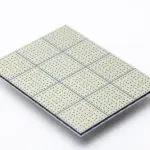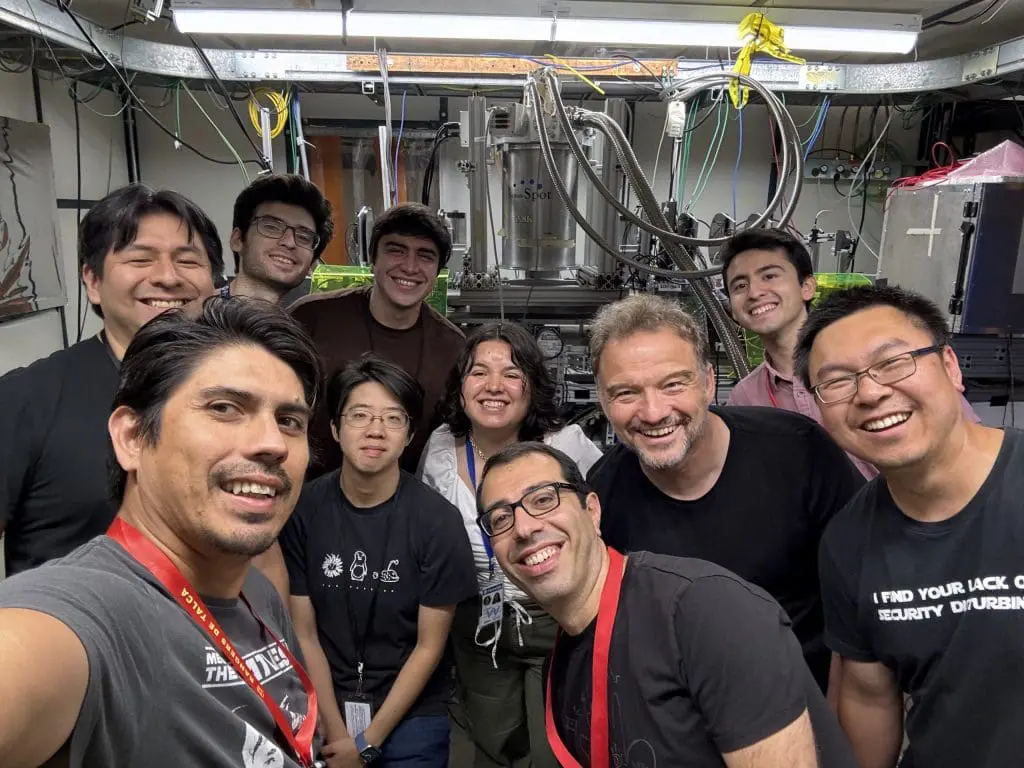
A collaboration of researchers from Fermilab, Caltech, NASA’s Jet Propulsion Laboratory, the University of Geneva, and Federico Santa María Technical University in Chile tested superconducting microwire single photon detectors (SMSPDs) at Fermilab to assess their feasibility for future particle physics experiments. The study demonstrated that SMSPDs achieved high detection efficiency across various particles, including protons, electrons, and pions, marking a step toward integrating this technology into advanced detectors for dark matter research and other applications.
Researchers are advancing particle physics experiments with SMSPD (Superconducting Microwire Single Photon Detector) arrays, which offer enhanced capabilities compared to traditional SNSPDs. These detectors provide a larger detection area, advantageous for experiments requiring broader coverage, such as those searching for dark matter candidates. Their ability to handle higher particle rates without performance degradation makes them suitable for high-energy environments like particle accelerators.
The use of SMSPDs benefits from their good timing resolution, crucial for accurately determining interaction events, particularly in detecting rare occurrences associated with dark matter. Testing at Fermilab’s Test Beam Facility, employing a silicon tracking telescope, demonstrated the detectors’ efficiency and robust performance metrics.
Potential Applications in Dark Matter Research
SMSPD arrays are being utilized in particle physics experiments due to their enhanced capabilities compared to traditional SNSPDs. These detectors offer a larger detection area, which is advantageous for experiments requiring broader coverage, such as those searching for dark matter candidates. Their ability to handle higher particle rates without performance degradation makes them suitable for high-energy environments like particle accelerators.
The use of SMSPDs in these experiments benefits from their good timing resolution, crucial for accurately determining interaction events, particularly in detecting rare occurrences associated with dark matter. Testing at Fermilab’s Test Beam Facility, employing a silicon tracking telescope, demonstrated the detectors’ efficiency and robust performance metrics.
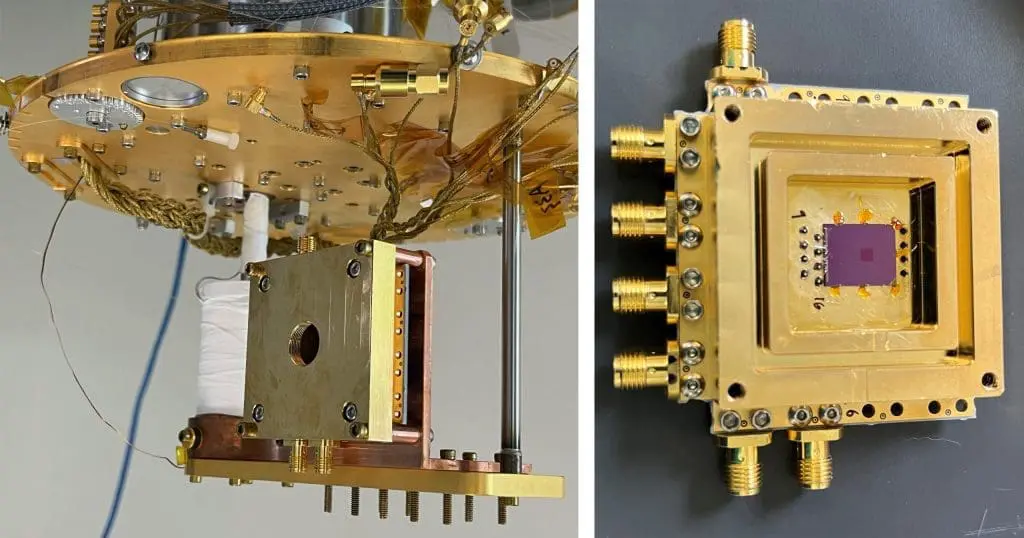
Future Plans to Optimize SMSPD Technology
Research efforts are focused on optimizing SMSPD arrays to function reliably in high-radiation environments, enhancing their practicality for real-world applications. This optimization is essential given the radiation-intensive conditions of particle accelerators.
Unlike SNSPDs, which are optimized for quantum communication with a focus on sensitivity and low noise, SMSPDs excel in high-energy settings, making them particularly suited for particle physics experiments that demand broader detection ranges.
More information
External Link: Click Here For More