

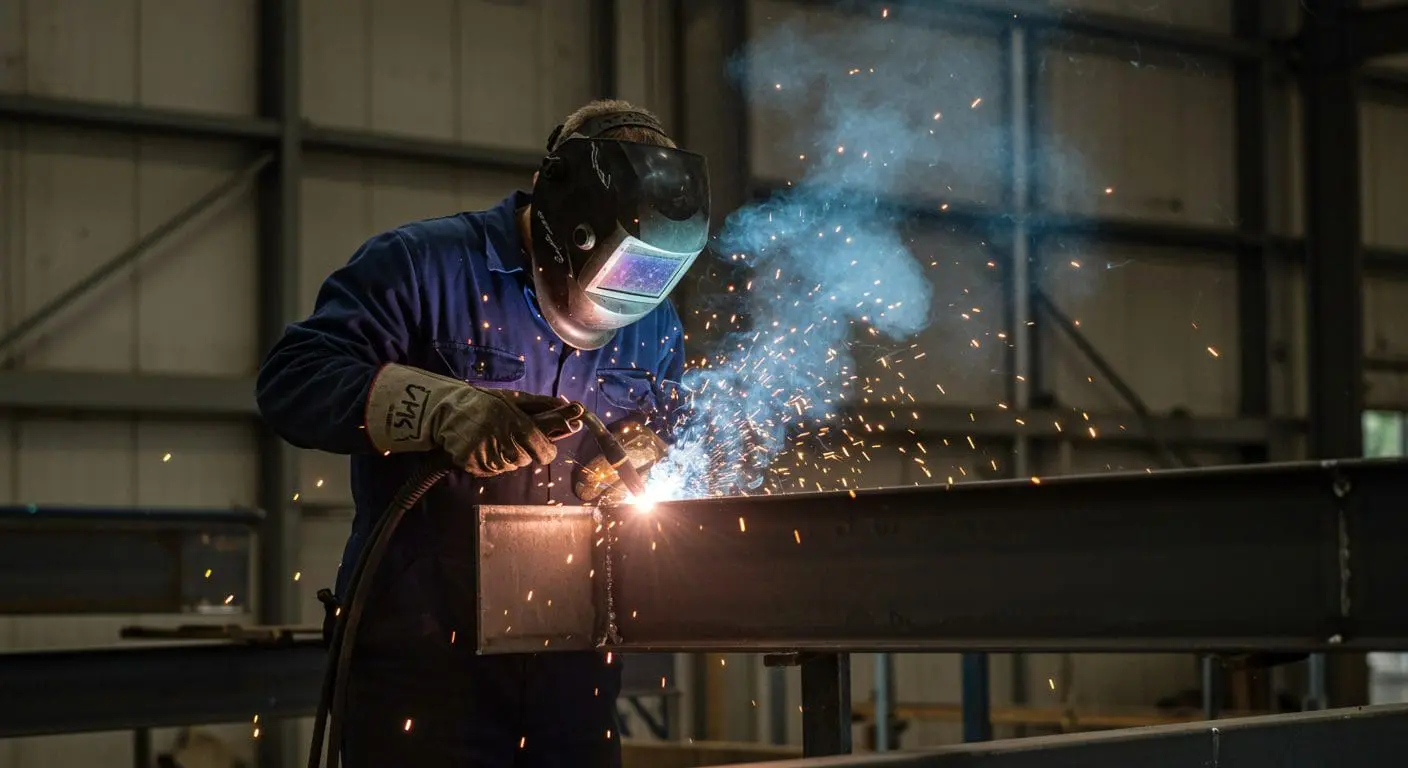
A study co-authored by an interdisciplinary team from the University of Notre Dame explores how multimodal large language models, including tools like ChatGPT, can enhance worker safety and product quality in manufacturing settings. Published in Information Fusion, the research examines AI’s potential to assess weld quality across industries such as RV, marine, aeronautical, and farming. Conducted with collaboration from educational and union partners in Northern Indiana, a region with a high concentration of manufacturing jobs, the study highlights discrepancies in AI performance when analyzing curated versus real-world weld images. Researchers emphasize the need for incorporating real-world data into AI training and recommend future studies focus on improving AI reasoning in unfamiliar domains. The federally funded project underscores the importance of fine-tuning AI models for industrial applications to ensure transparency, accountability, and effectiveness.
The integration of artificial intelligence (AI) into industrial processes has revolutionized quality control, particularly in welding applications. By leveraging large language models to analyze weld integrity through image analysis, industries can achieve higher precision and efficiency. However, the effectiveness of these AI tools is heavily dependent on the quality and diversity of their training data.
In recreational vehicle (RV) manufacturing, AI tools have shown promise in identifying welding defects more efficiently than traditional methods. Yet, current models rely heavily on curated datasets, highlighting the need for more diverse real-world training data to enhance accuracy in industrial settings.
For marine production, where durability and safety are paramount, precise welding is critical. While AI tools demonstrate potential in assessing weld quality, their performance remains constrained by reliance on curated images. Fine-tuning these models with industry-specific datasets could significantly improve reliability and applicability in marine environments.
In aeronautical production, the stakes are even higher due to the critical nature of aircraft safety. Here, AI tools can enhance welding quality but require more robust training data to meet the precision demands of aerospace manufacturing. Context-specific prompts and tailored approaches are identified as key strategies for optimizing model performance in this high-stakes industry.
Challenges in Fine-Tuning AI Models
The study reveals consistent patterns in model accuracy and reliability when evaluating real-world welds versus curated online images. Across all industries, models perform better with curated datasets, suggesting a need for more diverse and representative real-world training data to enhance accuracy in industrial settings.
In RV manufacturing, the research highlights the potential for AI tools to improve weld quality by identifying defects more efficiently than traditional methods. However, the findings indicate that models perform better with curated datasets, suggesting a need for more diverse and representative real-world training data to enhance accuracy in industrial settings.
For marine production, the study underscores the importance of precise welding to ensure durability and safety at sea. While AI tools demonstrate potential in assessing weld quality, their performance remains limited by reliance on curated images. The research advocates for fine-tuning models with industry-specific datasets to improve reliability and applicability in marine environments.
In aeronautical production, the stakes are even higher due to the critical nature of aircraft safety. The study finds that AI tools can significantly enhance welding quality but require more robust training data to match the precision demands of aerospace manufacturing. Context-specific prompts and tailored approaches are identified as key strategies for optimizing model performance in this high-stakes industry.
Recommendations for Future Research
The research concludes that while AI tools show promise across these sectors, their effectiveness is contingent upon access to diverse, real-world datasets and industry-specific fine-tuning. These findings emphasize the importance of continuous research and adaptation in AI technologies to meet the evolving needs of industrial welding applications.
By addressing these challenges and leveraging the potential of AI, industries can achieve higher levels of precision, efficiency, and safety in their welding processes.
More information
External Link: Click Here For More


