

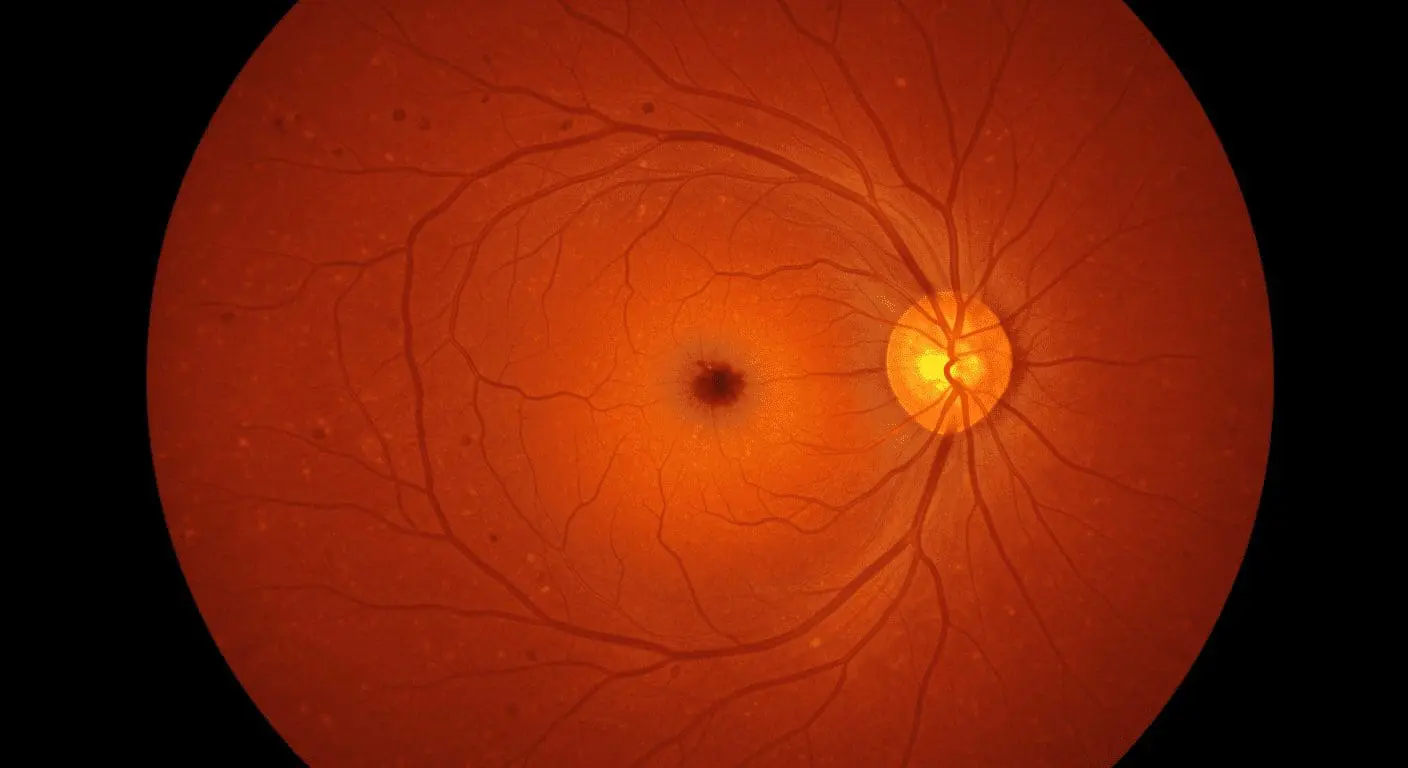
A recent study titled Opening the black box of deep learning by Han Yuan, Lican Kang, and Yong Li, published on April 6, 2025, demonstrates a significant alignment between artificial intelligence models and clinical expertise in diagnosing glaucoma through fundus images. The research validates, through rigorous statistical analysis across multiple datasets, that explainable AI techniques can reveal how neural networks focus on key anatomical features akin to human clinicians, thereby enhancing trust in AI-driven medical diagnostics.
The study investigates how neural networks make decisions in glaucoma classification by analyzing model focus areas using Class Activation Map (CAM) techniques. Four models (VGG-11, ResNet-18, DeiT-Tiny, Swin Transformer-Tiny) and five CAM methods were applied to five public datasets. Statistical tests revealed that models consistently focused more on relevant anatomical structures (optic cup, disk, vessels) than random areas, with a positive correlation between focus accuracy and predictive performance. This convergence between model decisions and clinical knowledge suggests potential for increased trust in AI-driven medical tools.
The Dawn of Deep Learning in Medical Imaging
Deep learning, a subset of artificial intelligence, has revolutionized how we analyze medical images. By mimicking the human brain’s neural networks, these algorithms can process vast amounts of data to identify patterns and anomalies that might escape even the most trained human eyes. This technology is particularly impactful in ophthalmology and radiology, where subtle changes in images can mean the difference between early detection and delayed treatment.
Glaucoma Detection: A New Frontier
One of the most notable advancements lies in the detection of glaucoma, a leading cause of irreversible blindness worldwide. Traditional methods rely on manual measurements of the optic disc and cup, which are time-consuming and prone to human error. Enter deep learning-based solutions that automate this process with remarkable precision.
For instance, researchers have developed multi-scale convolutional neural networks (CNNs) that analyze retinal fundus images to segment the optic disc and cup automatically. These models not only reduce the need for manual intervention but also improve accuracy by leveraging context-aware features. This innovation is a significant step forward in enabling early detection of glaucoma, thereby improving patient outcomes.
Pneumothorax Classification: Enhancing Clinical Decision-Making
Another area where deep learning has made strides is in pneumothorax classification, a critical condition requiring rapid diagnosis. By integrating clinical domain knowledge into AI explanations, researchers have developed models that not only classify pneumothorax with high accuracy but also provide interpretable results for clinicians.
This approach ensures that the decisions made by AI systems are transparent and aligned with medical expertise, fostering trust between healthcare providers and technology. Furthermore, leveraging anatomical constraints with uncertainty has allowed for more reliable segmentation of affected areas, enhancing the overall diagnostic process.
The Impact on Healthcare
These innovations underscore the potential of deep learning to address long-standing challenges in medical imaging. By reducing reliance on manual processes, these technologies not only improve efficiency but also enhance the consistency and reliability of diagnoses. Moreover, they pave the way for scalable solutions that can be applied across different healthcare settings, democratizing access to advanced diagnostic tools.
Looking Ahead: The Future of Deep Learning in Diagnostics
As deep learning continues to evolve, its applications in medical imaging are expected to expand further. Future directions include domain-specific pre-training approaches and human-in-the-loop machine learning systems, which integrate clinician feedback into the model development process. These advancements promise to create more robust and adaptable AI tools that can handle the complexities of real-world clinical environments.
🗞 Opening the black box of deep learning: Validating the statistical association between explainable artificial intelligence (XAI) and clinical domain knowledge in fundus image-based glaucoma diagnosis
🧠 DOI: https://doi.org/10.48550/arXiv.2504.04549


