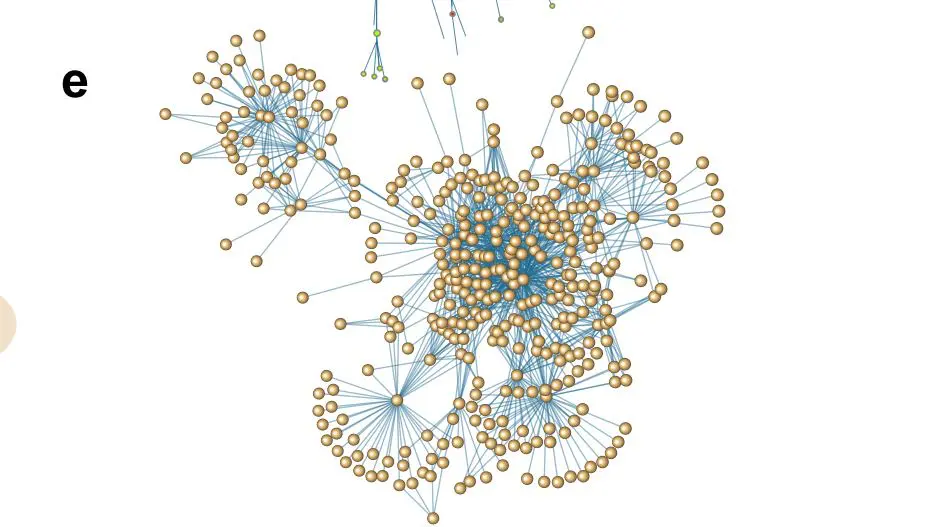
The evolution of software increasingly resembles a natural ecosystem, subject to pressures that favour both innovation and conformity, and a team led by Sergi Valverde from the Institute of Evolutionary Biology (CSIC-UPF), Blai Vidiella from the Theoretical and Experimental Ecology Station (CNRS), and Salva Duran-Nebreda from the Institute of Evolutionary Biology (CSIC-UPF) now investigates this phenomenon using principles from evolutionary ecology. Their work reveals how constraints, adaptation and imitation shape the development of software, influencing not only the technology itself but also the practices of those who create it. By combining computer simulations with detailed case studies, the researchers demonstrate that software evolves through a complex interplay of forces, mirroring patterns observed in biological systems. Crucially, this research highlights how the rise of artificial intelligence, particularly large language models, introduces new evolutionary pressures that could potentially limit diversity and stifle future innovation, offering valuable insight into the future of both software development and broader cultural change.
evolutionary trajectories of these socio-technical systems. The approach integrates agent-based modelling and case studies, drawing on complex network analysis and evolutionary theory to explore how software evolves under the competing forces of novelty generation and imitation. By examining the evolution of programming languages and their impact on developer practices, the research illustrates how technological artefacts co-evolve with and shape societal norms, cultural dynamics, and human interactions. This ecological perspective also informs the analysis of the emerging role of AI-driven development tools in software evolution. Large language models (LLMs) provide unprecedented access.
Software Evolution, Ecosystems and AI Disruption
This extensive paper explores the evolution of software through the lens of evolutionary biology, arguing that software, like living organisms, undergoes processes of adaptation, selection, and diversification, leading to complex ecosystems of code. The research reveals that software development functions as an ecological process, where code components compete, cooperate, and evolve over time, with open-source projects serving as particularly fertile grounds for this evolution. The authors observe patterns of rapid change, similar to punctuated equilibrium seen in biological evolution, and identify major transitions in information technology analogous to key evolutionary leaps. The study investigated the prevalence of specific network motifs, recurring patterns in software code, suggesting these motifs represent fundamental building blocks of complex systems, and highlight the crucial role of modularity for adaptability and resilience.
The research explores the balance between innovation and copying, noting that while copying accelerates development, it can also lead to bloat and redundancy. The paper emphasizes the potentially disruptive impact of LLMs like ChatGPT on software development, as these models can automate code generation, raising concerns about originality, quality, and the future role of human developers. The research demonstrates a shift in open-source activity from being driven by internal needs to being influenced by external factors, potentially impacting the direction of innovation. In essence, the paper argues that understanding software evolution requires applying principles from evolutionary biology. It warns that while AI offers exciting possibilities, it also poses significant challenges that need to be addressed to ensure the continued health and innovation of the software ecosystem. Key takeaways include that software development is a complex evolutionary process, open-source projects provide a valuable laboratory for studying this evolution, AI, particularly LLMs, is a disruptive force that will reshape the software landscape, and careful consideration is needed to mitigate the risks and harness the benefits of AI in software development.
Software Evolution Follows Discrete Beta Distribution
This work investigates the evolutionary ecology of software, revealing how interplay between constraints, innovation, and selection shapes its development. Researchers integrated agent-based modelling with case studies, employing complex network analysis and evolutionary theory to understand software evolution under competing pressures. Analysis of programming language evolution demonstrates how artifacts co-evolve with societal norms and human interactions, informing understanding of the role of AI-driven development tools. The study reveals that the popularity of coexisting programming languages follows a discrete generalized beta distribution, linking language frequency to its rank.
Fitting parameters for this distribution demonstrate a model where reinforcement and removal of cultural variants drive software diversity, creating steep, long-tailed popularity distributions when reinforcement dominates. Researchers also developed a model based on competition between languages, where growth rate depends on current popularity share. Simulations demonstrate convergence towards a number of languages shared by all programmers, defining the size of the niche. Further work reveals how cooperation influences software diversity, linking punctuated evolution to positive frequency-dependent selection. The minimal size of an adaptive step reveals the barriers to adoption associated with conformity bias and imitation.
Software Evolution Mirrors Ecological Dynamics
This research demonstrates that software evolution closely resembles ecological processes, shaped by constraints, tinkering, and selective pressures akin to those found in natural systems. By integrating agent-based modelling with case studies, the investigation reveals how software components interact, exhibiting patterns of cooperation, competition, and symbiosis that drive innovation and adaptation. The findings highlight the importance of long-term memory effects in software, where past development decisions significantly influence future modifications and contribute to the stability or adaptation of entire ecosystems. Importantly, the study identifies a potential disruptive influence of large language models on this established dynamic.
While LLMs offer unprecedented access to information and accelerate development, their widespread adoption introduces new selective pressures that may reduce the incentives for deep technical exploration and collaborative problem-solving. The research suggests this could lead to a narrowing of software diversity, as developers increasingly rely on AI-suggested implementations and imitate established conventions, potentially hindering future innovation. The authors acknowledge that further investigation is needed to fully understand the long-term consequences of this shift and to determine whether mechanisms can be developed to sustain software diversity in the age of AI-mediated development.
🗞 The Evolutionary Ecology of Software: Constraints, Innovation, and the AI Disruption
🧠 ArXiv: https://arxiv.org/abs/2512.02953