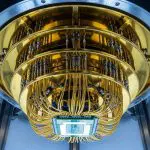
The Quantum Flagship, a European initiative, has unveiled a new roadmap to position Europe as the world’s leading ‘Quantum Valley’. The strategy, coordinated by the French Atomic Energy and Alternative Energies Commission (CEA), aims to end reliance on outside nations for quantum technology development. The roadmap includes plans to develop quantum computing and simulator devices, establish quantum communication, and expand Europe’s quantum workforce. Salvatore Cinà, coordinator of the Strategic Research and Industry Agenda (SRIA), emphasized the potential of quantum technologies for tackling societal challenges. The collective investment in European quantum initiatives has exceeded €5.7 billion over the past five years.
Europe’s Quantum Ambitions: A Strategic Roadmap
The Quantum Flagship, a European initiative, has unveiled a new strategic roadmap to establish Europe as a global leader in quantum technologies. The roadmap, titled “Strategic Research and Industry Agenda SRIA 2030: Roadmap and Quantum Ambitions over this Decade,” was presented to policymakers and representatives at the European Commission in Brussels. The strategy outlines Europe’s plan to build an autonomous ecosystem for scientific and industrial applications in the quantum space, focusing on economic and technological sovereignty.
The roadmap aims to position the European Union as a global player in the transformative field of quantum technologies. It envisions the EU as the world’s first ‘Quantum Valley,’ akin to Silicon Valley, but focused on quantum technologies. This vision is backed by the EU’s innovation hubs, research centres, startups, a ready workforce, and multi-billion Euro investments. The roadmap follows the European Declaration on Quantum Technologies made in December 2023, with the ultimate goal of making Europe the leading global region for quantum excellence and innovation.
Quantum Technologies: Computing, Communication, and the Quantum Internet
The SRIA provides a clear strategy for developing quantum computing and simulator devices that can outperform or accelerate existing classical computers to solve specific problems relevant to industry, science, and technologies. It also outlines a strategy for establishing quantum communication, with short-term plans to enhance the network with advanced quantum cryptography protocols, ensuring security based on the laws of quantum physics.
The long-term goal is to realize the quantum internet – a network connecting different quantum devices, from computers and simulators to sensors – at a European scale. If the recommendations in the roadmap are met, Europe could be at the forefront of the global race to improve the performance and maturity of quantum technologies by 2030.
Expanding the Quantum Community and Industry Integration
The Strategic Agenda seeks to bolster Europe’s quantum workforce by broadening and strengthening the quantum community. The roadmap recommends actively championing equality, diversity, and inclusion to ensure a wide range of skilled professionals can enter Europe’s quantum workforce. Beyond the quantum community, the SRIA suggests embracing other industrial and academic sectors looking to integrate quantum technologies into their products and services.
The high-performance computing (HPC) industry, the communications industry, and the semiconductor industry are all poised to harness quantum technologies. This integration will improve computational power and capabilities to address fundamental problems for society, like drug discovery, new materials for energy generation and storage, and optimise logistics and transport.
Collaboration and Investments in Quantum Technologies
The SRIA stresses the need to continue building joint efforts and financial support at the EU level beyond individual EU Member States’ capabilities. A wave of quantum initiatives has already seen EU27 countries channelling substantial resources via the national quantum initiatives. The collective investment in these endeavours has now exceeded €5.7 billion over the past five years. The SRIA integrates and aligns all these initiatives within a coherent strategy for Europe.