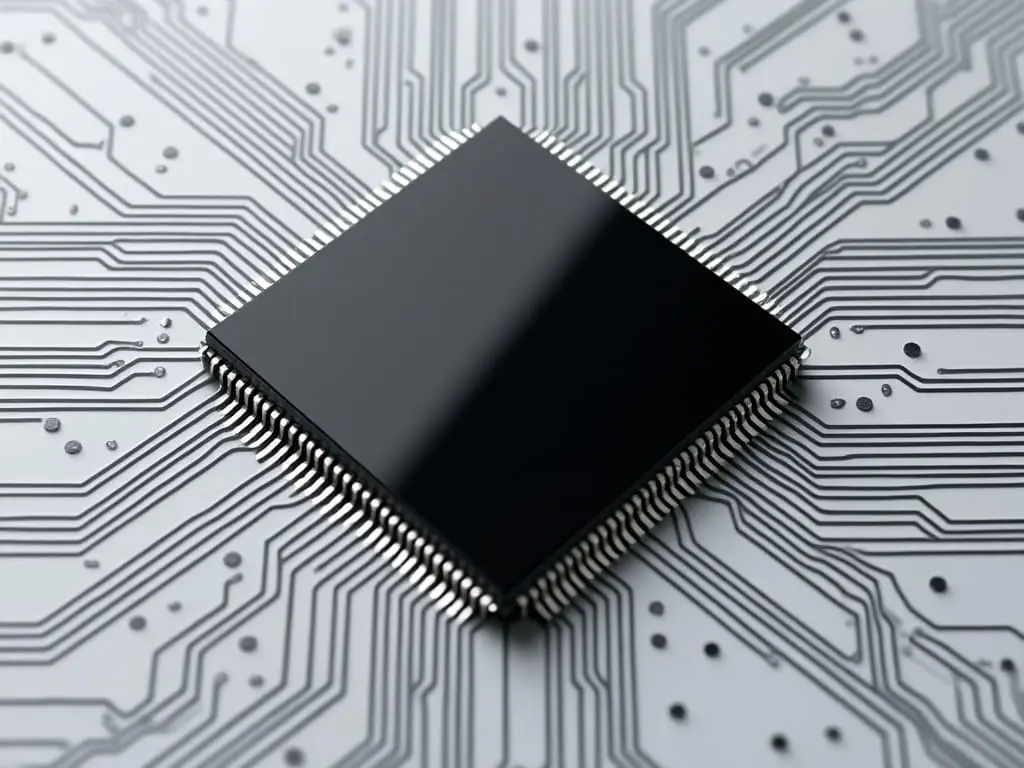
Dr. Florian Kaiser, Head of the Quantum Materials group at the Luxembourg Institute of Science and Technology, has been awarded a prestigious ERC Consolidator Grant worth €3 million to fund his research project, “Q-Chip”. The project aims to demonstrate that quantum processors and quantum memories can be operated simultaneously on a single chip, overcoming existing scalability challenges in quantum technologies.
This integration will enable superior performance and minimal energy consumption, aligning with the future of quantum technology: scalable, efficient, and practical systems. Kaiser’s team will build on their groundbreaking research on silicon carbide, which has shown potential to improve scalability in quantum computing significantly.
The ultimate goal is to develop a prototype miming Apple’s latest M-line chips, incorporating both processor and memory modules on the same chip. This project can potentially drive a major shift towards reliable, affordable, and widely accessible quantum technologies, with Europe well-positioned to lead this transformation given its dominance in the global silicon carbide industry.
Advancing Quantum Technology: Florian Kaiser’s ERC Consolidator Grant
Dr. Florian Kaiser, Head of the Quantum Materials group at the Luxembourg Institute of Science and Technology (LIST), has been awarded a prestigious ERC Consolidator Grant worth €3 million over a five-year period. This grant will fund the research project, “Q-Chip”, which aims to demonstrate that quantum processors and quantum memories can be operated simultaneously on a single chip, thus overcoming existing scalability challenges in quantum technologies.
The Q-Chip project focuses on developing a scalable semiconductor integration of quantum technology, addressing a major question in modern quantum technology: whether individual demonstration experiments can be combined to create practical, real-world applications. Theoretical studies suggest that linking quantum memories and processors – such as on a single chip – could allow even small systems to deliver significant quantum advantages. This will be immediately relevant for setting up a quantum internet, and, at a later stage, quantum computers.
The ultimate goal of the project is to develop a prototype that mimics Apple’s latest M-line chips, incorporating both processor and memory modules on the same chip. This integration will enable superior performance and minimal energy consumption, aligning with the future of quantum technology: scalable, efficient, and practical systems. Dr. Kaiser emphasized that the immediate aim of the project is to create a proof of concept for scalable quantum integration.
Overcoming Scalability Challenges in Quantum Technologies
One of the primary challenges in quantum technologies is scalability. Currently, individual demonstration experiments are limited in their ability to be combined into practical applications. The Q-Chip project aims to overcome this challenge by developing a single chip that can operate both quantum processors and quantum memories simultaneously. This integration will enable superior performance and minimal energy consumption, making it possible to create scalable, efficient, and practical systems.
The project’s focus on semiconductor integration is crucial in addressing the scalability challenge. By leveraging existing research in silicon carbide, the team aims to develop a prototype that can be widely adopted and integrated into various applications. The ultimate goal of creating a fully characterized prototype will provide a roadmap for subsequent developments, driving a major shift towards reliable, affordable, and widely accessible quantum technologies.
Leveraging Silicon Carbide Research for Scalable Quantum Computing
The Q-Chip project builds on groundbreaking research led by Dr. Kaiser and his team, which explores silicon carbide’s potential to significantly improve scalability in quantum computing. Silicon carbide is an attractive material for quantum computing due to its unique properties, such as high thermal conductivity and radiation hardness.
By leveraging this existing research, the Q-Chip project can accelerate the development of scalable quantum technologies. Europe is uniquely positioned to lead this transformation, as it dominates the global silicon carbide industry with over 70% market share. The project’s focus on silicon carbide integration will enable the creation of practical, real-world applications that can be widely adopted and integrated into various industries.
The Q-Chip project is anticipated to commence around April next year and span a total of five years. During this period, the team aims to develop a fully characterized prototype and provide a roadmap for subsequent developments. The ultimate goal is to drive a major shift towards reliable, affordable, and widely accessible quantum technologies.
The project’s outcome will have significant implications for various industries, including computing, communication, and cryptography. By developing a scalable semiconductor integration of quantum technology, the Q-Chip project can pave the way for widespread adoption of quantum technologies, enabling superior performance and minimal energy consumption in various applications.
External Link: Click Here For More