Two young researchers, Dr. Jun Huang and Dr. Taner Esat from Research Center Jülich, have each received an ERC Starting Grant worth up to 1.5 million euros for their innovative projects in basic research. Dr. Huang’s MESO-CAT project aims to close a critical knowledge gap by examining the overlapping electrical double layers of worn nanoparticle catalysts, which could enable great progress in electrochemical energy conversion and accelerate the transition to a sustainable, fossil-free energy system.
Meanwhile, Dr. Esat’s QuSINT project focuses on developing a mobile quantum system for quantum sensors and information processing at the atomic level, which could form the basis for the next generation of quantum technologies and enable decisive advances in material characterization as well as the diagnosis and implementation of new quantum computers. The European Research Council (ERC) founded by the EU in 2007 has provided funding for these pioneering projects across Europe.
MESO-CAT Project: Unlocking the Secrets of Electrical Double Layers
Dr. Jun Huang’s MESO-CAT project aims to close a critical knowledge gap in our understanding of electrical double layers (EDLs) around tiny nanoparticles. EDLs are crucial for electrochemical energy conversion, but their behavior becomes increasingly complex when they overlap with those of the carrier material. By examining these overlapping EDLs, Dr. Huang’s research could enable significant progress in electrochemical energy conversion and accelerate our transition to a sustainable, fossil-free energy system.

QuSINT Project: Mobile Quantum Systems for Next-Generation Technologies
Dr. Taner Esat’s QuSINT project focuses on developing a mobile quantum system that can be introduced to other objects, such as molecules or qubits, at the atomic level. This innovative approach could form the basis for next-generation quantum technologies, enabling decisive advances in material characterization and the diagnosis and implementation of new quantum computers. The mobile quantum system could also measure electrical and magnetic properties of individual molecules with high precision and atomic resolution.
ERC Starting Grants: Empowering Young Researchers
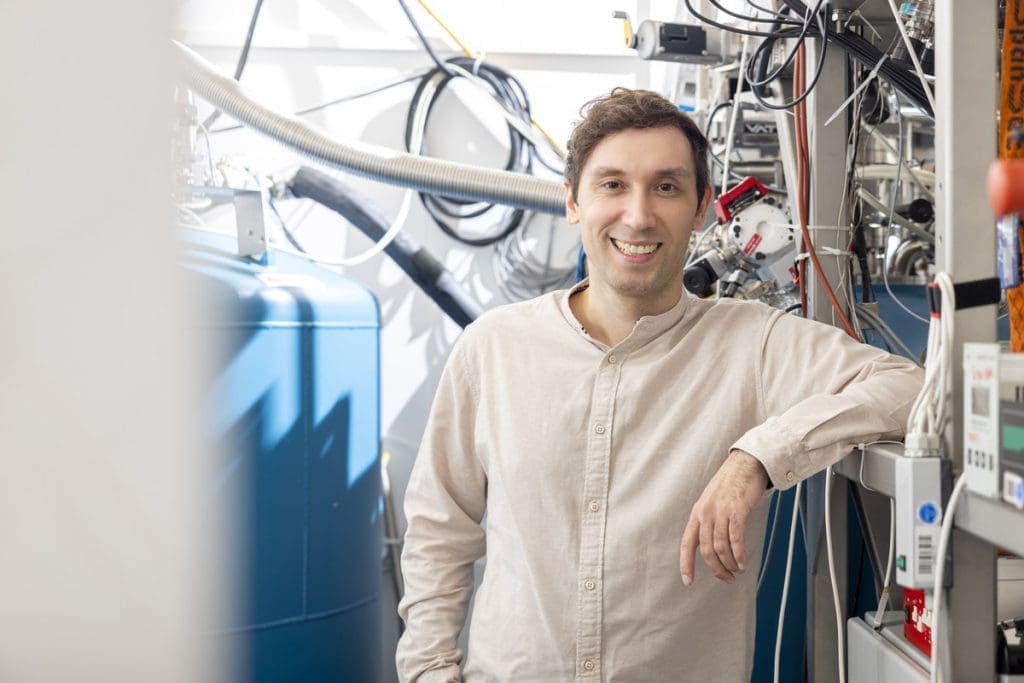
Both Dr. Huang and Dr. Esat have received ERC Starting Grants, which provide funding for young researchers to pursue innovative projects across Europe. The European Research Council (ERC) was founded in 2007 to support top researchers at various career levels, with a budget of over €16 billion for the period 2021-2027.
These two projects demonstrate the potential of cutting-edge research to drive progress in critical areas like energy conversion and quantum technology. As a science journalist, I’m excited to share these stories and highlight the importance of supporting innovative research that can shape our future.
External Link: Click Here For More