Researchers at ETH Zurich have developed a new technology that uses DNA to secure passwords against quantum computers. The technology, led by Professor Robert Grass and doctoral student Anne Lüscher, uses a pool of one hundred million different DNA molecules to create a cryptographic one-way function. This function can only convert an input value to an output value, not the other way around, making it secure against quantum computing. The technology can also be used to confirm the authenticity of valuable objects like art. ETH Zurich has applied for a patent and plans to bring the technology to market.
DNA-Based Cryptography: A New Frontier in Security and Authentication
Researchers at ETH Zurich have developed a novel cryptographic one-way function that leverages the unique properties of DNA molecules. This innovative approach to cryptography could provide a robust defense against the potential threat posed by quantum computers, which are predicted to be capable of cracking today’s passwords within the next decade.
One-way functions are a cornerstone of cryptography, transforming an input value into an output value in such a way that the original input cannot be deduced from the output. This is the principle that allows passwords to be checked for validity without the need for the password itself to be transmitted or stored. However, the advent of quantum computing could potentially undermine this security measure, as quantum algorithms may be able to reverse-engineer the input from the output.
The ETH Zurich team’s solution to this problem is to store data as a sequence of nucleotides, the chemical building blocks of DNA, rather than using traditional arithmetic operations. This system is based on true randomness, with the input and output values physically linked, making it impossible to deduce the input from the output. Furthermore, as this is a physical system rather than a digital one, it cannot be decoded by an algorithm, even one running on a quantum computer.
Biochemical One-Way Function: The Mechanism
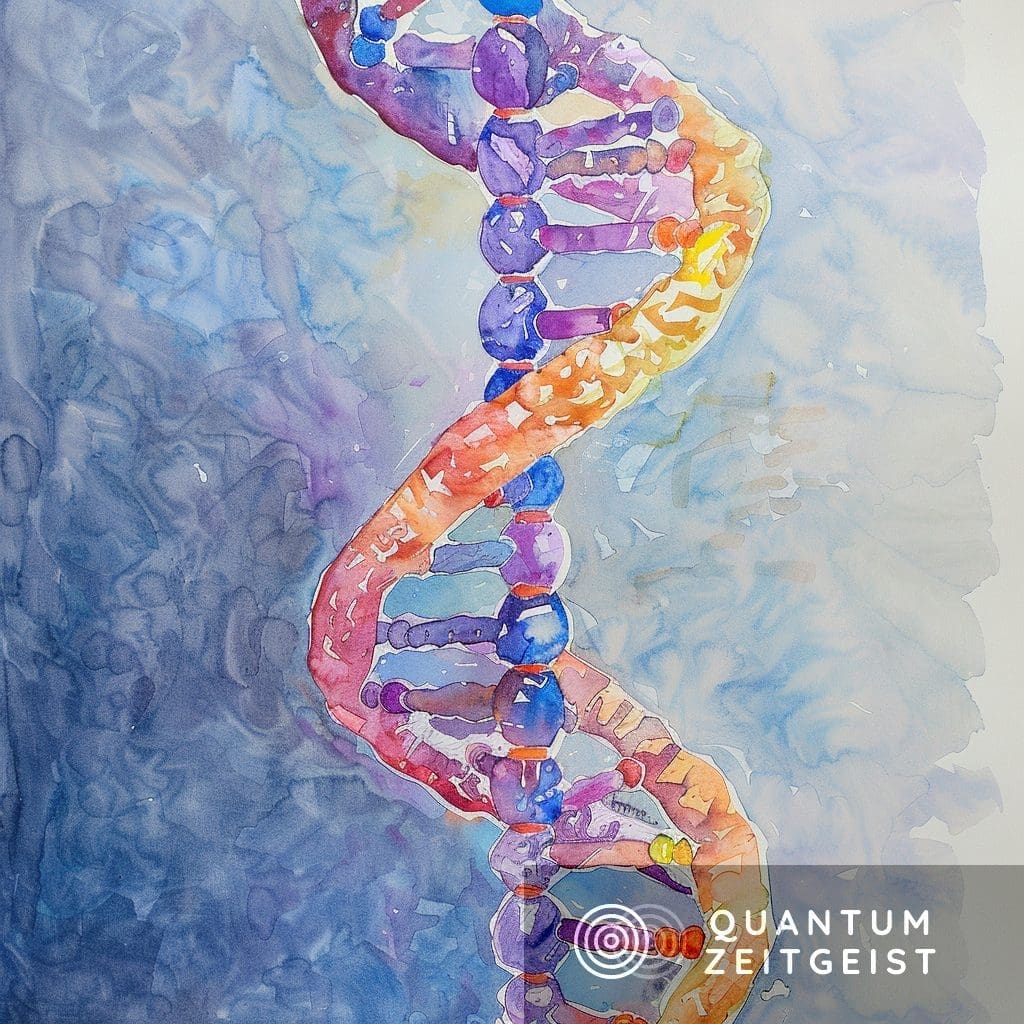
The new biochemical one-way function is based on a pool of one hundred million different DNA molecules. Each molecule contains two segments featuring a random sequence of nucleotides: one segment for the input value and one for the output value. The pool can be divided into several identical pools, each containing the same random DNA molecules. These pools can be located in different places or built into objects.
The key to this security system is a short sequence of nucleotides, which can be tested using the polymerase chain reaction (PCR). The PCR amplifies the output value located on the same molecule as the matching input value, and DNA sequencing is used to make the output value readable. Despite the complexity of the process, producing DNA molecules with built-in randomness is relatively cheap and easy, with the production costs for a DNA pool being less than 1 Swiss franc.
Applications: Art Authentication and Supply Chain Security
This new technology has potential applications in a variety of fields. One of the most promising is the authentication of valuable objects such as works of art. For example, an artist could mark multiple copies of a piece with the DNA pool, and the authenticity of these artworks could later be confirmed through a DNA test. This technology could also be used to link digital assets, such as non-fungible tokens (NFTs), to physical objects.
Another potential application is in the tracking of industrial goods or raw materials along supply chains. The aviation industry, for instance, could use this technology to provide complete proof that it uses only original components. Similarly, it could be used to verify the authenticity of original medicines or cosmetics.
Future Developments and Challenges
While this new technology holds great promise, there are still challenges to be overcome before it can be widely adopted. The method requires specialized laboratory infrastructure, making it currently most suitable for verifying highly sensitive goods or for access to buildings with restricted access. It is unlikely to be an option for the broader public to check passwords until DNA sequencing becomes easier.
The researchers at ETH Zurich have applied for a patent on this new technology and are now working to optimize and refine it for market use. As the technology continues to evolve, it could open up new possibilities for secure authentication and supply chain tracking, providing a robust defense against the potential threats posed by quantum computing.
External Link: Click Here For More