

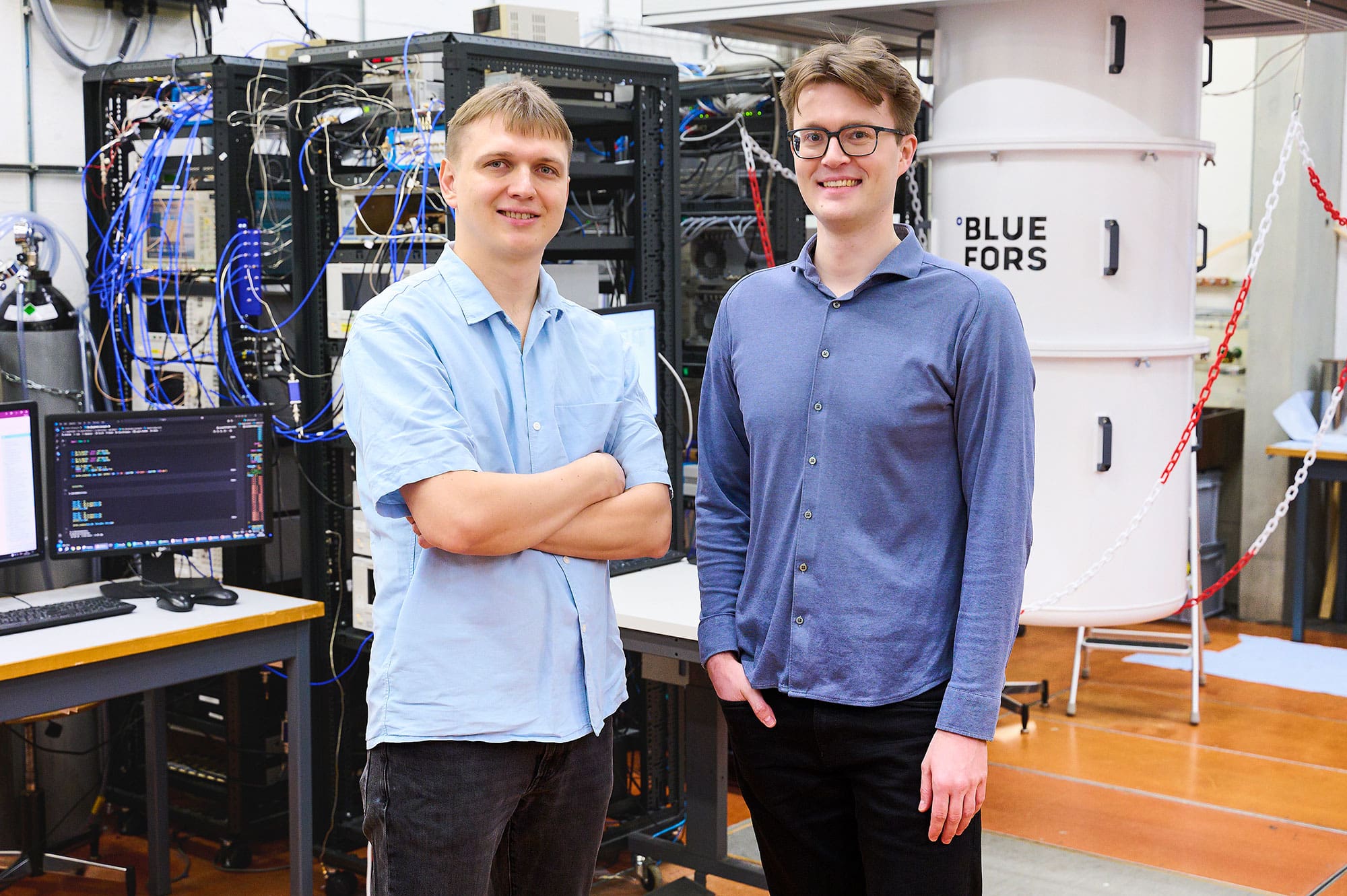
Researchers at ETH Zurich and the Paul Scherrer Institute have achieved a breakthrough in quantum computing, successfully performing what amounts to “surgery” on qubits – executing operations on logical qubits while simultaneously correcting for bit-flip errors. Published in Nature Physics on January 30, 2026, this advancement tackles a critical hurdle in building stable and reliable quantum computers. The team, led by D-PHYS Professor Andreas Wallraff, demonstrated this technique using superconducting qubits, paving the way for more complex quantum algorithms. “With qubits, things are a lot more complicated,” explains Dr. Ilya Besedin, postdoctoral researcher in Wallraff’s group and co-leading author of the study, highlighting the challenges of maintaining quantum information without the simple copying methods used in classical computing.
Superconducting Qubit Error Correction with Surface Codes
Unlike classical bits, qubits are prone to decoherence, causing unpredictable shifts from ‘0’ to ‘1’ or alterations in superposition states, necessitating robust error correction protocols. Conventional error correction involves encoding a logical qubit using multiple physical qubits and constant monitoring, but performing operations on these logical qubits presents a new challenge. Simply copying quantum information is impossible; instead, researchers utilize entangled states. The team employed surface codes, where a qubit’s state is distributed across several physical data qubits, and error correction is achieved by repeatedly measuring “stabilizers” – qubits that reveal changes in bit value or phase.
Data qubits themselves remain unread, preserving the error-corrected state. The breakthrough lies in addressing the limitations of fixed qubit arrangements in two-dimensional arrays, where only nearby qubits can interact. “Performing a logical operation in this fault-tolerant way would be relatively easy if we could move our qubits around and connect them arbitrarily to each other,” explains PhD student Michael Kerschbaum. Lattice surgery offers a solution by effectively “splitting” a single logical qubit into two entangled qubits.
In the experiment, a logical qubit encoded by seventeen physical qubits underwent stabilizer readout every 1.66 microseconds for error correction, before three data qubits were read out to divide the square arrangement. “The end result of this operation was that we had two logical qubits entangled with each other,” explains Besedin. This initial surgery, while not a complete controlled-NOT gate, lays the groundwork for constructing more complex operations. “One could say that the lattice surgery operation is the operation, and all the others can be constructed from it,” Besedin states. While 41 physical qubits are needed to stabilize the split against phase-flip errors, this demonstration represents a significant advance, marking the first successful lattice surgery on superconducting qubits.
Lattice Surgery Enables Logical Qubit Operations
Unlike classical computing, maintaining qubit stability is exceptionally challenging; a qubit’s state can unpredictably shift from ‘0’ to ‘1’ or experience phase changes. The breakthrough centers on manipulating the physical arrangement of qubits without compromising the integrity of the encoded quantum information. “Lattice surgery is a way of dealing with this constraint,” explains PhD student Michael Kerschbaum, referencing the fixed spatial arrangement of qubits in two-dimensional arrays.
By reading out three data qubits along the middle of the square and halting readout of X-type stabilizers, the team effectively split the initial square into two entangled logical qubits, all while continuing to correct for bit-flip errors. This splitting operation, performed every 1.66 microseconds, isn’t a complete quantum gate in itself, but serves as a fundamental building block. The team emphasizes this is the first demonstration of lattice surgery on superconducting qubits, though further development is needed; stabilizing the operation against phase flips would require 41 physical qubits. Nevertheless, this advancement represents a significant step toward constructing quantum computers with the thousands of qubits necessary for complex calculations, paving the way for realizing the technology’s immense potential.
One could say that the lattice surgery operation is the operation, and all the others can be constructed from it.
Demonstration of Bit-Flip Correction During Entanglement
Researchers have achieved a significant milestone in quantum computing by successfully demonstrating error correction during the entanglement of superconducting qubits, a crucial step towards building stable and scalable quantum processors. Instead of directly reading the data qubits—which would collapse the fragile quantum state—the team focused on measuring “stabilizers,” extra qubits that reveal errors in bit value or phase. The experiment began with a single logical qubit encoded in seventeen physical qubits, arranged in a square configuration, with stabilizers read out every 1.66 microseconds to correct errors.
Crucially, bit-flip errors were actively corrected throughout this process, and error correction continued on the resulting halves after the split. While not yet a full quantum controlled-NOT gate, this splitting operation forms a foundational building block.


