

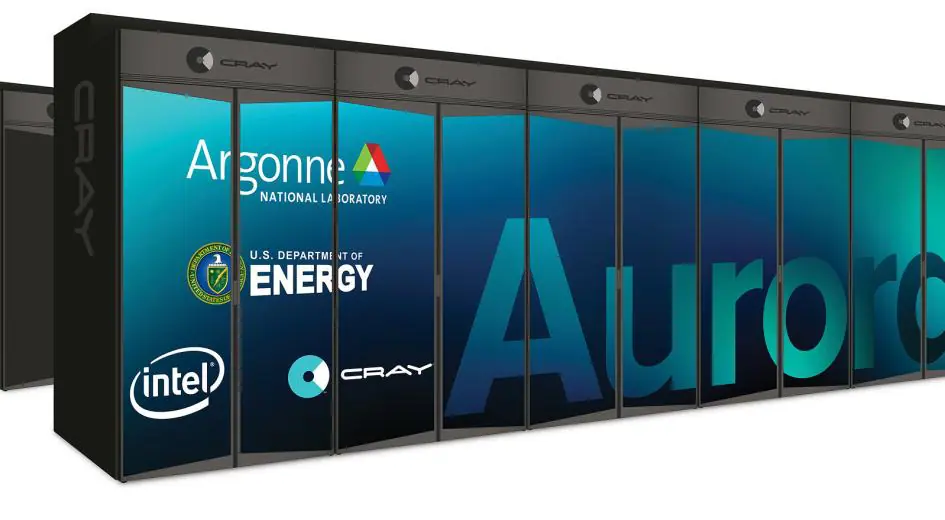
Sarah Read, an associate professor at Portland State University, is leading a project to demystify one of the world’s most powerful supercomputers, Aurora, with a grant from the National Science Foundation. Located at the Argonne Leadership Computing Facility near Chicago, Aurora is capable of performing over a quintillion calculations per second, making it one of the first exascale supercomputers in the world.
Read is teaming up with Jordan Frith from Clemson University to give the public a better understanding of this powerful machine, which will tackle complex scientific problems such as designing more efficient airplanes, investigating the mysteries of the cosmos, and modeling the impacts of climate change. Through observational and interview research, they will explore how Aurora works, what scientists do at the supercomputing center, and why the US needs the fastest supercomputers. This project aims to simplify complex topics like supercomputers and provide opportunities for students to work with the US National Laboratory system.
Unveiling the Power of Exascale Supercomputers: Demystifying Aurora
The world of supercomputing is often shrouded in mystery, leaving many to wonder what these powerful machines do and why they matter. To shed light on this complex topic, an English professor at Portland State University, Sarah Read, has teamed up with Clemson University’s Jordan Frith to give the public a better understanding of Aurora, one of the world’s most powerful public supercomputers.
The Capabilities of Exascale Supercomputing
Aurora, based at the Argonne Leadership Computing Facility (ALCF) near Chicago, is an exascale supercomputer capable of performing over a quintillion calculations per second. This means it can tackle a wide range of scientific problems, including designing more efficient airplanes, investigating the mysteries of the cosmos, modeling the impacts of climate change, and accelerating the discovery of new materials. The sheer scale of its processing power makes it an invaluable tool for scientists seeking to advance our understanding of the world.
Aurora’s capabilities are not limited to these examples; its exascale computing power can be applied to various fields, from medicine to finance. By harnessing this immense processing power, researchers can simulate complex systems, analyze vast amounts of data, and make groundbreaking discoveries that can transform industries and improve lives.
The Role of Technical Writing in Supercomputing
Technical writing plays a crucial role in demystifying supercomputers like Aurora. Read’s research builds on her previous work at the ALCF, where she explored how technical writing can simplify complex topics like supercomputing. Her findings highlighted the importance of user documentation in supporting scientists as they prepare their projects to run on the supercomputer.
User documentation is particularly critical when working with cutting-edge technology like Aurora, where the complexity and constant evolution of the system require clear guidance for users. By examining the experiences of users creating and utilizing this documentation, Read and Frith’s research will provide valuable insights into the challenges and uncertainties of using a supercomputer at the bleeding edge.
The Everyday Practices of Supercomputing
The first phase of Read and Frith’s research will delve into the everyday practices of supercomputing, examining how big science projects are used and maintained through the work of scientists, operations staff, and technical documentation processes. This phase will provide a nuanced understanding of the intricate relationships between these stakeholders and the supercomputer.
By conducting observational and interview research with individuals involved in Aurora’s development and operation, Read and Frith will uncover the intricacies of supercomputing and how it shapes the work of researchers. This research will also explore how the user documentation supports scientists as they navigate the complexities of working with a machine like Aurora.
The Global Competition for Supercomputing Leadership
The second phase of the research will move into higher-level examinations of how the global competition for supercomputing leadership has been shaped by, and also shapes, the U.S.’s identity as a leader in scientific and technological advancement. This phase will investigate how exascale computing changes possibilities for science within the context of the dynamic geopolitical race for supercomputing power.
Read’s research question – “How does exascale computing change possibilities for science within the context of the dynamic geopolitical race for supercomputing power?” – gets to the heart of the matter. By exploring this question, Read and Frith will provide a deeper understanding of the implications of supercomputing on the global stage and how it influences the U.S.’s position as a leader in scientific and technological advancement.
Opportunities for Students and the Future of Supercomputing
The grant will provide opportunities for both undergraduate and graduate students at PSU and Clemson to work with the U.S. National Laboratory system and learn about the world of public supercomputing. This collaboration will not only enrich the research but also equip the next generation of scientists, engineers, and technical writers with the skills and knowledge necessary to harness the power of exascale supercomputers like Aurora.
As the world continues to grapple with complex problems that require immense processing power, the importance of demystifying supercomputing cannot be overstated. Read and Frith’s research will contribute significantly to our understanding of these machines and their potential to transform various fields. By shedding light on the capabilities and implications of exascale supercomputers like Aurora, we can unlock new possibilities for science, innovation, and progress.
External Link: Click Here For More


