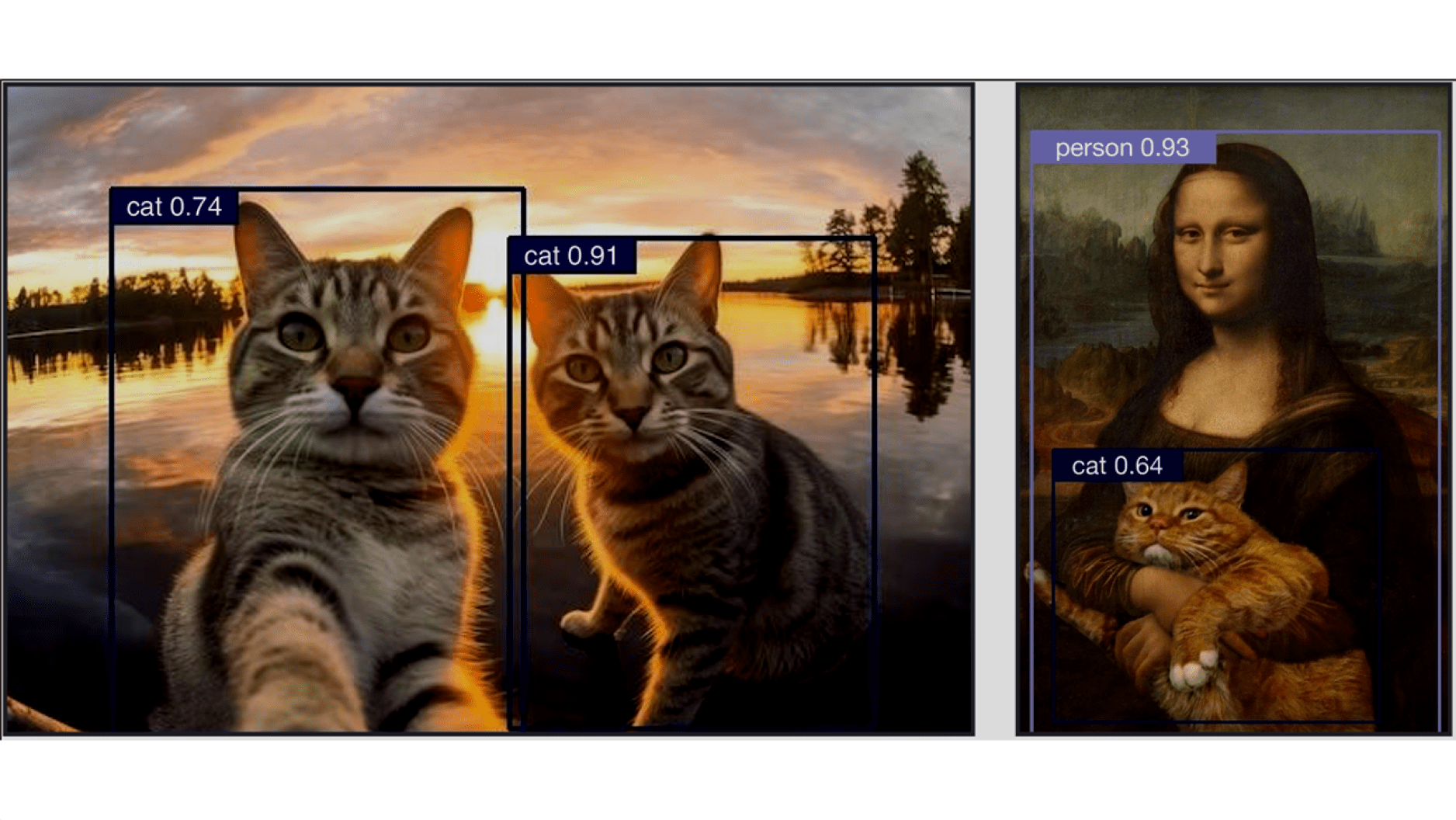
Researchers Austin Ebel, Karthik Garimella, and Brandon Reagen have developed Orion, a novel framework enabling fully homomorphic encryption (FHE) in deep learning, allowing AI models to operate on encrypted data without decryption.
Published on arXiv and set to be presented at the 2025 ACM International Conference on Architectural Support for Programming Languages and Operating Systems, Orion addresses challenges in computational overhead and neural network adaptation for FHE, achieving a 2.38x speedup over existing methods on ResNet-20 and demonstrating high-resolution object detection with YOLO-v1, a model 500 times larger than ResNet-20.
The framework’s lightweight design lowers the barrier to entry for implementing FHE in real-world applications, benefiting privacy-sensitive industries like healthcare, finance, and cybersecurity. By enabling confidential data processing without compromising user privacy, Orion advances practical deep learning applications while maintaining security.
Encryption Breakthrough in Artificial Intelligence
Researchers have developed a novel framework called Orion that enables fully homomorphic encryption (FHE) in deep learning models. This marks a significant advancement in privacy-preserving AI. FHE allows computations on encrypted data without decryption, enhancing data security.
Orion addresses the challenges faced by FHE in deep learning, such as high computational overhead and technical complexities. It automates the conversion of PyTorch models into efficient FHE programs, optimizing data structure and streamlining encryption processes to reduce noise accumulation.
The framework demonstrates notable performance improvements, achieving a 2.38x speedup on ResNet-20 and successfully performing high-resolution object detection with YOLO-v1, which is significantly larger than previous models. This showcases Orion’s capability in handling real-world AI tasks effectively.
Orion’s applications span industries like healthcare, finance, and cybersecurity, enabling secure AI operations without compromising sensitive data. Its lightweight design and accessibility lower the barrier to entry for developers, making it easier to integrate into various systems.
The researchers have open-sourced Orion, making it freely available to developers worldwide. This initiative promotes collaboration and innovation within the AI community, allowing researchers and developers to build upon its foundation for tailored solutions across industries.
Future Implications for Data Security
Orion addresses the challenge of integrating FHE into deep learning models by automating the conversion process from PyTorch models to efficient FHE programs. This automation reduces complexity and makes it more accessible for developers without extensive expertise in cryptographic methods.
The framework’s optimization techniques focus on minimizing computational overhead and noise accumulation during encrypted computations, ensuring accuracy even with large-scale models like YOLO-v1. These innovations are critical for real-world applications where both performance and privacy are paramount.
Orion’s adaptability to different use cases underscores its potential as a versatile tool for secure AI solutions. In healthcare, it can securely analyze patient data while ensuring compliance with stringent privacy regulations. Similarly, in finance, it enables robust fraud detection systems that protect sensitive transactional information.
Orion’s open-source nature encourages community contributions and fosters innovation. This collaborative approach allows researchers and developers to tailor the framework to specific industry needs, expanding its applicability beyond current implementations. As a result, Orion advances the field of encrypted AI and sets a foundation for future developments in secure computational methods.
In summary, Orion is a significant step in making FHE practical for deep learning applications. Its technical innovations, industry-specific adaptability, and open-source availability position it as a valuable resource for advancing secure AI solutions across multiple domains.
More information
External Link: Click Here For More