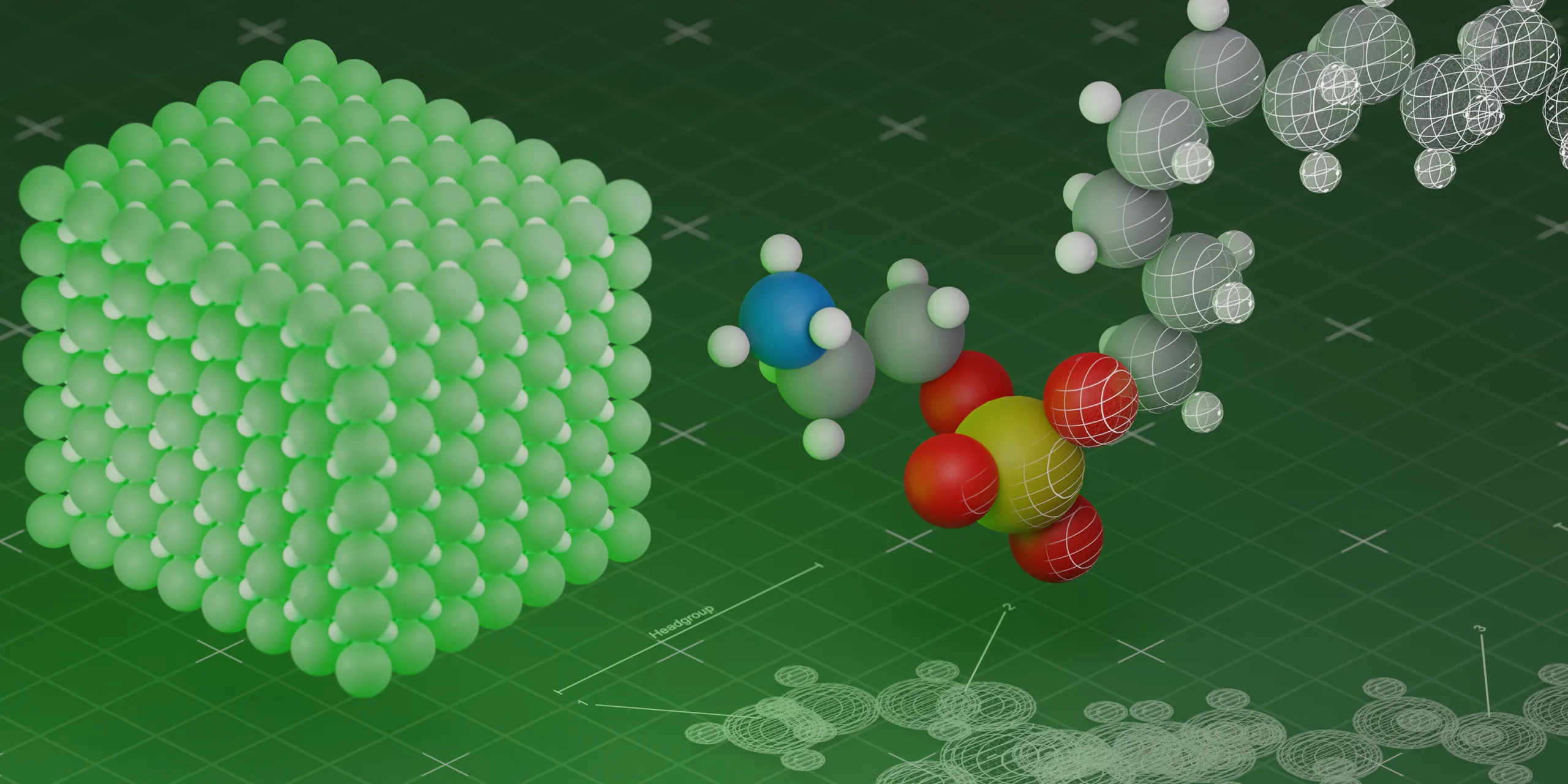
Researchers at Empa and ETH Zurich, led by Maksym Kovalenko, have developed a method to increase the brightness of perovskite quantum dots, which are used in displays and quantum technologies. The team created special molecules that form a protective layer around the quantum dot, making it more efficient. They also used a quantum mechanical effect to increase the number of photons created per second. The improved perovskite quantum dots could be used in light production, displays, and as light-activated catalysts in organic chemistry. The findings were published in the scientific journal Nature.
Enhanced Brightness of Quantum Dots
Researchers at Empa and ETH Zurich have developed methods to increase the brightness of perovskite quantum dots, which are artificial atoms that emit light of a specific color or single photons. This development is significant for applications in displays and quantum technologies. The team used chemical methods and quantum mechanical effects to improve the brightness of these quantum dots.
Quantum Dots and Perovskites
Quantum dots are made of semiconductor materials and are just a few nanometers in size. They have the ability to emit light of a specific color or even single photons, which is crucial for quantum technologies. Quantum dots made of perovskites have gained attention in recent years due to their unique optical properties and cost-effective production. Perovskites are materials that have a similar structure to the mineral perovskite (calcium titanate). These quantum dots can be mixed with liquids to form a dispersion, making them easy to process further.
Improving Quantum Dot Properties
A team of researchers led by Maksym Kovalenko at ETH Zurich and Empa, in collaboration with their counterparts in Ukraine and the USA, have demonstrated how the promising properties of perovskite quantum dots can be further improved. They used chemical methods for surface treatment and quantum mechanical effects that had never before been observed in perovskite quantum dots. The researchers recently published their results in two papers in the scientific journal Nature.
Phospholipid Protective Coating
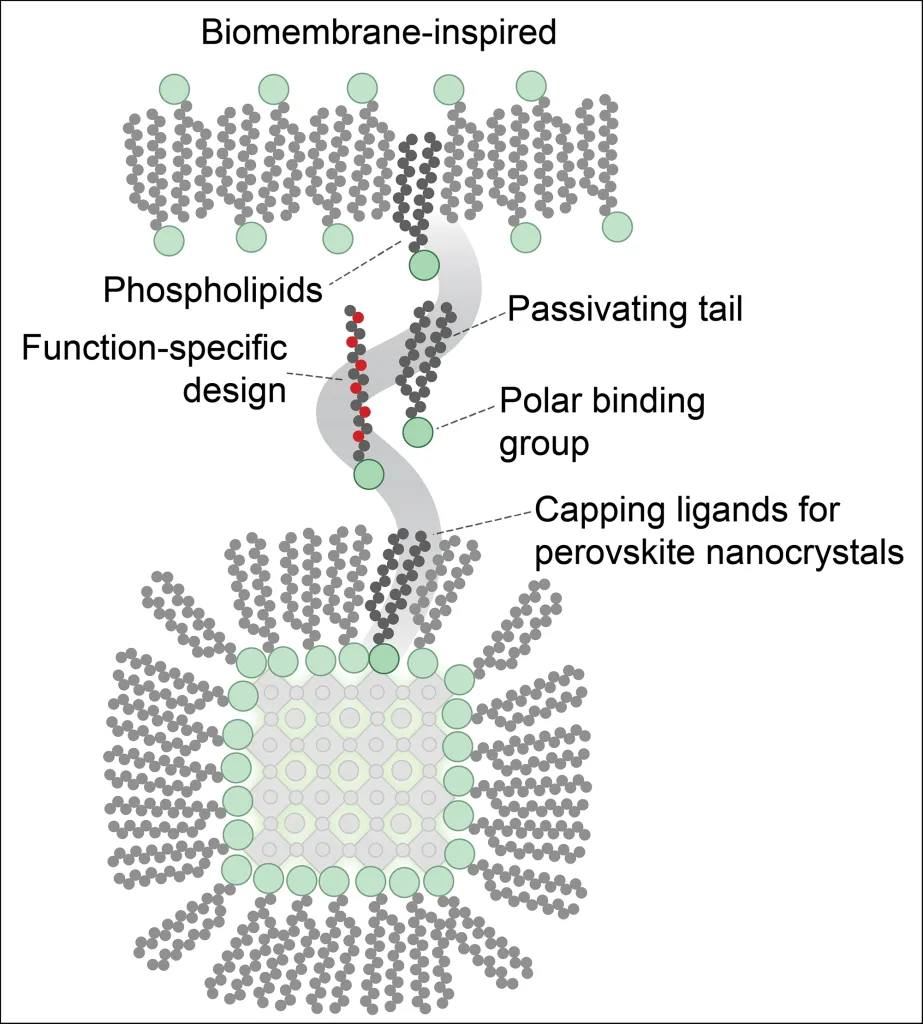
To prevent the quantum dot from “blinking” or not shining continuously, the researchers developed tailor-made molecules known as phospholipids. These phospholipids form a protective layer around the perovskite nanocrystal, ensuring that the quantum dot emits photons more continuously. The nonpolar part of the phospholipid that protrudes on the outside also makes it possible to turn quantum dots into a dispersion inside non-aqueous solutions such as organic solvents.
Quantum Mechanical Effects and Superradiance
The researchers were able to show experimentally that the coherent coupling also works in perovskite quantum dots. Through quantum mechanical effects, an exciton dipole can spread out all over the volume of the quantum dot, thereby creating several copies of itself. These copies can bring about an effect known as superradiance, by which the exciton recombines much faster. The quantum dot is consequently also ready more quickly to take up a new exciton and can thus emit more photons per second, making it even brighter.