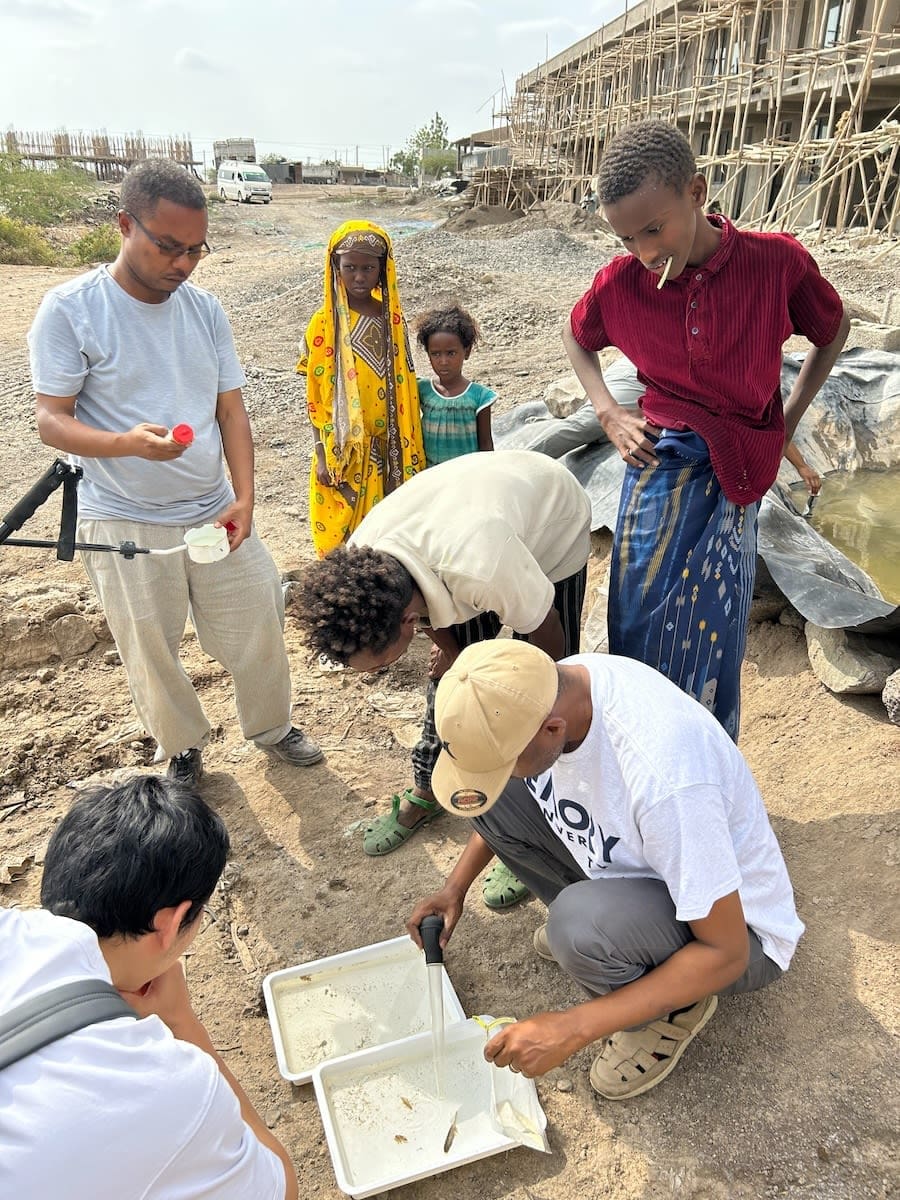
Emory University is leading an initiative funded by the Gates Foundation to combat the Stephensi mosquito in Ethiopia, a species spreading across Africa since its 2012 detection in Djibouti. This mosquito thrives in both urban and rural areas, complicating malaria control efforts. The project employs AI, remote sensing, and satellite imagery to identify breeding sites, particularly construction cisterns with algae, during dry seasons. Researchers are developing a map-based system using machine learning to target treatments effectively, supported by a mobile app for public health workers. Collaborating with experts in environmental science, computer science, and sociology, the team also engages local communities to ensure sustainable outcomes, aiming to scale this approach nationally and potentially across Africa.
Malaria remains a significant public health challenge in Africa, claiming hundreds of thousands of lives annually. The emergence of Anopheles stephensi as a major vector has further complicated control efforts due to its adaptability and resistance to conventional interventions. This mosquito species thrives in urban environments, making it particularly challenging to combat.
To address this growing threat, researchers at Emory University have developed an innovative approach combining remote sensing technology, drones, and machine learning. This integrated strategy aims to disrupt the lifecycle of Anopheles stephensi by identifying high-priority breeding sites for targeted larval control.
The Arrival of Anopheles Stephensi in Ethiopia
The spread of Anopheles stephensi into urban areas of Ethiopia has raised alarms among public health officials. This mosquito species is highly adaptable and resistant to traditional control measures, making it a formidable adversary in the fight against malaria. Its presence in densely populated regions exacerbates the risk of urban malaria outbreaks, which are often more difficult to manage than rural cases.
Emory University researchers have pioneered an innovative approach to combat Anopheles stephensi. By leveraging remote sensing technology and drones, they identify high-priority breeding sites for targeted larval control using slow-release larvicides. This method aims to disrupt the mosquito lifecycle and reduce malaria transmission in urban areas where conventional methods are less effective.
Community Engagement for Sustainable Malaria Prevention
Community engagement is a cornerstone of Emory University’s research initiative. Surveys and interviews are conducted to understand local knowledge, practices, and perceptions regarding malaria and mosquito control. This information informs tailored interventions that address community-specific challenges, enhancing acceptance and participation in control efforts.
By integrating advanced technology with community-driven strategies, the project seeks sustainable solutions to reduce malaria transmission. The approach emphasizes long-term impact through targeted larval control and community involvement.
Testing Effectiveness of Remote-Sensing Approaches
Field testing is conducted in urban areas of Ethiopia, where Anopheles stephensi has been identified as a significant vector. The study evaluates the effectiveness of slow-release larvicides in reducing mosquito populations and subsequent malaria incidence. Data collected during these trials inform refinements to the intervention strategy, ensuring adaptability to local conditions.
The findings contribute to broader efforts to combat urban malaria caused by Anopheles stephensi. By addressing knowledge gaps and improving control measures, the research supports global malaria elimination goals. The project highlights the importance of combining technological innovation with community engagement for effective vector control in resource-limited settings.
More information
External Link: Click Here For More