

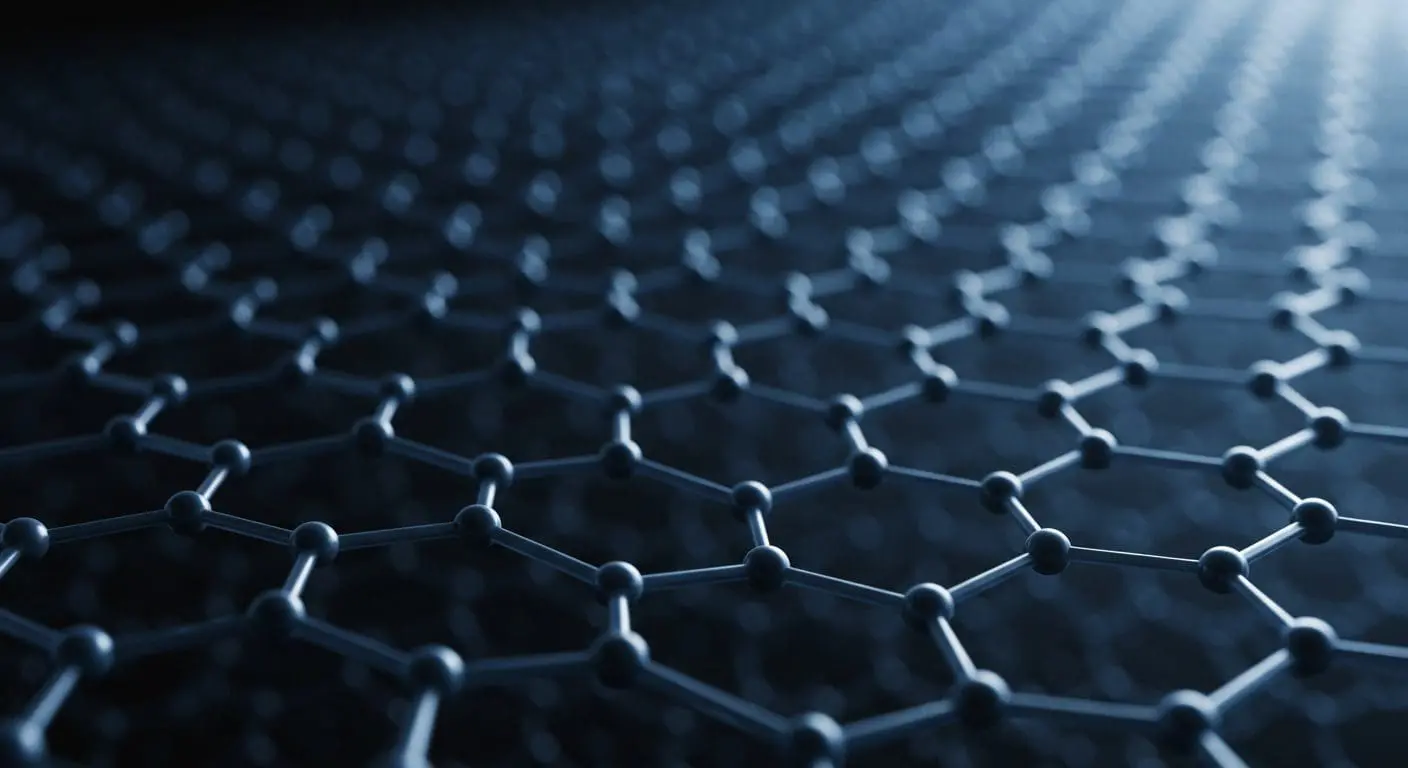
In a fascinating manifestation of quantum physics, researchers at Daegu Gyeongbuk Institute of Science and Technology (DGIST) have unearthed an enigmatic electronic state where electrons exhibit a “1/3” fractional quantum behavior under a twisted graphene structure.
This novel discovery, achieved through a collaborative effort with the Korea Advanced Institute of Science and Technology (KAIST), has far-reaching implications for the development of more efficient and faster electronic devices, as well as potential applications in quantum memory and complex computations.
By leveraging a unique structure comprising two slightly twisted layers of graphene, the research team was able to observe and theoretically prove the existence of this extraordinary state, where electrons move in a manner that defies conventional understanding, interacting with each other in a complex dance of push and pull between the layers. This groundbreaking finding, published in Nature Communications, is poised to expand significantly the possibilities for quantum technologies, paving the way for innovative advancements in the field.
Introduction to Quantum Physics and Graphene
Quantum physics is a fundamental theory that seeks to understand and explain how atoms and particles interact and move in nature. This understanding serves as the basis for designing new technologies that control or utilize nature at the microscopic level. Recent research conducted by Professor Youngwook Kim at the Department of Physics and Chemistry, Daegu Gyeongbuk Institute of Science & Technology (DGIST), in collaboration with Professor Gilyoung Cho at the Korea Advanced Institute of Science & Technology (KAIST), has made a significant contribution to this field. The team discovered a quantum state in which electrons move in a completely new way under a twisted graphene structure, which is expected to contribute to the development of more efficient and faster electronic devices.
Graphene, a material as thin as a piece of paper, comprises carbon atoms. This study utilized a unique structure comprising two slightly twisted layers of graphene, observing a new quantum state. The researchers revealed that these new patterns create completely different rules for governing the movement of electrons, preventing electrons from crossing from one layer to another while creating strong interactions (Coulomb interactions) between the layers. This discovery has the potential to greatly expand future possibilities for quantum technologies.
The research team’s findings were published in Nature Communications and were funded by the National Research Foundation of Korea, Samsung Future Technology Development Foundation, and the Institute for Basic Science. The study was led by Youngwook Kim at DGIST and PhD student Seyoung Jin at POSTECH, with international collaboration from NIMS in Japan and the Max Planck Society for the Advancement of Science in Germany. The team used the Max Planck Society’s high-magnetic-field experimental equipment to obtain key data, which demonstrated the physical implications of their discovery.
Fractional Quantum Hall State
The research team discovered a new electronic state called the “1/3 fractional quantum Hall state.” This state is unique because electrons move as if in three parts, which is completely different from their conventional movement. The 1/3 fractional quantum Hall state arises from strong interactions between electrons as they push and pull each other between the layers. The team theoretically proven this state using a Monte Carlo simulation, which demonstrated its physical implications.
The discovery of the 1/3 fractional quantum Hall state has important implications for the development of quantum computer technologies. Professor Gilyoung Cho at KAIST noted that their discovery could contribute to the development of quantum computer technologies. This is because the 1/3 fractional quantum Hall state is a unique electronic state that can be used to process complex computations, such as those required in quantum memory.
The 1/3 fractional quantum Hall state is a result of the strong interactions between electrons in the twisted graphene structure. When two layers of graphene are twisted slightly, the patterns overlap to reveal new patterns, creating completely different rules for governing the movement of electrons. This unique electronic state has the potential to be used in a variety of applications, including quantum computing and quantum memory.
Quantum Computing and Quantum Memory
The discovery of the 1/3 fractional quantum Hall state has important implications for the development of quantum computing and quantum memory. Quantum computing is a type of computing that uses the principles of quantum mechanics to perform calculations. Quantum memory, on the other hand, refers to the ability to store and retrieve quantum information.
The 1/3 fractional quantum Hall state is a unique electronic state that can be used to process complex computations, such as those required in quantum memory. This is because the strong interactions between electrons in the twisted graphene structure create a stable and coherent quantum state, which is necessary for quantum computing and quantum memory.
Quantum computing and quantum memory have the potential to revolutionize a variety of fields, including cryptography, optimization, and simulation. The discovery of the 1/3 fractional quantum Hall state is an important step towards the development of these technologies. However, further research is needed to fully understand the properties of this unique electronic state and to develop practical applications.
Twisted Graphene Structure
The twisted graphene structure used in this study is a unique material that has the potential to be used in a variety of applications. The structure consists of two layers of graphene that are twisted slightly, creating new patterns and rules for governing the movement of electrons. This unique structure creates strong interactions between electrons, which is necessary for the 1/3 fractional quantum Hall state.
The twisted graphene structure is a result of the rotation of one layer of graphene relative to another. When two layers of graphene are rotated slightly, the patterns overlap to reveal new patterns, creating completely different rules for governing the movement of electrons. This unique structure has the potential to be used in a variety of applications, including quantum computing and quantum memory.
The twisted graphene structure is also a result of the strong interactions between electrons in the material. The electrons in the material interact with each other through Coulomb interactions, which create a stable and coherent quantum state. This unique electronic state has the potential to be used in a variety of applications, including quantum computing and quantum memory.
Another area of future research is to explore the properties of the twisted graphene structure in more detail. The unique electronic state created by this structure has the potential to be used in a variety of applications, including quantum computing and quantum memory. Further research is needed to fully understand the properties of this material and to develop practical applications.
External Link: Click Here For More


