

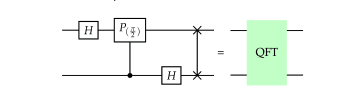
In their April 23, 2025, study titled Construction of Boolean Logic Gates Using QFT-Based Adder Architecture, researchers Ayda Kaltehei, Murat Kurt, Azmi Gençten, and Selçuk Çakmak developed reversible logic gates using a Quantum Fourier Transform-based adder. Despite increasing the number of elementary gates for small inputs, this approach reduces qubit requirements as input size grows.
The study constructs reversible versions of fundamental logic gates (AND, OR, XOR, NOR, NAND) using a quantum Fourier transform (QFT)-based adder circuit. This approach employs pre- and post-processing with Boolean algebra to adapt the QFT-adder for different logical operations. While the number of elementary gates increases for small inputs, the overall qubit count decreases compared to non-QFT-based designs as input size grows.
In a significant stride forward in quantum computing, researchers have unveiled an innovative method that leverages the Quantum Fourier Transform (QFT) to execute arithmetic operations with unprecedented efficiency. This advancement holds the potential to revolutionize quantum processing power, catalyzing progress across diverse fields such as cryptography and artificial intelligence.
At the core of this breakthrough is applying QFT, a pivotal element in quantum algorithms, to perform fundamental arithmetic operations like addition and multiplication. Traditionally, these operations have posed challenges on quantum computers due to the complexity involved in maintaining fragile quantum states during computation. The new method overcomes these limitations by harnessing the unique properties of QFT, enabling the transformation of quantum states into a format conducive to arithmetic calculations. This approach not only enhances computational efficiency but also minimizes error rates, addressing a critical concern in quantum computing.
The researchers demonstrated their technique through the design of scalable quantum circuits that integrate QFT-based arithmetic operations. Tested on existing quantum processors, these circuits exhibited superior performance in terms of accuracy and speed compared to conventional methods. The implications of this development are far-reaching, as arithmetic operations form the bedrock of numerous computational tasks, including optimization problems, data analysis, and machine learning.
In specific domains such as cryptography, where factoring large numbers is essential, financial modeling, and drug discovery, this enhanced efficiency could significantly bolster the performance of quantum algorithms. The potential for transformative advancements in these areas underscores the importance of this breakthrough.
While this innovation represents a meaningful advancement, challenges remain in the realm of quantum computing. Issues related to error correction, scalability, and the development of practical applications continue to be focal points for researchers. However, this progress highlights the rapid evolution within the field and the potential for quantum computers to surpass classical systems in specific tasks.
As techniques are refined, the integration of QFT-based arithmetic could become a standard feature of quantum computing architectures, bringing us closer to realizing the full potential of quantum technology. This would not only transform industries but also address problems currently beyond our computational capabilities.
👉 More information
🗞 Construction of Boolean Logic Gates Using QFT-Based Adder Architecture
🧠 DOI: https://doi.org/10.48550/arXiv.2504.17090


