Efficient Computer, a company focused on energy-efficient computing, has raised $16M in seed financing led by Eclipse VC. The company, founded by Brandon Lucia, Nathan, Graham, and Alex, aims to solve the energy problem in computing. They have developed a new technology stack, including a silicon chip called Monza, which is designed to be more energy-efficient than traditional von Neumann processor designs. The funding will be used to expand the team and bring their chips to market. Greg Reichow, General Partner at Eclipse VC and former VP of Production at Tesla, will join the Efficient Board of Directors.
Efficient Computer: A New Approach to Energy-Efficient Computing
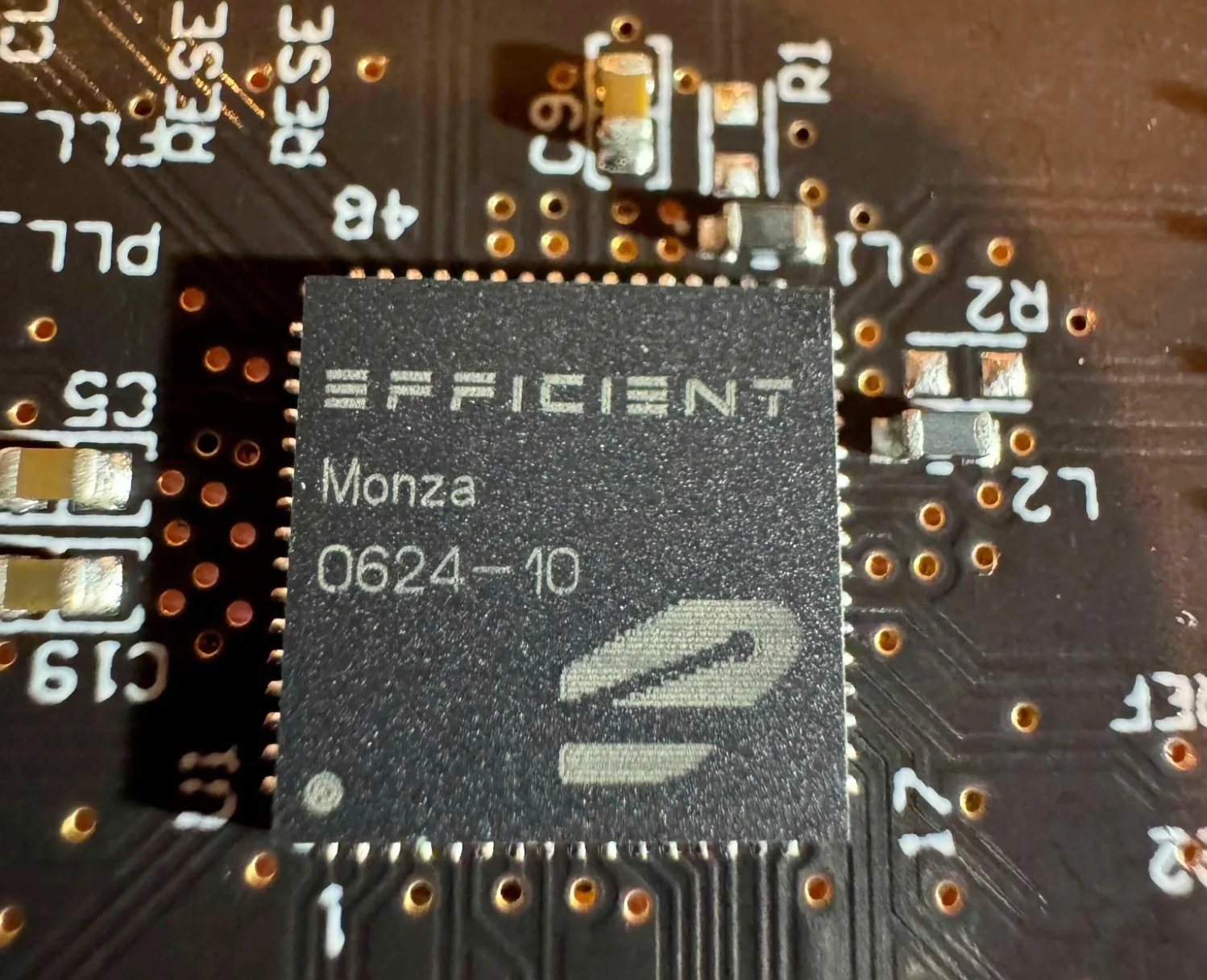
Efficient Computer, a company focused on revolutionizing energy-efficient computing, has recently come out of stealth mode. The company, which was founded just over a year ago, has made significant strides in its mission to address the energy problem in computing. This includes welcoming their first non-founding employee and receiving their first silicon chip, named Monza, from the foundry.
The company has also secured $16M in seed financing, led by Eclipse VC. This funding will be instrumental in expanding the team and combining research and development efforts with market strategies to get their chips into the hands of customers. Eclipse VC, with its deep expertise in hardware and connections to key markets for Efficient Computer’s technology, is an ideal partner for the company’s mission.
The Energy Problem in Computing
The founders of Efficient Computer, Nathan, Graham, Alex, and Brandon Lucia, established the company with the aim of solving the energy problem in computing. This issue is prevalent across all scales of computing, from battery life in IoT and mobile devices to power supply and cooling in data centers.
For many years, computer designers relied on Moore’s Law to automatically improve energy efficiency. However, with the slowing of Moore’s Law, the energy problem in computing can no longer be ignored. The dominant “von Neumann” processor design, which is unfortunately deeply ingrained in the design of today’s computers, wastes 99% of energy. This inefficiency is due to the fact that programs are expressed as a sequence of simple instructions, but running programs in a simple sequence is unacceptably slow. To improve performance, complex hardware is required to find instructions that can safely run in parallel.
A Fundamental Rethinking of Computer Design
Addressing the energy problem in computing requires a fundamental rethinking of how computers are designed. Some have attempted to solve this problem by restricting programs, i.e., limiting the processor to only run programs where parallelism is easy to find. While this approach does improve efficiency, it sacrifices general-purpose programmability, which is a significant issue.
Efficient Computer, however, is taking a different approach. The company is developing a general-purpose, post-von Neumann processor design that is easy to program and extremely energy-efficient. This approach spans both hardware and software, which is the only path to efficiency. Instead of executing a series of instructions like von Neumann designs, Efficient Computer’s architecture expresses programs as a “circuit” of instructions that shows which instructions communicate with each other. This model allows the circuit to be laid out spatially across an array of extremely simple processors and execute the program in parallel, with much simpler hardware (and thus less energy!) than any existing processor.
The Fabric Processor Architecture
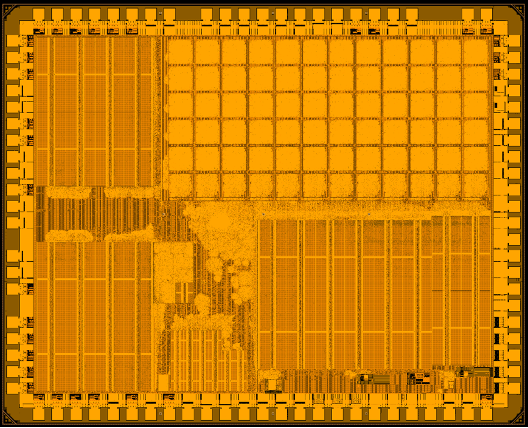
Efficient Computer’s design, known as the Fabric processor architecture, has been implemented in the Monza test system on chip (SoC). The Fabric’s compiler was designed alongside the hardware from day one, and it compiles programs written in high-level C or C++. Monza achieves up to 100x better energy efficiency than the best embedded von Neumann processor and, unlike specialized hardware, it can be programmed in software using a standard, familiar flow.
Looking Ahead: Efficient Computer’s Future Plans
With the seed funding, Efficient Computer has been able to expand its team to 20 employees and is moving full-speed-ahead towards their next tapeout and release of their software development kit later this year. The company is also receiving new customer stories daily, demonstrating how Efficient Computer’s technology will enable smarter, longer-lasting devices in various sectors, from consumer IoT, to industrial IoT, civil infrastructure monitoring, and defense.
In addition, Greg Reichow, General Partner at Eclipse VC and former VP of Production at Tesla, has joined the Efficient Board of Directors. His experience will be invaluable in helping the company scale its team and plan its roadmap for the years to come.
External Link: Click Here For More