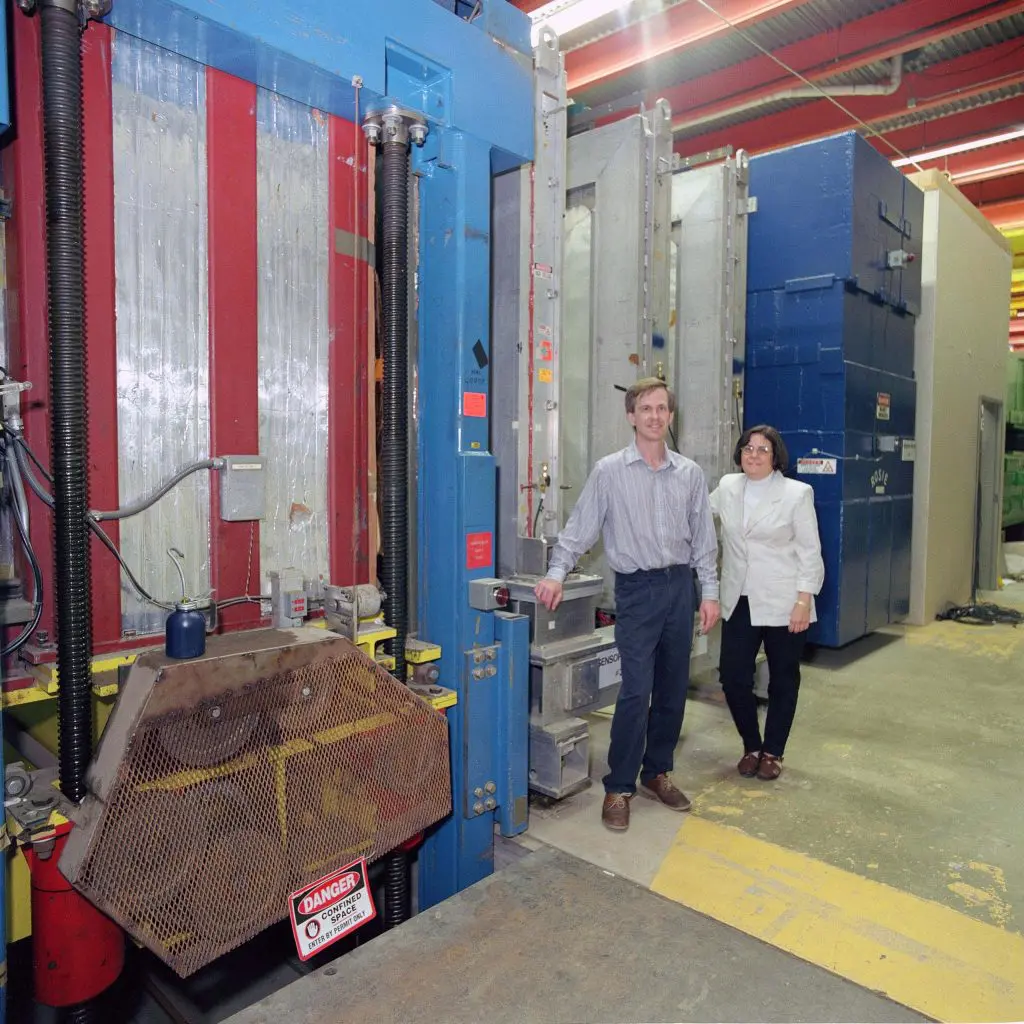
In 2000, the DONUT collaboration at Fermilab announced the first direct evidence of tau neutrinos, completing a key verification of the Standard Model of particle physics. Physicists Regina Rameika and Byron Lundberg initiated the experiment in 1994, recognising the need to directly observe the particle following the 1975 discovery of the tau. The DONUT collaboration utilised emulsion plate technology, initially developed by physicists at Nagoya University and employed in Fermilab’s Experiment 653 during the mid-1980s, to collect data beginning in 1997 and ultimately confirm the existence of the third neutrino flavour.
Completing the Standard Model
The DONUT collaboration at Fermilab announced the first direct evidence for tau neutrinos on July 21, 2000, thereby completing a significant verification of the Standard Model of particle physics. Physicists had previously identified a gap within the Standard Model, and the DONUT experiment successfully addressed this by detecting one of the last unseen particles predicted by the theory. Despite this initial breakthrough, physicists continue to seek new ways of studying these elusive particles.
Neutrinos, incredibly lightweight subatomic particles, were first postulated by Wolfgang Pauli in 1930, with the first observed neutrino – an electron neutrino – detected in 1956 at the Savannah River Plant in South Carolina. At the time of this initial detection, physicists were unaware of the different types, or ‘flavours’, of these particles. A second flavour, the muon neutrino, was subsequently detected in 1962 at Brookhaven National Laboratory.
The concept of a third neutrino flavour emerged following the discovery of the tau particle in 1975 by Martin Perl at SLAC National Laboratory. The tau is a member of the lepton family, representing the third generation of these particles, and given that electrons and muons each have corresponding neutrinos, the existence of a tau neutrino was logically anticipated. Although indirect evidence accumulated, direct observational confirmation remained elusive until the DONUT experiment.
Recognising the value of directly observing the tau neutrino, physicists Regina Rameika and Byron Lundberg initiated the DONUT experiment in the early 1990s as Fermilab prepared for the Neutrinos at the Main Injector (NuMI) project. Rameika and Lundberg assembled a team of scientists previously involved in Fermilab’s Experiment 653, conducted in the mid-1980s. This earlier experiment, E653, had utilised emulsion plates developed by physicists at Nagoya University in Japan, and DONUT adopted a similar technological approach to detect evidence of tau neutrinos, submitting their proposal in 1994 and beginning data collection by 1997.
The Elusive Tau Neutrino
The DONUT collaboration began collecting data in 1997, after submitting their proposal in 1994. Although relatively simple by contemporary standards, the experiment presented considerable combined difficulties. The technological approach adopted by DONUT involved utilising emulsion plates, originally developed by physicists at Nagoya University in Japan, mirroring a technique used in Fermilab’s Experiment 653 conducted in the mid-1980s.
This earlier experiment, E653, had searched for charm particles, and the DONUT collaboration assembled a team of scientists previously involved in its execution. Physicists Regina Rameika and Byron Lundberg recognised the value of directly observing the tau neutrino as Fermilab prepared for the Neutrinos at the Main Injector (NuMI) project, leading to the inception of the DONUT experiment.
A Collaborative Endeavour
The DONUT collaboration’s success in detecting tau neutrinos built upon the earlier discovery of electron and muon neutrinos. The first observed neutrino, detected in 1956 at the Savannah River Plant in South Carolina, was an electron neutrino, while a muon neutrino was detected at Brookhaven National Laboratory in 1962. Physicists had logically anticipated the existence of a tau neutrino following the 1975 discovery of the tau particle by Martin Perl at SLAC National Laboratory, as the tau is a member of the lepton family and represents the third generation of these particles.
The DONUT experiment’s proposal was submitted in 1994, and data collection began in 1997, utilizing a technological approach similar to that of Fermilab’s Experiment 653 conducted in the mid-1980s. Experiment 653 had employed emulsion plates developed by physicists at Nagoya University in Japan, and the DONUT collaboration assembled a team of scientists previously involved in this earlier research. This earlier work focused on searching for charm particles, while the DONUT experiment aimed to directly observe the elusive tau neutrino.
More information
External Link: Click Here For More