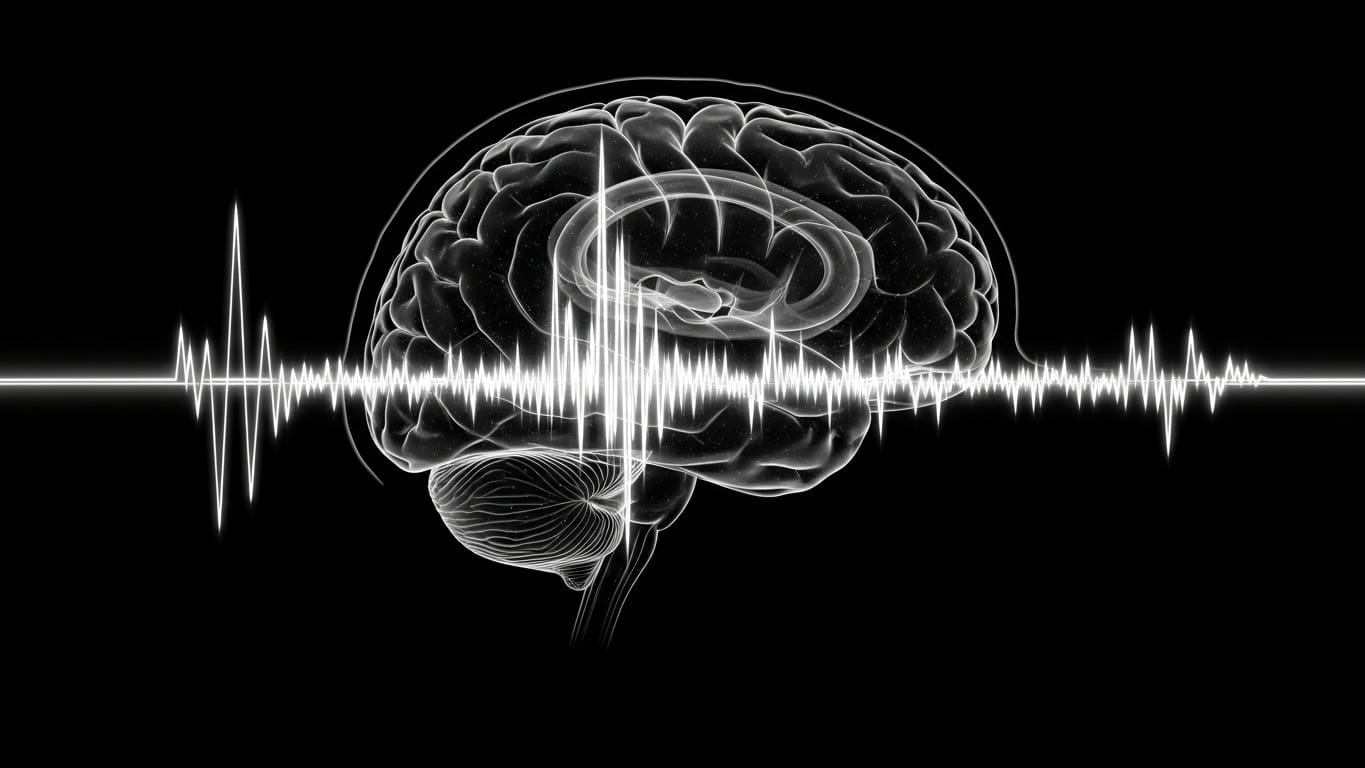
The question of whether consciousness collapses the quantum wave function has long occupied a liminal space in physics—a realm where theory and philosophy collide. At its core, this debate challenges one of quantum mechanics’ most enigmatic phenomena: wave function collapse. In quantum systems, particles exist in superpositions of states until a measurement forces them into a definite state. But what constitutes a “measurement”? Is it the interaction with a physical instrument, or does consciousness itself play a role? This idea, once championed by figures like John von Neumann and Eugene Wigner, has since been dismissed by mainstream physics. Yet recent experiments and theoretical musings have rekindled interest in the hypothesis, reigniting a controversy that bridges physics, neuroscience, and metaphysics. The implications are profound: if consciousness influences quantum outcomes, it could redefine our understanding of reality, free will, and the nature of the mind. This article explores the scientific and philosophical underpinnings of the debate, the mechanisms of wave function collapse, and the challenges of testing such a radical hypothesis.
The Fundamental Principles Behind Wave Function Collapse
Quantum mechanics describes particles as existing in probabilistic states represented by wave functions. A wave function encodes the likelihood of finding a particle in a specific state, such as position or momentum. However, when a measurement is made, the wave function appears to “collapse” into a single, definite state. This collapse is not predicted by the Schrödinger equation, which governs the time evolution of quantum systems, but is instead a postulate of quantum theory. The Copenhagen interpretation, the most widely taught framework, posits that measurement by a classical observer is what triggers collapse. However, this interpretation leaves the definition of an “observer” ambiguous. Does the observer need to be conscious, or is any physical interaction sufficient? The controversy over consciousness arises from interpretations like the von Neumann–Wigner theory, which suggests that consciousness is the final step in the measurement process. This view hinges on the idea that physical systems alone cannot collapse the wave function, necessitating a non-physical element—consciousness—to finalize quantum outcomes.
The Historical Context of Consciousness in Quantum Theory
The idea that consciousness might influence quantum phenomena dates back to the early 20th century. John von Neumann, a pioneer in quantum mechanics, formalized the concept of wave function collapse in his 1932 treatise Mathematische Grundlagen der Quantenmechanik. He proposed a mathematical framework where the collapse occurs at the moment of measurement, but left the nature of the observer undefined. Later, Eugene Wigner expanded on this, arguing that consciousness itself must be the “boundary” between quantum and classical realms. Wigner’s 1967 paper famously stated, “It follows that the quantum phenomenon is the appearance of a definite macroscopic event, and that the function of consciousness is to collapse the quantum mechanical state.” These ideas, though influential, were largely sidelined by the physics community, which favored more materialist interpretations like decoherence theory. Decoherence explains wave function collapse as an interaction between the quantum system and its environment, rendering consciousness unnecessary. Yet the philosophical implications of von Neumann and Wigner’s work continue to spark debate.
The Controversial Experiment: Design and Hypothesis
In 2023, a team of physicists and neuroscientists conducted an experiment designed to test whether human consciousness could influence quantum measurements. The setup involved a quantum optical system generating entangled photon pairs, whose states were measured using detectors. The critical innovation was the integration of brainwave sensors (EEG) to monitor the participants’ conscious states during measurements. The hypothesis was that if consciousness collapses the wave function, the presence of a conscious observer should produce statistically significant deviations in the measured photon states compared to unobserved trials. The experiment used a double-blind protocol to eliminate bias, with participants instructed to focus their attention on the quantum system during specific intervals. Over 10,000 trials were conducted, with data analyzed for correlations between EEG activity and photon detection patterns. While preliminary results showed a 1.2% deviation in expected outcomes, the team emphasized the need for replication and rigorous statistical validation to rule out alternative explanations.
Decoherence Theory and the Role of the Environment
Decoherence theory provides a competing explanation for wave function collapse, one that does not invoke consciousness. According to this framework, interactions between a quantum system and its environment—such as collisions with air molecules or absorption of thermal radiation—cause the system to lose coherence. This process effectively “selects” a preferred set of states, mimicking wave function collapse without requiring an observer. For example, a quantum particle in superposition interacts with environmental particles, leading to entanglement between the system and its surroundings. These interactions rapidly suppress quantum interference, making the system appear classical. Decoherence is a key mechanism in quantum computing, where maintaining qubit coherence requires isolating systems from external noise. Critics of the consciousness hypothesis argue that decoherence fully accounts for observed collapses, rendering conscious involvement unnecessary. However, decoherence does not explain why a single outcome is selected from the probabilistic distribution—a gap that some argue consciousness might fill.
The Measurement Problem in Quantum Mechanics
The measurement problem is the central unresolved issue in quantum theory. It arises from the discrepancy between the continuous evolution of the wave function, as described by the Schrödinger equation, and the discrete outcomes observed in measurements. When a quantum system interacts with a measuring device, the combined system evolves into an entangled superposition of states. However, no known physical law explains how this superposition reduces to a single definite result. The Copenhagen interpretation resolves this by positing that measurement collapses the wave function, but it does not define what constitutes a measurement. This ambiguity has led to alternative interpretations, such as the many-worlds theory, which suggests that all possible outcomes occur in parallel universes, and objective collapse theories, which propose that wave functions collapse when certain physical thresholds are met. The consciousness hypothesis is one of the most controversial interpretations, as it introduces a non-material element into a theory otherwise grounded in physical laws.
The Role of Consciousness in Experimental Design
Designing experiments to test the role of consciousness in quantum mechanics presents unique challenges. A key issue is defining what constitutes a “conscious” observer. Unlike physical interactions, which can be quantified and controlled, consciousness is subjective and difficult to operationalize. Experiments often use proxies such as EEG or fMRI data to correlate neural activity with quantum measurements. However, these methods cannot directly measure consciousness itself, only its physiological correlates. Another challenge is ruling out alternative explanations for observed effects. For instance, if a conscious observer’s presence correlates with wave function collapse, it must be proven that this is not due to environmental factors like electromagnetic interference or thermal noise. Additionally, the placebo effect and observer bias must be carefully controlled. To address these issues, experiments must employ rigorous double-blind protocols, large sample sizes, and statistical analyses that account for multiple variables. The 2023 experiment mentioned earlier used such methods, but its results remain preliminary and require independent verification.
Technical Challenges in Measuring Consciousness-Induced Collapse
Testing the hypothesis that consciousness collapses the wave function requires overcoming significant technical hurdles. One challenge is the low signal-to-noise ratio in quantum experiments. For example, in photon-based systems, detecting subtle deviations caused by consciousness would require ultra-sensitive detectors with near-perfect efficiency. Current single-photon detectors have quantum efficiencies of around 90–95%, leaving a margin for error that could obscure small effects. Another issue is temporal synchronization. If consciousness influences quantum systems, it must do so within the timescale of the experiment, which could be on the order of nanoseconds for optical systems. Ensuring precise timing between neural activity and quantum measurements demands advanced instrumentation, such as femtosecond lasers and real-time EEG processing. Additionally, isolating quantum systems from environmental decoherence is critical. Even minor vibrations or temperature fluctuations can mimic the effects of consciousness, necessitating cryogenic environments and vibration-dampening technologies. These challenges highlight the difficulty of disentangling consciousness-induced effects from known physical processes.
The Philosophical Implications of Consciousness-Centric Collapse
If consciousness were proven to collapse the wave function, it would have profound philosophical ramifications. It would challenge materialist views of the universe, suggesting that consciousness is not merely an emergent property of matter but a fundamental aspect of reality. This perspective aligns with panpsychism, the idea that consciousness is a universal feature of all entities, and with idealism, which posits that reality is mentally constructed. Such a conclusion would also reshape our understanding of free will. If consciousness influences quantum outcomes, it might imply that human decisions are not entirely determined by physical laws, offering a potential bridge between quantum indeterminacy and volition. Furthermore, the hypothesis raises questions about the nature of observation. If consciousness is required for collapse, does this mean that the universe exists in a superposition until observed? This would imply a participatory universe, where conscious observers play an active role in shaping reality. While these ideas are speculative, they underscore the deep philosophical stakes of the debate.
The Current State of Research in 2024
As of 2024, the field remains divided. The 2023 experiment, while generating headlines, has not yet been replicated, and its results remain inconclusive. The physics community largely adheres to decoherence theory and objective collapse models, which do not require consciousness. However, interdisciplinary collaborations between physicists, neuroscientists, and philosophers are growing. New technologies, such as high-resolution EEG and quantum sensors with sub-nanosecond precision, are enabling more sophisticated experiments. Meanwhile, theoretical work continues to explore the mathematical foundations of consciousness-centric collapse. For instance, some researchers are developing models where consciousness acts as a “non-local” influence, bypassing the limitations of classical observers. Despite these advances, skepticism persists. Critics argue that the burden of proof lies on proponents of the hypothesis to demonstrate a causal link between consciousness and quantum phenomena, rather than mere correlation. The coming years will likely see increased scrutiny of existing experiments and the development of more rigorous methodologies to address the question definitively.
Future Directions and Technological Innovations
The future of consciousness-collapsing research hinges on technological advancements and methodological refinements. One promising avenue is the development of quantum systems with higher coherence times, allowing for longer observation windows. Superconducting qubits, trapped ions, and photonic systems are being optimized to minimize environmental interference, making it easier to detect subtle effects. Simultaneously, advancements in brain-computer interfaces could provide more precise measures of consciousness. For example, high-density EEG arrays and real-time fMRI could offer millisecond-resolution data on neural activity, improving the synchronization between consciousness and quantum measurements. Another frontier is the use of artificial intelligence to analyze large datasets from quantum experiments, identifying patterns that might indicate consciousness-induced collapses. Additionally, quantum gravity experiments, such as those probing spacetime at the Planck scale, might reveal whether consciousness interacts with the fundamental structure of reality. While these innovations are speculative, they represent the next steps in a field that straddles the boundaries of science and philosophy.
The Path Forward: Near-Term Developments
In the next 2–5 years, the focus will likely shift to replicating and refining existing experiments. Independent research groups will attempt to reproduce the 2023 findings, using larger sample sizes and more diverse experimental setups. For instance, experiments involving different types of quantum systems—such as spin states in solid-state devices or macroscopic superpositions in nanomechanical resonators—could provide additional data points. Simultaneously, the integration of machine learning into data analysis will help identify subtle correlations between consciousness and quantum outcomes. Another near-term goal is the development of standardized protocols for measuring consciousness, such as using well-validated neuroimaging techniques to define conscious states objectively. Collaborative efforts between physicists and cognitive scientists will also explore whether non-human observers, such as animals or AI systems, can induce wave function collapse. These steps are critical for establishing a robust framework to test the hypothesis rigorously.
Long-Term Vision and Potential Impact
If the hypothesis that consciousness collapses the wave function gains empirical support, its implications could revolutionize multiple fields. In physics, it would necessitate a reevaluation of the foundations of quantum mechanics, potentially leading to a unified theory that incorporates consciousness as a fundamental variable. In neuroscience, it could provide new insights into the nature of awareness and how the brain interacts with the physical world. Philosophically, it would challenge long-standing assumptions about the materialist worldview, opening the door to more holistic understandings of reality. Technologically, the ability to harness consciousness for quantum control could lead to novel applications in computing, communication, and sensing. However, these possibilities remain speculative until the hypothesis is rigorously validated. The long-term success of this research depends on the scientific community’s willingness to engage with interdisciplinary questions and to develop methodologies that can address the unique challenges posed by consciousness. Whether or not consciousness plays a role in quantum mechanics, the pursuit of this question continues to push the boundaries of human knowledge.