Scientists have uncovered evidence supporting a ‘helicity barrier’ in the solar wind, a phenomenon that limits the transfer of energy to smaller scales and influences how turbulence dissipates. This barrier arises from the conservation of magnetic helicity, a property of magnetic fields, and is particularly prominent in imbalanced turbulence, common in the solar wind, where energy in counter-propagating magnetic fields is unequal. The research proposes that energy dissipates through cyclotron resonance, a process where particles gain energy from turbulent fields at their natural frequency, converting turbulent energy into particle heating. Utilizing data from NASA’s Parker Solar Probe (PSP) and its FIELDS instrument, the study benefits from unprecedented measurements of the solar wind taken close to the Sun.
Researchers discovered evidence for extended cyclotron resonance, suggesting heating occurs across a range of frequencies, not just a single one. The turbulence preferentially heats ions, charged particles, over electrons, contributing to the observed temperature differences within the solar wind. This research provides crucial insights into the complex processes governing energy transfer and dissipation in space plasma physics.
Solar Wind Energy Transfer via Magnetic Spectra
Researchers harnessed data from NASA’s Parker Solar Probe to investigate how energy transfers within the solar wind, focusing on a phenomenon theorized to limit energy reaching smaller scales and explain temperature differences between protons and electrons. The team meticulously analyzed data from the first ten orbits, combining measurements from search-coil and fluxgate magnetometers to construct detailed magnetic field spectra across a wide range of frequencies. To ensure comprehensive analysis, they constructed total magnetic power spectra using data from two axes of the magnetometer. The data underwent rigorous filtering to remove signatures from the probe’s internal mechanisms, and ion velocity and temperature data were carefully selected to minimize errors.
Density measurements were derived from quasithermal noise, and data intervals were carefully screened for quality. Researchers also mitigated the impact of interplanetary coronal mass ejections on the spectra. By fitting spectra to a three-power law function, scientists determined key parameters describing the energy cascade, revealing trends consistent with theoretical predictions.
Helicity Barrier Limits Solar Wind Energy Transfer
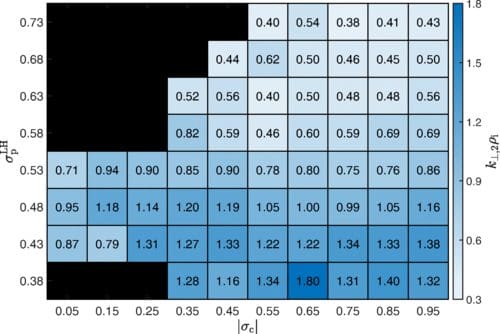
Recent analysis of data from NASA’s Parker Solar Probe reveals a significant barrier to energy transfer within the solar wind, offering new insights into why solar wind protons are hotter than electrons. Researchers discovered this ‘helicity barrier’ effectively limits the flow of energy to smaller scales, a crucial step in understanding how the solar wind gains energy and accelerates. The barrier forms under specific conditions, notably when the ion plasma beta is below approximately 0. 5, and becomes more prominent with increasing normalized cross helicity. Experiments show the barrier arises from the interplay of energy cascades at the ion gyroradius, a fundamental scale in plasma dynamics.
This mechanism restricts the forward cascade of energy, allowing only balanced energy components to reach smaller scales, influencing the heating of the solar wind. The research confirms that the barrier is not a result of standard magnetohydrodynamic effects, but rather a consequence of physics occurring at the ion gyroradius scale, a realm previously unexplored by many turbulence models. This discovery provides a potential explanation for the observed temperature differences between protons and electrons, a key characteristic of the solar wind.
Helicity Barrier Controls Solar Wind Heating
The research demonstrates that a ‘helicity barrier’ plays a significant role in heating the solar wind, a constant stream of charged particles emitted by the Sun. Analysis of data from NASA’s Parker Solar Probe reveals that this barrier forms in the turbulence of the solar wind, limiting the transfer of energy to smaller scales. The team found that the properties of this turbulence change depending on solar wind conditions, and identified critical values for parameters like ion plasma beta and normalized cross helicity that determine when the barrier forms and becomes active. These findings help explain why protons in the solar wind are hotter than electrons, a long-standing puzzle in space physics. By showing that the helicity barrier is frequently active under common conditions in the inner heliosphere, the research suggests that the heating of the solar wind is intrinsically linked to its dynamic properties. While a clear trend was observed, disentangling the barrier’s influence from other solar wind parameters proved challenging, and further research is needed to fully understand the interplay of these factors.
👉 More information
🗞 Evidence for the Helicity Barrier from Measurements of the Turbulence Transition Range in the Solar Wind
🧠 DOI: http://link.aps.org/doi/10.1103/PhysRevX.15.031008