

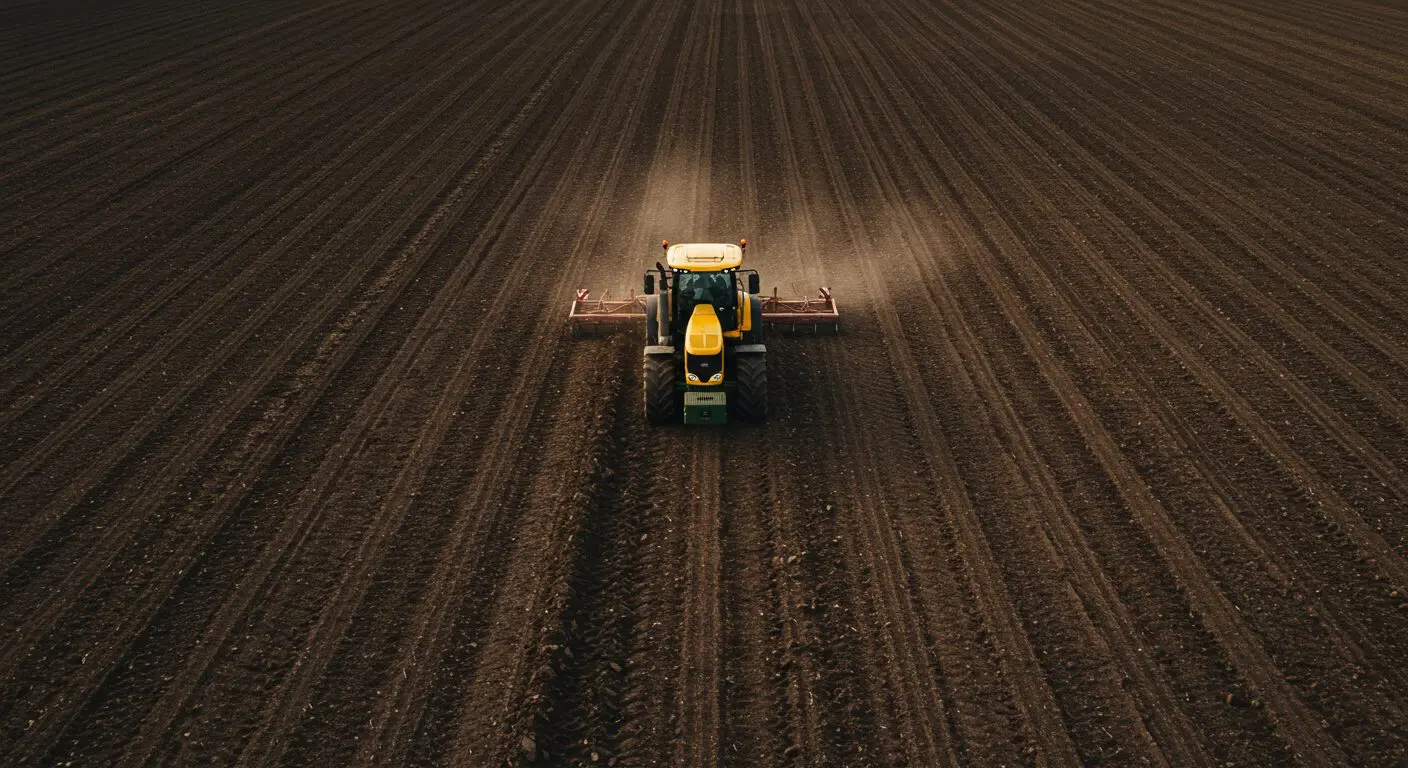
The increasing demand for food production, coupled with diminishing arable land, drives the need for innovation in agricultural practices. Researchers, led by Xing et al., investigate the potential of diffusion models, a powerful new approach to artificial intelligence, to address critical challenges in modern farming. This comprehensive review details how these models, which excel at generating realistic data, are being applied to areas such as crop pest and disease detection, remote sensing, and resource management. The work highlights that diffusion models offer improvements in accuracy and stability compared to older techniques, particularly when dealing with limited or uneven agricultural datasets, and suggests they will be instrumental in developing more sustainable and efficient farming practices for a growing global population.
Diffusion Models for Smart Agriculture Applications
Researchers are increasingly exploring advanced artificial intelligence techniques to overcome challenges in modern agriculture, particularly concerning limited data and the need for more robust analytical tools. Deep learning models, capable of automatically learning complex patterns from data, have become central to this effort, with a recent focus on diffusion models as a particularly promising approach. These models excel at generating realistic and diverse data, which is crucial when dealing with the inherent variability of agricultural environments and limited datasets. The core of this methodology lies in a process inspired by physics, specifically the way particles diffuse and spread out.
Diffusion models work by systematically adding noise to training images, gradually transforming them into random patterns, and then learning to reverse this process, effectively learning to ‘denoise’ and reconstruct images from pure noise. This approach offers significant advantages over earlier generative models, which often struggle with training instability and generating consistently high-quality results. Recent advancements have further refined this technique, improving both the speed and efficiency of image generation. One key development involves performing the diffusion process not directly on the original images, but within a compressed ‘latent space’, significantly reducing computational demands.
Another innovation allows for a more streamlined generation process, reducing the number of steps required to create a realistic image. These improvements are vital for applying diffusion models to large-scale agricultural datasets and real-time applications, such as crop monitoring and disease detection. Furthermore, the methodology extends beyond simple image generation, enabling conditional generation tasks. This means the models can be instructed to create images with specific characteristics, such as images of healthy versus diseased plants, or crops under different environmental conditions. This capability opens up exciting possibilities for data augmentation, allowing researchers to create synthetic datasets that supplement limited real-world data and improve the accuracy of agricultural analysis. Ultimately, this approach aims to provide a more intelligent, automated, and sustainable foundation for modern agricultural practices.
Diffusion Models Enhance Smart Agriculture Applications
Diffusion models, a recent advancement in artificial intelligence, are demonstrating significant potential to transform modern agriculture and address growing concerns about food security and sustainable practices. These models excel at generating realistic images and data, offering solutions to challenges posed by limited agricultural data and imbalanced datasets, which often hinder the development of effective AI applications in this sector. Unlike earlier generative models, such as generative adversarial networks (GANs), diffusion models offer improved stability during training and consistently produce higher-quality results, making them particularly well-suited for complex agricultural environments. The application of diffusion models spans several key areas of smart agriculture, including enhanced crop pest and disease detection, improved remote sensing image analysis, and more accurate crop growth prediction.
By generating synthetic data that augments existing datasets, these models can significantly improve the accuracy and robustness of AI algorithms used to identify threats to crops, even in challenging conditions where data is scarce or variable. This capability is crucial for enabling timely interventions and minimizing crop losses, ultimately contributing to increased yields and more efficient resource utilization. Furthermore, diffusion models are proving valuable in enhancing remote sensing imagery, allowing for more detailed analysis of crop health, soil conditions, and water stress. By improving the quality and resolution of these images, farmers and agricultural specialists can gain deeper insights into field conditions and make more informed decisions regarding irrigation, fertilization, and pest control.
This level of precision is essential for optimizing resource allocation and minimizing environmental impact, promoting sustainable agricultural practices. The superior performance of diffusion models stems from their unique approach to data generation, which involves gradually adding noise to an image and then learning to reverse this process to reconstruct a realistic image. This method not only produces high-quality results but also avoids the training instability often associated with GANs, making diffusion models a more reliable and practical solution for agricultural applications. As the technology continues to evolve, it is expected to play an increasingly important role in driving innovation and sustainability within the agricultural sector, supporting the development of smarter, more efficient, and more resilient food production systems.
Diffusion Models Advance Smart Agriculture Applications
This research demonstrates the significant potential of diffusion models in addressing key challenges within smart and precision agriculture. Experiments across data augmentation, image reconstruction, and multimodal data fusion consistently show improvements in accuracy and robustness, particularly in tasks complicated by limited data or imbalanced categories. Notably, diffusion models enhance pest and disease detection, improve image quality for remote sensing, and effectively address data scarcity issues, offering valuable technical support for sustainable agricultural development. The successful integration of image and sensor data further underscores the effectiveness of these models in complex environments, leading to substantial gains in detection accuracy. While the study highlights the promise of diffusion models, it acknowledges existing challenges related to computational efficiency and the need for further development to fully realise their practical application in agriculture. Future work will likely focus on optimising these models to reduce computational demands and enhance their generalisation capabilities, paving the way for wider adoption in the field.
🗞 A Comprehensive Review of Diffusion Models in Smart Agriculture: Progress, Applications, and Challenges
🧠 DOI: https://doi.org/10.48550/arXiv.2507.18376


