

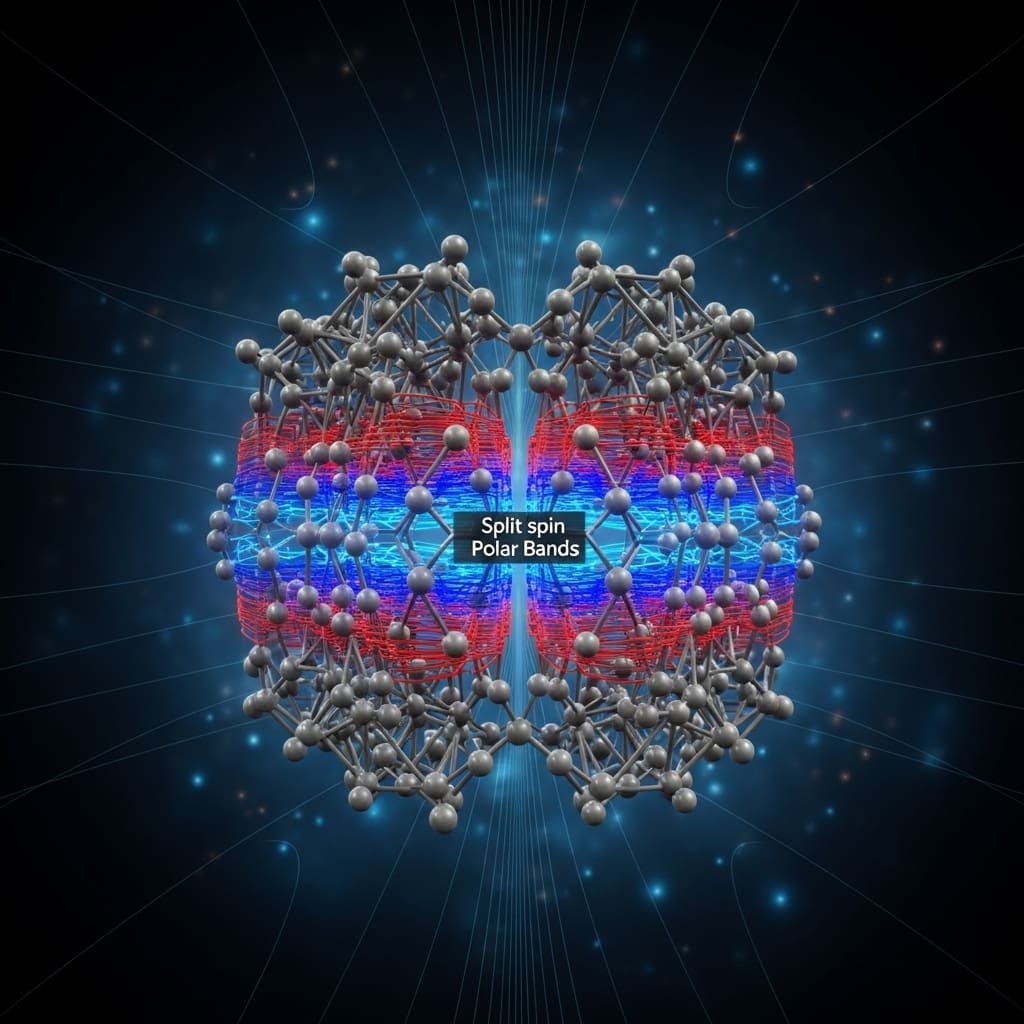
Altermagnets, a recently discovered class of magnetic materials, present unique challenges to understanding electron behaviour due to their unusual spin configurations, and scientists are now investigating how interactions within these materials affect electron lifetimes. Kristoffer Leraand from the Norwegian University of Science and Technology, Kristian Mæland from the University of Würzburg, and Asle Sudbø, along with their colleagues, demonstrate that despite complex interactions with vibrations and magnetic excitations, the fundamental spin splitting within altermagnets remains detectable. Their work reveals a crucial distinction in how electrons with different spins interact with magnetic excitations, offering a pathway to experimentally verify the material’s unique properties, and provides theoretical estimates of lifetime effects relevant for experimental detection. This research advances the fundamental understanding of electron behaviour in spin-split systems and offers insights into the complex interplay of many-body interactions within these novel materials.
These materials possess unique electronic structures where electron bands touch at specific points, creating quasiparticles with potentially long lifetimes, and understanding how electrons interact within these materials is crucial for developing future spintronic devices. The team calculates how long these quasiparticles last, revealing that their lifespan depends on their energy and momentum, with shorter lifetimes observed near the points where the bands touch due to increased scattering. These findings provide fundamental insights into the physics of altermagnets and pave the way for designing new spintronic devices based on their properties.
The researchers compute how electrons are affected by interactions with magnons, phonons, and combined magnetoelastic modes, demonstrating that these interactions broaden the energy bands, potentially obscuring the intrinsic spin-splitting in spectroscopic measurements. By modelling a specific type of altermagnet, the team reveals that the spin-splitting remains detectable despite these broadening effects, and provides theoretical estimates of lifetime effects relevant for experimental detection. Importantly, they find a distinct difference in how spectral functions broaden for electrons with different spins when interacting with magnons, a contrast not seen when interacting with phonons, and linked to the spin splitting of the magnon modes themselves.,.
Altermagnetism, Topology, and Electron-Phonon Interactions
This extensive list of references details research into condensed matter physics, specifically focusing on altermagnetism, topological materials, electron-phonon interactions, and related quantum phenomena. It covers a broad range of topics, including the fundamental properties of altermagnets, topological insulators, and the interplay between electrons and lattice vibrations, alongside studies of various quantum effects, such as magnons, skyrmions, and quantum fluctuations.,.
Spin Splitting Resolvable Amidst Many-Body Broadening
This research details a comprehensive investigation into how electrons interact within altermagnets, focusing on the effects of interactions with magnons, phonons, and combined magnetoelastic modes on the spin-split electron bands. The team demonstrates that despite these interactions broadening the energy bands, the intrinsic spin-splitting remains detectable, providing crucial theoretical estimates of lifetime effects relevant for experimental detection. A key finding is the distinct difference in how spectral functions broaden for electrons with different spins when interacting with magnons, a contrast not seen when interacting with phonons, and linked to the spin splitting of the magnon modes themselves. The study further clarifies the relative contributions of different interactions, revealing that electron-magnon coupling and magnetoelastic coupling yield virtually indistinguishable results.
By calculating the spectral function, the researchers provide a theoretical framework for interpreting experimental data obtained through techniques like angular-resolved photoemission spectroscopy, offering insights into how electronic energy bands are modified by many-body interactions. The authors acknowledge that the analysis simplifies the self-energies by omitting momentum and frequency dependence, representing a limitation of the current model, and suggest that future work could address this by incorporating these dependencies for a more complete description of the system. This research contributes to a deeper understanding of quasiparticle dynamics in altermagnets and advances the broader field of many-body physics in spin-split systems, providing a foundation for future investigations into novel magnetic materials and phenomena.
👉 More information
🗞 Spin-dependent quasiparticle lifetimes in altermagnets
🧠 ArXiv: https://arxiv.org/abs/2512.15859

