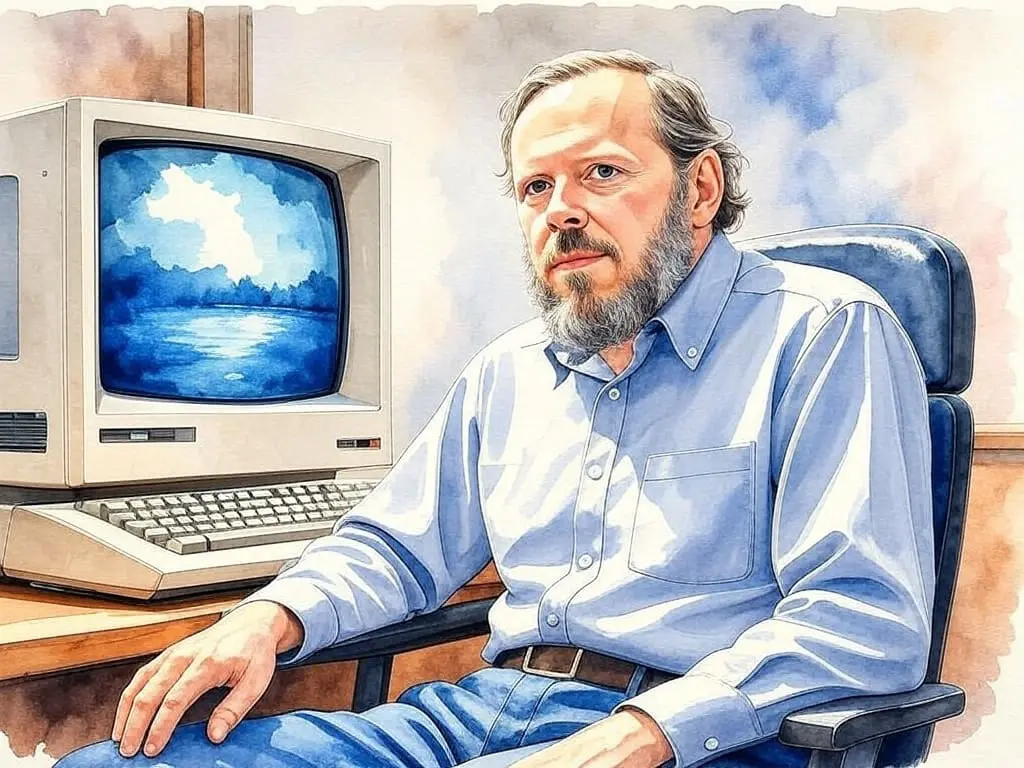
Dennis Ritchie was a pivotal figure in computer science, renowned for creating the C programming language and co-developing the Unix operating system. His work laid the foundation for modern computing, influencing everything from embedded systems to web servers. Despite his significant contributions, Ritchie remained relatively unknown compared to other tech icons like Steve Jobs or Bill Gates, as his focus was on system-level innovations rather than consumer-facing products.
The C programming language, developed alongside Unix, became a cornerstone of software development due to its unique balance of high-level abstractions and low-level hardware control. Ritchie’s design choices, including pointers and direct memory manipulation, provided programmers with unprecedented control over system resources, making C particularly suited for systems programming where efficiency and precision are critical. Unix, with its modular approach, emphasized simplicity and efficiency, principles that continue to shape contemporary systems like Linux and macOS.
Ritchie’s underappreciation stemmed from the technical depth of his work, which required a deep understanding of computer architecture. Unlike consumer-oriented innovations, Ritchie’s advancements operated behind the scenes, focusing on creating robust systems and programming languages characterized by functionality and practicality rather than personal recognition. Despite this relative obscurity, his influence is undeniable, as C and Unix-derived systems have become cornerstones of software development. His legacy is a testament to the enduring power of well-designed tools in shaping technological progress over decades.
The Man Behind The Digital Revolution
Dennis Ritchie, often hailed as the father of Unix, made groundbreaking contributions to computer science that have profoundly shaped modern computing. Born in 1941, Ritchie’s work at Bell Labs in the late 1960s led to the creation of Unix, an operating system designed for simplicity and efficiency. Unix was revolutionary because it allowed multiple users to access a single computer simultaneously, setting a new standard for multitasking systems.
Ritchie developed the C programming language in collaboration with Ken Thompson during the early 1970s. C was unique in its ability to write hardware-independent code that could be compiled on various machines, enhancing portability and flexibility. This innovation made Unix more accessible across different computing environments, solidifying its influence on subsequent operating systems.
Ritchie’s contributions were not confined to technical innovations but emphasized the importance of clear and concise programming practices. His work with Thompson on Unix demonstrated a commitment to modularity and simplicity, which are foundational in software development. This approach allowed Unix to evolve and adapt over time, remaining relevant despite technological advancements.
The impact of Ritchie’s work extends beyond specific technologies; it has influenced the broader computing culture. The C language became a cornerstone for system programming, while Unix inspired the development of Linux and other operating systems. Ritchie’s legacy is evident in the enduring principles he championed, which continue to guide software engineers today.
In 1983, Ritchie and Ken Thompson were awarded the Turing Award in recognition of Their contributions. His humility and dedication to advancing computer science have left an indelible mark on the field, ensuring that his work remains a cornerstone of digital innovation.
How Dennis Ritchie Created The C Language
Dennis Ritchie was a pivotal figure in the development of computer science, particularly known for creating the C programming language. Born in 1941, Ritchie earned his Ph.D. in physics from Harvard University before joining Bell Labs, where he would make groundbreaking contributions to computing.
Ritchie worked on the Unix operating system alongside Ken Thompson at Bell Labs. Recognizing the limitations of existing languages like B, Ritchie developed C as a more versatile and efficient tool for software development. This innovation allowed programmers to write code that was both portable across different hardware platforms and highly performant.
The creation of C had a profound impact on the field of computer science. Its design emphasized simplicity and efficiency, making it easier for developers to create complex systems. The language’s influence extended beyond Unix, becoming a standard tool in software development and inspiring numerous other programming languages.
Ritchie’s contributions were not limited to C; he also played a key role in developing essential tools within the Unix ecosystem. His work on compilers and debuggers further solidified his reputation as a foundational figure in computing. The enduring relevance of his innovations underscores their importance in shaping modern technology.
UNIX And Its Lasting Legacy
Dennis Ritchie was a pivotal figure in the development of modern computing, best known for creating the C programming language and co-founding the UNIX operating system. His work laid the groundwork for the software infrastructure underpinning contemporary digital systems. Ritchie’s contributions were not only technical but also conceptual, influencing how software is designed, developed, and maintained.
Ritchie and Ken Thompson created UNIX in 1969, revolutionising computing by introducing a modular, portable operating system. Unlike its predecessors, UNIX was written in a high-level language (initially a subset of C), which made it easier to understand, modify, and port across different hardware platforms. This modularity and portability were revolutionary, enabling UNIX to become a standard in both academic and industrial settings.
Ritchie’s development of the C programming language in 1972 was another cornerstone of his legacy. C provided a balance between high-level abstraction and low-level hardware control, making it ideal for system programming. Its influence extended beyond UNIX, becoming the foundation for many other languages and systems. The widespread adoption of C is evidenced by its continued use in critical applications, from embedded systems to large-scale servers.
Ritchie’s work on UNIX and C significantly impacted software engineering practices. The principles of modularity, code reuse, and separation of concerns, which were integral to UNIX design, became standard methodologies. These principles facilitated the development of more maintainable and scalable software systems, influencing generations of programmers and software architects.
The Golden Era Of AT&T Bell Labs
Dennis Ritchie was a pivotal figure at AT&T Bell Labs, renowned for his foundational contributions to computer science. His creation of the C programming language in 1972 marked a significant milestone, influencing countless subsequent languages and systems. Additionally, Ritchie co-developed Unix with Ken Thompson, which transformed operating systems by introducing a modular, portable design that became widely adopted.
The development of C was revolutionary due to its efficiency and flexibility, enabling programmers to write system software closer to machine code while maintaining readability. This innovation facilitated the creation of Unix, as C’s portability allowed Unix to run on various hardware platforms. The synergy between C and Unix underscored Ritchie’s ability to address practical computing challenges with elegant solutions.
Unix’s impact was profound; it introduced concepts like multi-user support and file systems that are now standard in operating systems. Its design emphasized simplicity and modularity, encouraging a culture of collaboration and innovation within the computer science community. This approach contrasted with proprietary systems, fostering an open-source ethos that continues to influence technology development.
Later in his career, Ritchie joined Google, where he contributed to the Go programming language. Although less prominent than his earlier work, this project reflected his ongoing commitment to solving real-world computing problems through innovative design. Go aimed to improve software engineering practices by addressing issues like concurrency and scalability, continuing Ritchie’s legacy of impactful contributions.
C’s Enduring Influence On Programming
Dennis Ritchie, often referred to as the “father of C,” played a pivotal role in shaping modern computing through his creation of the C programming language and his contributions to the development of Unix. His work on C introduced a high-level language that was both efficient and portable, enabling developers to write code that could run on various hardware systems. This innovation laid the groundwork for many subsequent programming languages, including C++, Java, and even Python, which often relies on C for performance-critical components.
Ritchie’s collaboration with Ken Thompson on the Unix operating system further solidified his impact on computer science. Unix introduced a modular approach to software design, emphasizing simplicity and efficiency. Its influence can still be seen in contemporary systems like Linux and macOS, which draw heavily from its principles. The development of Unix demonstrated how a well-designed operating system could foster innovation by providing developers with a flexible platform for experimentation.
The C programming language, developed alongside Unix, became a cornerstone of software development due to its balance of high-level abstractions and low-level hardware control. Ritchie’s design choices, such as the inclusion of pointers and the ability to manipulate memory directly, gave programmers unprecedented control over system resources. This feature set made C particularly suited for systems programming, where efficiency and precision are paramount.
Why Dennis Ritchie Remains Underappreciated
Dennis Ritchie’s contributions to computer science are foundational yet often overlooked. He created the C programming language and co-developed Unix, both of which have profoundly influenced modern computing. His work laid the groundwork for numerous technologies we rely on today.
Ritchie’s underappreciation stems from his focus on system-level innovations rather than consumer-facing products. Unlike figures such as Steve Jobs or Bill Gates, whose contributions are more visible in everyday technology, Ritchie’s advancements operate behind the scenes, making them less immediately recognizable to the general public.
Comparisons with other tech luminaries highlight Ritchie’s relative obscurity. While Jobs and Gates achieved widespread fame through their companies and products, Ritchie’s work remained largely technical. This disparity is evident in analyses from sources like IEEE Spectrum, which discuss the impact of various technological contributors.
The nature of Ritchie’s contributions further explains his underappreciation. His focus on creating robust systems and programming languages required a deep understanding of computer architecture, which is less accessible to the average user. This technical depth contrasts with consumer-oriented innovations often capturing public attention.
Despite his relative obscurity, Ritchie’s influence is undeniable. The C language and Unix operating system have become cornerstones of software development, shaping everything from embedded systems to web servers. His work exemplifies the importance of foundational research in driving technological progress.