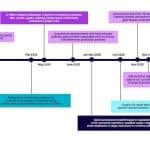
On May 2, 2025, researchers Sheikh Samit Muhaimin and Spyridon Mastorakis published Helping Big Language Models Protect Themselves: An Enhanced Filtering and Summarization System, introducing a defense framework that enables large language models to autonomously detect and mitigate adversarial inputs. Their system employs advanced NLP techniques and contextual summarization, achieving a 98.71% success rate in identifying harmful prompts without requiring retraining, thereby enhancing LLM resilience against malicious exploitation.
Large language models (LLMs) face growing threats from adversarial attacks, manipulative prompts, and encoded malicious inputs. Current defenses often require retraining, which is computationally expensive. This study introduces a defense framework enabling LLMs to autonomously detect and filter harmful inputs without retraining. The framework includes a prompt filtering module using NLP techniques like zero-shot classification and keyword analysis, and a summarization module processing adversarial literature for context-aware defense. Experimental results show a 98.71% success rate in identifying threats, with improved jailbreak resistance and refusal rates. This approach enhances LLM resilience to misuse while maintaining response quality, offering an efficient alternative to retraining-based defenses.
In recent years, large language models (LLMs) have emerged as a transformative force in artificial intelligence, revolutionising natural language processing tasks such as text generation, translation, and summarisation. These models, trained on vast amounts of data, are capable of generating human-like text, making them versatile tools across industries. However, their rapid development has also raised critical questions about security, ethical use, and the potential for misuse.
One of the most concerning developments in LLM research is the rise of prompt injection attacks. These attacks involve manipulating prompts to influence model outputs, potentially leading to unintended consequences. For instance, an attacker could craft a prompt that causes the model to generate harmful content or reveal sensitive information. This vulnerability underscores the need for robust security measures and ethical guidelines.
Automated jailbreaking is another significant concern. Attackers use automated scripts to exploit vulnerabilities in LLMs, bypassing safety measures designed to prevent harmful outputs. This highlights the importance of continuous monitoring and updating of security protocols to stay ahead of potential threats.
While prompt injection attacks are a major concern, they are not the only risk. Adversarial attacks, where inputs are subtly altered to mislead models, pose another significant threat. These attacks can lead to incorrect predictions or decisions, potentially causing real-world harm. Addressing these vulnerabilities requires a comprehensive approach that includes both technical solutions and ethical considerations.
As LLMs continue to evolve, it is crucial to strike a balance between innovation and responsibility. Researchers and policymakers must collaborate to develop transparent mechanisms for detecting and mitigating adversarial attacks while ensuring that LLMs are used in ways that align with societal values. This includes establishing clear guidelines for the ethical use of these models.
The rise of large language models presents both opportunities and risks. While they offer immense potential for advancing AI capabilities, their vulnerabilities demand immediate attention from researchers, developers, and regulators. By prioritising robust security measures and ethical frameworks, we can ensure that LLMs serve as tools for positive change rather than instruments of harm. The future of AI hinges on our ability to address these challenges head-on while fostering innovation in a responsible manner.
👉 More information
🗞 Helping Big Language Models Protect Themselves: An Enhanced Filtering and Summarization System
🧠 DOI: https://doi.org/10.48550/arXiv.2505.01315