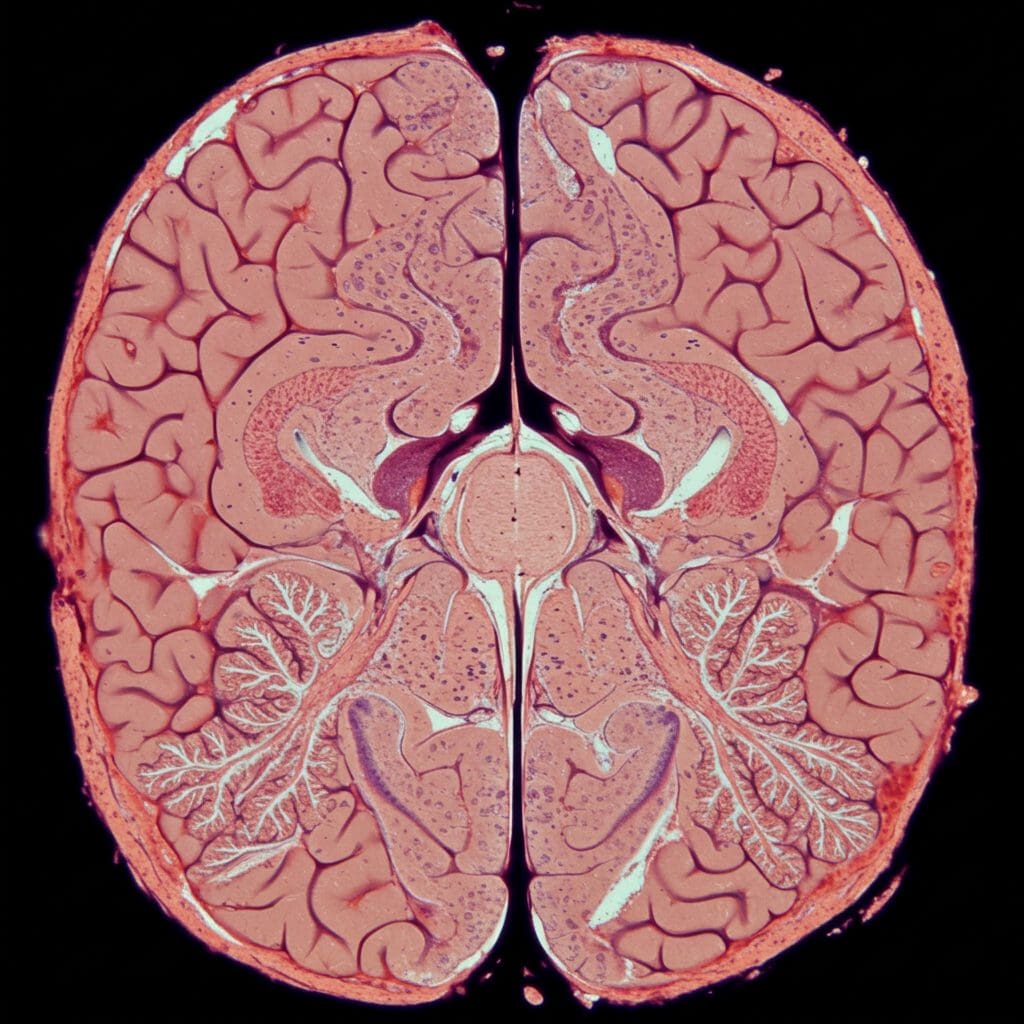
Accurate diagnosis and monitoring of Parkinsonism rely increasingly on quantitative imaging of dopamine transporters (DaTs) using single-photon emission computed tomography (SPECT), a nuclear medicine imaging technique. However, conventional methods for processing these scans require a separate X-ray computed tomography (CT) scan to correct for tissue attenuation, introducing logistical difficulties, increased radiation exposure, and potential inaccuracies. Researchers at Washington University, including Zitong Yu, Md Ashequr Rahman, Zekun Li, Chunwei Ying, Hongyu An, Tammie L.S. Benzinger, Richard Laforest, Jingqin Luo, Scott A. Norris, and Abhinav K. Jha, present a novel deep-learning-based approach, detailed in their article, “Development and in silico imaging trial evaluation of a deep-learning-based transmission-less attenuation compensation method for DaT SPECT”. Their work introduces ‘DaT-CTLESS’, a method designed to circumvent the need for a CT scan by leveraging artificial intelligence to estimate attenuation directly from the SPECT images themselves, and demonstrates its efficacy through a comprehensive in silico trial.
Parkinson’s disease presents a considerable diagnostic and management challenge, driving ongoing research into improved imaging techniques. Accurate quantification of dopamine transporter (DaT) uptake via single-photon emission computed tomography (SPECT) is crucial for both diagnosing and monitoring this neurodegenerative condition. DaT, a protein responsible for reabsorbing dopamine in the brain, diminishes in Parkinson’s disease, and SPECT imaging visualises this reduction. Researchers actively pursue methods to refine quantitative SPECT imaging, addressing limitations inherent in traditional approaches and striving for greater accuracy, efficiency, and patient comfort. This pursuit culminates in the development of innovative techniques, such as deep learning-based transmission-less attenuation correction (DaT-CTLESS), which promises to refine the field of DaT-SPECT imaging.
Early investigations, dating back to the late 1980s and 1990s, established the importance of precise regional uptake quantification within the striatum, recognising its sensitivity to subtle changes indicative of neurodegenerative processes. Kish, Licho, and Bai pioneered these efforts, meticulously examining the impact of factors like photon scattering and attenuation on the reliability of SPECT image analysis. Attenuation refers to the reduction in intensity of emitted photons as they travel through tissue, while scattering describes the redirection of photons. These foundational studies highlighted the need for robust correction methods to mitigate distortions introduced by these physical processes, paving the way for more accurate and reproducible measurements. Subsequent research focused on refining quantitative SPECT/CT techniques, including multi-energy window projection-domain methods, to further enhance accuracy and minimise errors.
Recent years witness a surge in publications dedicated to optimising quantitative SPECT/CT imaging, with Dickson, Brown, and Jha emerging as prolific contributors to the field. Jha and colleagues consistently refine existing methodologies and explore novel approaches to improve the precision and reliability of DaT-SPECT measurements. These researchers actively investigate advanced reconstruction algorithms, sophisticated correction models, and optimised imaging protocols to push the boundaries of what is achievable with SPECT/CT technology. Reconstruction algorithms transform raw data into usable images, while correction models account for physical distortions.
The core innovation, DaT-CTLESS, leverages the power of deep learning to estimate attenuation directly from the SPECT projection data, effectively eliminating the need for a separate computed tomography (CT) scan. This represents a significant advancement, as CT scans contribute to patient radiation exposure, increase imaging costs, and add logistical complexity to the imaging process. The ISIT-DaT trial rigorously evaluates the performance of DaT-CTLESS, demonstrating its superiority compared to uncorrected attenuation correction (UAC) and its close alignment with results obtained using traditional CT-based attenuation correction (CTAC). This validation establishes DaT-CTLESS as a viable and potentially transformative alternative to conventional methods.
The ISIT-DaT trial meticulously assesses the performance of DaT-CTLESS, revealing a high correlation with CTAC in quantifying regional uptake. This strong correlation confirms the accuracy of the deep learning-based method, demonstrating its ability to provide measurements comparable to those obtained with CT-based attenuation correction. Furthermore, DaT-CTLESS significantly outperforms UAC in accurately distinguishing between healthy individuals and patients affected by Parkinson’s disease.
DaT-CTLESS exhibits robustness even with reduced training data sizes, suggesting its feasibility for implementation in clinical settings where large datasets may not be readily available. This adaptability makes the method particularly attractive for smaller hospitals and clinics with limited access to extensive data resources.
Supporting this quantitative work, researchers emphasise statistical rigor and reliability, providing guidelines for selecting and reporting intraclass correlation coefficients. Koo and Li contribute to this effort, ensuring the validity and reproducibility of quantitative measurements. The research also acknowledges the importance of radiation safety, highlighting the motivation for reducing radiation dose through techniques like transmission-less attenuation correction. Brenner and colleagues contribute to this understanding, emphasising the need to minimise patient exposure to ionizing radiation.
In essence, this collection of research represents a concerted effort to advance the field of DaT-SPECT imaging, moving towards more accurate, efficient, and patient-friendly quantification methods for diagnosing and managing Parkinson’s disease. The development of DaT-CTLESS, validated through the ISIT-DaT trial, marks a significant step towards achieving this goal. Future research will focus on further refining the deep learning algorithms, expanding the training datasets, and conducting large-scale clinical trials to confirm the long-term benefits of this innovative technology.
Prospective studies will investigate the potential of DaT-CTLESS to improve early diagnosis, monitor disease progression, and personalise treatment strategies for Parkinson’s disease. Researchers will also explore the application of this technology to other neurodegenerative disorders, such as dementia and Huntington’s disease, expanding its impact on the broader field of neurology. The ultimate goal is to develop a comprehensive imaging platform that provides clinicians with the tools they need to deliver the best possible care to patients affected by these debilitating conditions.
👉 More information
🗞 Development and in silico imaging trial evaluation of a deep-learning-based transmission-less attenuation compensation method for DaT SPECT
🧠 DOI: https://doi.org/10.48550/arXiv.2506.20781