
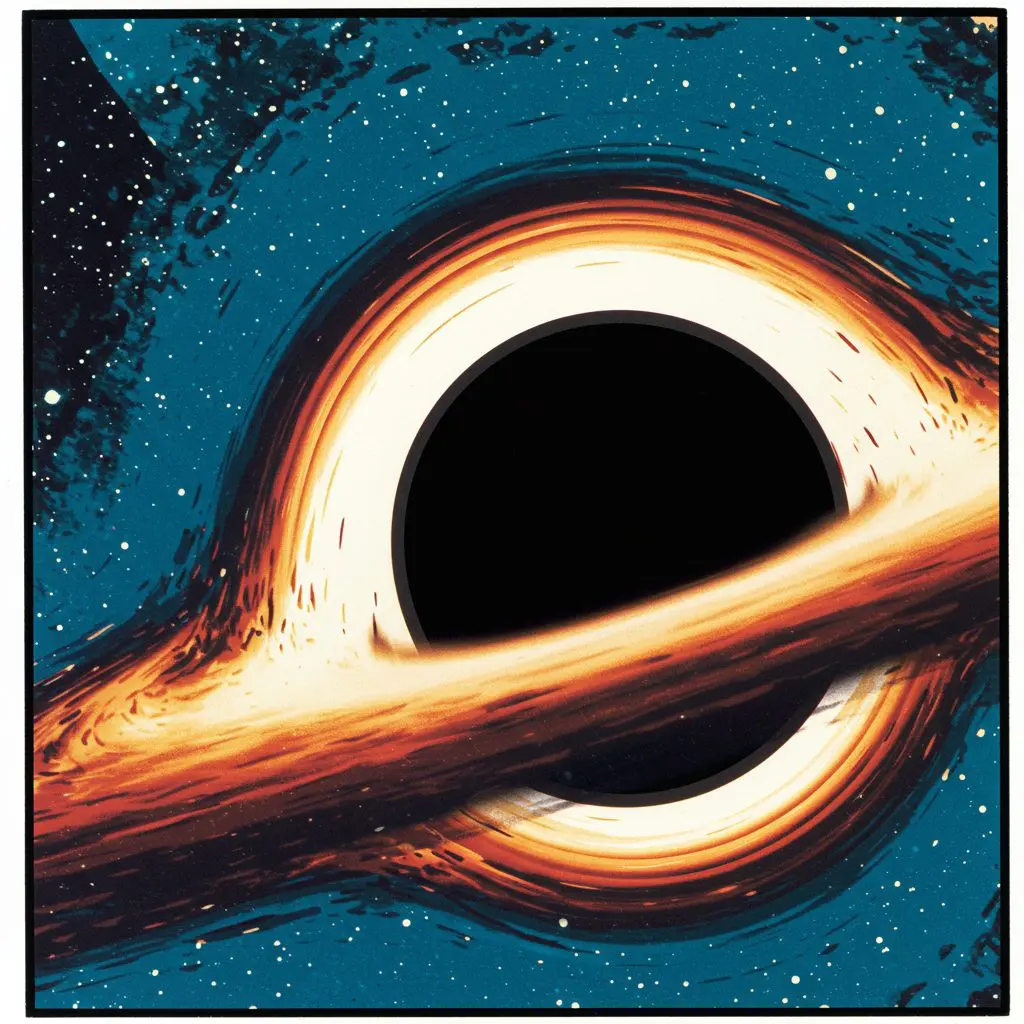
Research establishes an upper mass limit for extremal charged black holes in de Sitter spacetime using a 3-form gauge field and higher-derivative corrections. This framework links the de Sitter Weak Gravity Conjecture to slow-roll inflation, revealing that cosmological constraints derived from the conjecture can exceed those from inflationary dynamics alone.
The enduring puzzle of reconciling quantum mechanics with general relativity necessitates continual refinement of theoretical boundaries. Recent work explores constraints on effective field theories arising from the interplay between de Sitter space – a model for the accelerating expansion of the universe – and the Weak Gravity Conjecture, a proposal concerning the limits of gravity at high energies. Researchers from the Khon Kaen Particle Physics and Cosmology Theory Group (KKPaCT) – Nutthaphat Lunrasria and Chakrit Pongkitivanichkula – at Khon Kaen University, investigate these limits using a framework involving 3-form gauge fields and higher-derivative corrections to gravity. Their analysis, detailed in the article “The de Sitter Weak Gravity Conjecture from 3-Form Black Holes and Inflation with Higher-Derivative Corrections”, demonstrates how these principles can constrain both the properties of black holes and the viability of inflationary models describing the very early universe, potentially offering a more robust foundation for cosmological theory.
Three-Form Gauge Fields, Black Hole Extremality, and Cosmological Constraints
Recent research explores the interconnectedness of black hole physics and early universe cosmology through the lens of a three-form gauge field. This investigation establishes constraints on the parameters governing this field, linking the properties of extremal charged black holes to the dynamics of slow-roll inflation – a period of rapid expansion in the early universe.
A three-form gauge field is a mathematical object in physics that assigns a value to three-dimensional regions of space, unlike more familiar electromagnetic fields which act on points. The study focuses on the weak gravity conjecture (WGC), a theoretical proposal suggesting that gravity becomes weak at very high energies, and its implications for the mass of extremal black holes within de Sitter (dS) spacetime – a universe with a positive cosmological constant, similar to our own. Researchers derive an upper bound on the mass of these black holes, effectively defining permissible parameter ranges for the model.
The analysis confirms the consistency of the Wald entropy – a measure of black hole entropy calculated using field theory – with the established extremality bound, even when incorporating higher-derivative corrections to the three-form field’s action. These corrections account for more complex interactions within the field and demonstrate the robustness of the findings. Importantly, these higher-derivative terms yield further constraints that align with established ‘swampland’ criteria – theoretical consistency conditions that differentiate viable physical theories from those likely to be inconsistent with quantum gravity.
The investigation extends to cosmology by examining the scalar dual of the three-form field within the context of inflationary models. This scalar field represents a simplified description of the three-form field’s behaviour and allows for easier cosmological calculations. In the large-field limit – where the scalar field takes on large values – the potential energy of the field acquires a Higgs-like structure, supporting the conditions necessary for slow-roll inflation and providing a mechanism for the rapid expansion of the early universe. Conversely, the small-field limit results in a potential energy with an anti-de Sitter (AdS) minimum – a universe with negative cosmological constant – which contradicts the dS swampland constraints and rules out this inflationary pathway.
The research demonstrates that the dS WGC imposes constraints on the system that are often more restrictive than those derived solely from inflationary dynamics. This highlights the utility of swampland-inspired principles in constructing realistic cosmological models. The findings establish a framework where constraints derived from black hole thermodynamics actively shape the permissible landscape of cosmological models, offering a novel approach to understanding the interplay between gravity, quantum mechanics, and cosmology.
👉 More information
🗞 The de Sitter Weak Gravity Conjecture from 3-Form Black Holes and Inflation with Higher-Derivative Corrections
🧠 DOI: https://doi.org/10.48550/arXiv.2506.06709