China Pacific Insurance and the Dali Bai Autonomous Prefecture jointly established the Dali Tsung-Dao Lee Center for Sciences and Arts on July 6, 2025, aiming to integrate scientific research with artistic creation and natural observation. Spearheaded by Academician Ding Hong, the centre will host approximately 20 international academic and artistic events annually, each lasting one to four weeks, and provides 30 independent workspaces for long-term research groups. The centre’s inauguration follows a conference co-hosted by the Tsung-Dao Lee Institute and the Institute of Physics, Chinese Academy of Sciences, demonstrating a focus on theoretical physics research.
A New Centre for Interdisciplinary Research
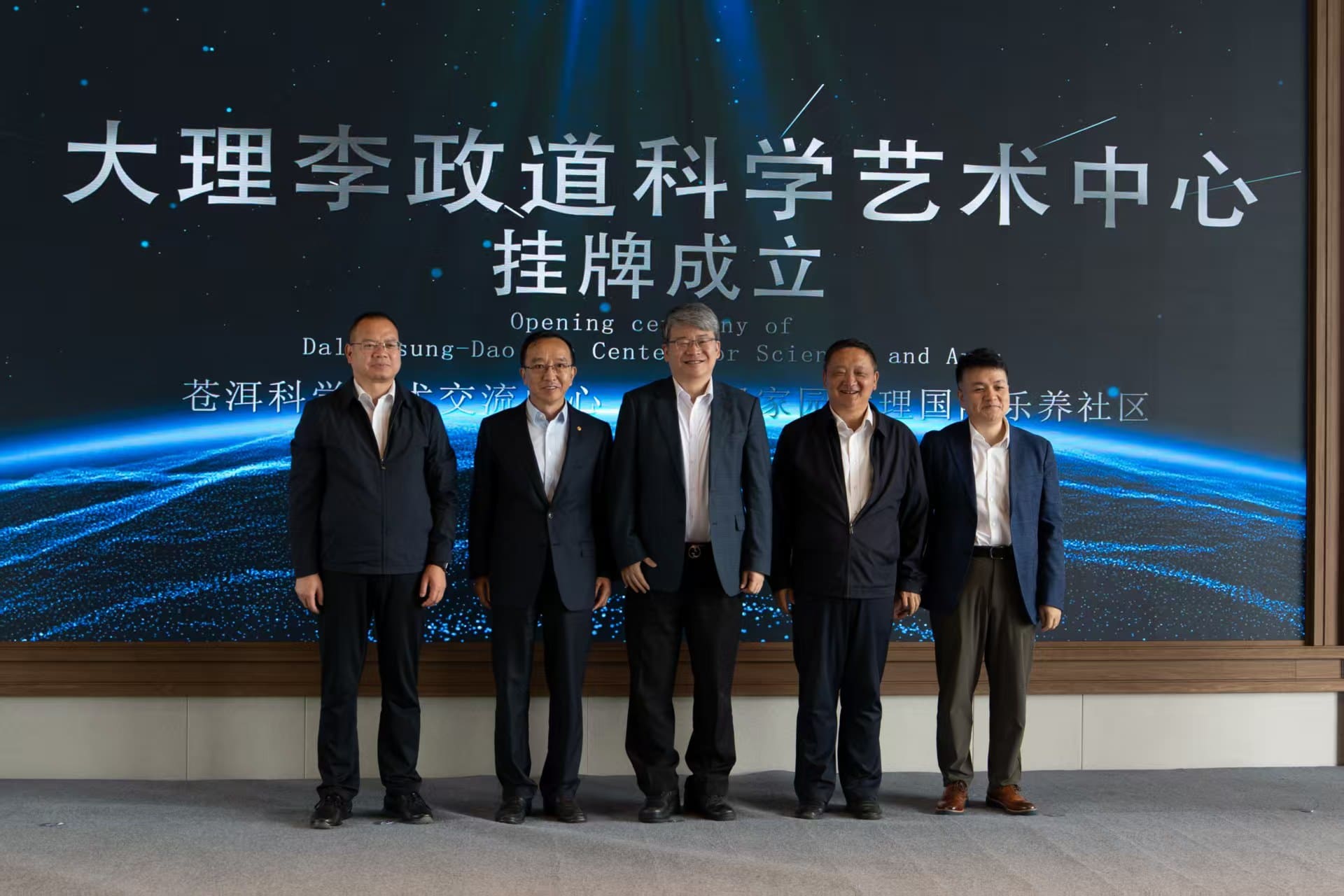
The Dali Tsung-Dao Lee Center for Sciences and Arts was officially inaugurated on July 6, 2025, at the Pacific Care Home Dali International Holiday Retirement Community. This centre represents a joint establishment between the Cang-Er Center for Scientific and Artistic Exchange of the Dali Bai Autonomous Prefecture and the Pacific Care Home Dali International Holiday Retirement Community, and is led by Academician Ding Hong, Deputy Director of the Tsung-Dao Lee Institute at Shanghai Jiao Tong University. The centre’s establishment is inspired by Nobel Laureate Tsung-Dao Lee’s vision of the interconnectedness of science and art, aspiring to become a world-class interdisciplinary innovation platform.
The centre will focus its activities around the themes of “Science, Art, and Nature,” drawing inspiration from globally recognised academic institutions such as the Aspen Center for Physics. It is equipped with 30 independent workspaces designed to support long-term residency programs for small research groups, alongside comprehensive facilities for conferences, accommodation, and office use. These facilities are intended to support both cutting-edge issues in fundamental science and avant-garde explorations in artistic creation, fostering environments conducive to scientific innovation centres.
Approximately 20 international academic and artistic events are planned annually, each lasting from one to four weeks, bringing together leading scientists and artists. These extended gatherings, held within the scenic landscape of Dali, are designed to foster open dialogue, inspire innovation, and generate original outcomes. The centre also intends to engage with the public through science lectures and art exhibitions, collaborating with local universities and media outlets to promote cross-disciplinary communication and public participation.
Prior to its official inauguration, the Tsung-Dao Lee Institute and the Institute of Physics, Chinese Academy of Sciences, co-hosted the International Conference on Majorana Zero Modes: from Topological Superconductors to Non-Abelian Braiding. This demonstrates a commitment to fostering advanced research in theoretical physics, a field concerned with the fundamental laws governing the universe and matter.
Establishing the Dali Tsung-Dao Lee Center
The unveiling ceremony was jointly officiated by Academician Ding Hong, Mr Fan Fu, Chairman and Party Secretary of China Pacific Insurance (Group) Co., Ltd., and Mr Guozong Yang, Party Secretary of Dali Prefecture, all of whom delivered opening remarks. A distinguished gathering, including Academicians Enge Wang, Gang Tian, Xincheng Xie, Xianhui Chen, and Chao Tang of the Chinese Academy of Sciences; Professor Fuchun Zhang, Director of the Kavli Institute for Theoretical Sciences at UCAS; Professor Ziqiang Wang of Boston College; Mr Guohua Yuan, Party secretary and chairman of Shanghai State Owned Capital Investment Co., Ltd.; and Mr Wu Wang, Head of the Organization Department of Dali Prefectural Committee, witnessed the event, alongside representatives from leading universities, research institutes, companies and governments.
The centre plans to host approximately 20 international academic and artistic events annually, each lasting from one to four weeks, bringing together leading scientists and artists. These extended gatherings, set within the scenic landscape of Dali, are designed to foster open dialogue, inspire innovation, and generate original, boundary-breaking outcomes. In addition to academic exchange, the centre will engage with the public through science lectures and art exhibitions, collaborating with local universities and media outlets to promote cross-disciplinary communication and public participation.
Programme and Future Activities
The Dali Tsung-Dao Lee Center for Sciences and Arts is equipped with 30 independent workspaces to support long-term residency programs for small research groups, alongside comprehensive facilities for conferences, accommodation, and office use. These facilities are intended to support both cutting-edge issues in fundamental science and avant-garde explorations in artistic creation, fostering environments conducive environments for scientific innovation centres.
In addition to the planned events, the Tsung-Dao Lee Institute and the Institute of Physics, Chinese Academy of Sciences, co-hosted the International Conference on Majorana Zero Modes: from Topological Superconductors to Non-Abelian Braiding as a precursor to the centre’s establishment. This demonstrates a commitment to fostering advanced research in theoretical physics, a field concerned with the fundamental laws governing the universe and matter.
The centre intends to engage with the public through science lectures and art exhibitions, collaborating with local universities and media outlets to promote cross-disciplinary communication and public participation. These activities will complement the approximately 20 international academic and artistic events planned annually, each lasting from one to four weeks, bringing together leading scientists and artists.
More information
External Link: Click Here For More