

D-Wave Quantum Inc. research indicates that 81% of business leaders believe classical computing has reached its limits for optimisation, prompting exploration of quantum technologies. The study, surveying 400 leaders in logistics, retail, and finance between May 2nd and May 15th, 2025, found that 27% anticipate a return on investment exceeding $5 million within a year of adopting quantum optimisation, while 46% expect between $1 and $5 million. Over 100 organisations have already submitted more than 200 million problems to D-Wave’s quantum systems.
Quantum Computing Adoption Signals Shift in Optimization Strategies
A substantial proportion of business leaders anticipate financial returns from implementing quantum optimisation strategies, with 46% of those who have implemented or plan to implement quantum optimisation expecting a return on investment between $1 and $5 million within the first year. Furthermore, 27% predict a return exceeding $5 million in the same timeframe, indicating a growing expectation of significant financial benefit. These projections are based on responses from a study surveying leaders in retail, logistics, supply chain, manufacturing, life sciences, and financial services across North America, Europe, and the Asia Pacific region.
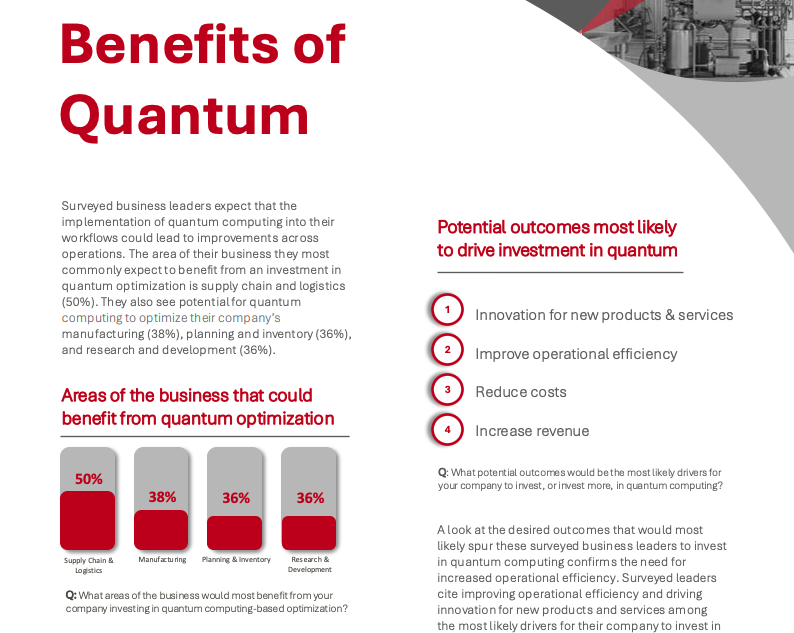
The study reveals that 88% of respondents, particularly in manufacturing, believe a 5% improvement in optimisation would justify investment, suggesting a clear link between enhanced efficiency and financial viability. Anticipated benefits are concentrated in key operational areas, including supply chain and logistics (50%), manufacturing (38%), planning and inventory (36%), and research and development (36%). Leaders cite improved operational efficiency, reduced costs, and increased revenue as primary drivers for investing in quantum optimisation, directly linking technological advancement to business outcomes and demonstrating a focus on Quantum optimisation ROI.
Despite the positive outlook, several hurdles to improvement were identified, including reliance on outdated technology (39%), budgetary restrictions (38%), dependence on classical optimisation (36%), and staffing limitations (35%). A significant majority (87%) also report that complacency is hindering innovation within their organizations, potentially slowing the adoption of strategies designed to deliver Quantum optimisation ROI. Dr. Alan Baratz, CEO of D-Wave, noted that leaders are increasingly recognizing the potential of quantum computing, and specifically annealing, to solve critical business problems.
Anticipated Returns on Investment
The study, conducted between May 2nd and May 15th, 2025, surveyed 400 business leaders across North America, Europe, and the Asia Pacific region, focusing on respondents in logistics, operations, and decision-making roles within retail, logistics, supply chain, manufacturing, life sciences, and financial services. Close to a quarter of respondents (22%) report that quantum computing is already having a significant impact on their organizations, while half anticipate it will be disruptive to their industry.
Three in five (60%) respondents expect quantum computing-based optimization to be very or extremely helpful in solving their companies’ operational challenges, a figure rising to 73% among those most familiar with the technology. More than 100 organizations currently trust D-Wave with their computational challenges, having submitted over 200 million problems to its quantum systems, demonstrating existing engagement with the technology.
The vast majority of respondents (88%), particularly in manufacturing, believe a 5% improvement in optimisation would justify investment, indicating a clear threshold for return on investment. D-Wave Quantum Inc. offers both annealing and gate-model quantum computers, deployed on-premises or accessed through a quantum cloud service with 99.9% availability, providing multiple access options for potential adopters.
Barriers to Implementation and Future Outlook
However, hurdles to improvement include reliance on outdated technology (39%), budgetary restrictions (38%), dependence on classical optimisation (36%), and staffing limitations (35%). These factors potentially impede the realisation of Quantum optimisation ROI despite positive expectations.
A significant majority (87%) also report that complacency is hindering innovation within their organizations, suggesting an internal challenge to adopting new technologies and achieving potential returns. This internal resistance may slow the implementation of strategies designed to deliver Quantum optimisation ROI.
Leaders cite the need for more innovative products and services, improved operational efficiency, reduced costs, and increased revenue as primary drivers for investing in quantum optimisation. These motivations directly link technological advancement to business outcomes and demonstrate a focus on Quantum optimisation ROI.
The study, conducted between May 2nd and May 15th, 2025, surveyed 400 business leaders across North America, Europe, and the Asia Pacific region. Respondents were logistics or operational managers and decision-makers in retail, logistics, supply chain, manufacturing, life sciences, and financial services, providing a focused sample for assessing expectations around Quantum optimisation ROI.
More information
External Link: Click Here For More


