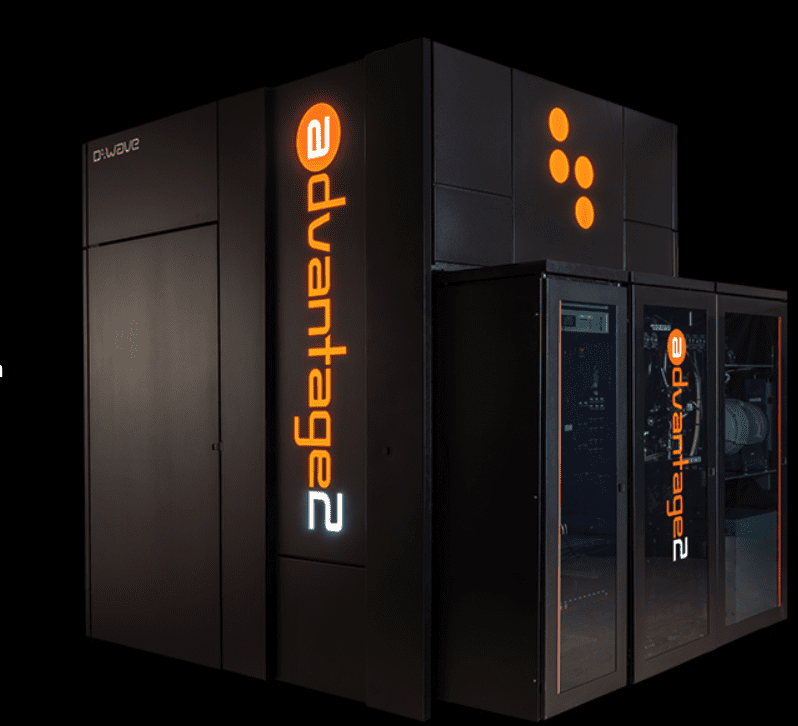
D-Wave has announced the general availability of its sixth-generation quantum computer, Advantage2, featuring 4,400+ qubits with enhanced performance through higher connectivity, coherence, and lower noise, while maintaining energy efficiency. This system is capable of solving complex problems beyond classical computing limits and is accessible via D-Wave’s Leap cloud service in 42 countries or as an on-premises solution for hyperscalers and supercomputing centers. Applications include optimization, artificial intelligence, and research across various industries.
The D-Wave Advantage2 quantum computer represents a significant leap forward in quantum computing technology. Designed with cutting-edge advancements, this system is poised to revolutionize industries by solving complex optimization problems at unprecedented speeds.
At its core, the D-Wave Advantage2 leverages a unique architecture incorporating a Zephyr topology. This innovative design enhances qubit connectivity, enabling more efficient problem-solving compared to previous generations. The increased connectivity allows the system to handle larger and more intricate computational tasks with greater precision.
One of the standout features of the D-Wave Advantage2 is its higher energy scale. This improvement ensures that the quantum computer can maintain stable operations even when tackling challenging problems. Additionally, the system boasts lower noise levels, contributing to more accurate computations and reducing the likelihood of processing errors.
The D-Wave Advantage2 also benefits from extended coherence times. These longer periods of stability allow the quantum computer to perform calculations with greater reliability, making it a powerful tool for researchers and businesses alike. The combination of these advancements positions the D-Wave Advantage2 as a leader in the field of quantum computing.
In terms of applications, the D-Wave Advantage2 is being utilized across various industries. For instance, Japan Tobacco has integrated this technology into its drug discovery processes, demonstrating its potential to accelerate scientific breakthroughs. Collaborations with leading institutions such as the Jülich Supercomputing Centre and Los Alamos National Laboratory further highlight the system’s versatility and impact. The D-Wave Advantage2 is not just a technological advancement; it represents a step toward unlocking new possibilities in quantum computing. With its enhanced capabilities, this system is set to drive innovation across multiple sectors, from healthcare to finance, enabling organizations to tackle complex challenges with unprecedented efficiency.
As quantum computing continues to evolve, the D-Wave Advantage2 stands as a testament to the progress being made in this field. Its cutting-edge features and wide-ranging applications make it an essential tool for researchers and businesses looking to stay at the forefront of technological innovation. The future of quantum computing is bright, and the D-Wave Advantage2 is leading the way.
More information
External Link: Click Here For More