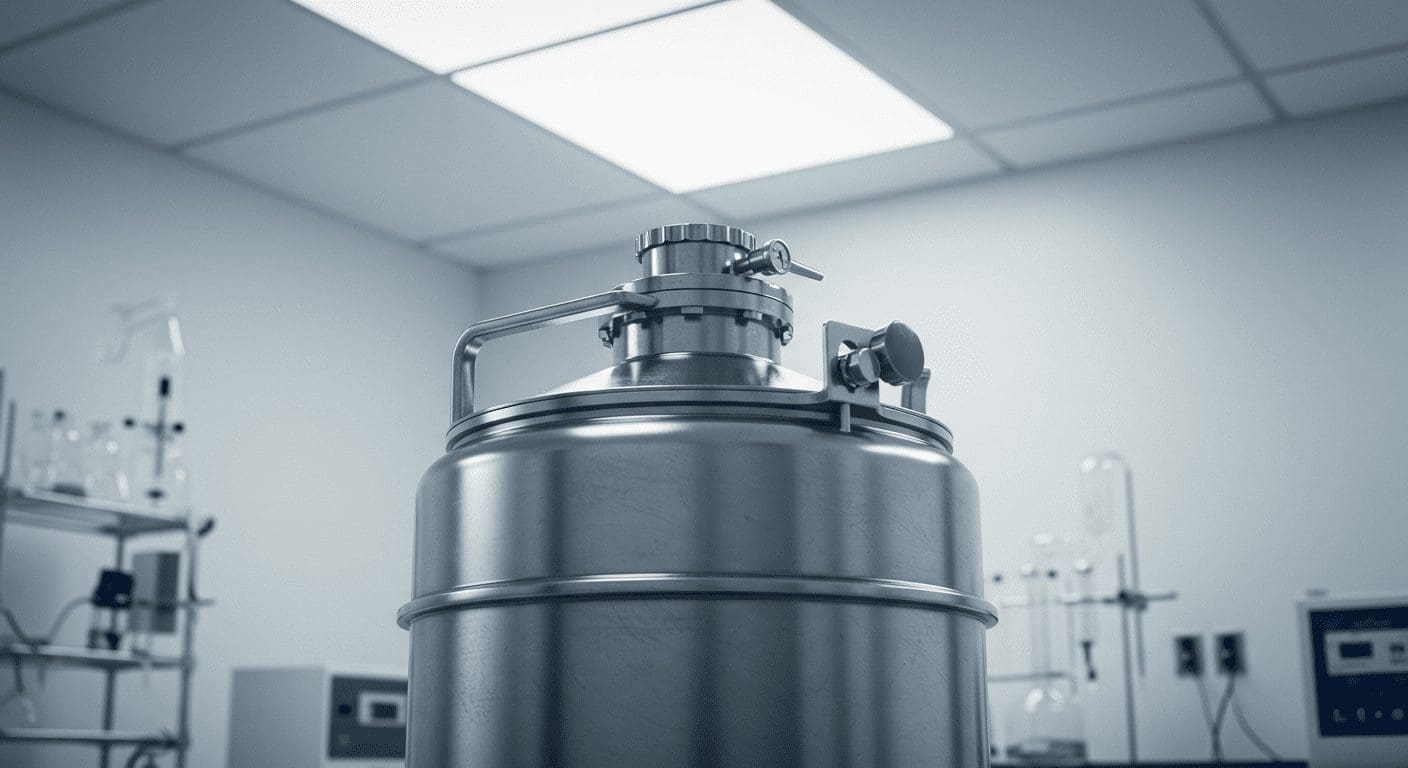
Cryogenics is critical in advancing quantum computing and technology by enabling ultra-low temperature environments necessary for superconducting qubits. These systems rely on precise thermal management to maintain stability, as even minor fluctuations can disrupt quantum operations.
Cryogenics is also integral to various industries, including space exploration, where materials are tested under extreme cold to ensure reliability, and medicine, where MRI machines use superconducting magnets that require cryogenic cooling for optimal performance.
Despite its importance, scaling cryogenic systems presents significant challenges. Larger quantum computing setups generate more heat, necessitating advanced cooling solutions to prevent operational disruptions. Additionally, the physical infrastructure required for these systems demands innovative materials and designs to address increased space and insulation needs. Cost considerations further complicate scalability, as specialized materials and energy-intensive processes drive up expenses, while integrating large-scale cryogenic systems into existing facilities poses logistical challenges.
Addressing these challenges requires a multifaceted approach involving research, industry collaboration, and strategic investments. Overcoming thermal management issues, developing cost-effective solutions, and creating robust infrastructure are essential steps to unlocking quantum computing’s full potential. By fostering innovation and cooperation, the field can develop scalable, efficient cryogenic systems that drive technological advancements across multiple sectors, from healthcare to space exploration.
The Role Of Superconductivity In Quantum Computing
Cryogenics plays a pivotal role in advancing quantum computing by enabling the operation of superconducting qubits at extremely low temperatures. Superconductivity is essential for these systems as it allows materials to conduct electricity without resistance, which is crucial for maintaining the delicate quantum states required for computation. The typical temperature needed for such operations is around a few millikelvin above absolute zero, achieved through advanced cryogenic systems like dilution refrigerators. These devices utilize helium isotopes to reach such low temperatures, ensuring the stability of superconducting qubits.
The necessity of cryogenics extends beyond just cooling the qubits; it also involves maintaining the entire quantum computing system at these low temperatures. This includes control lines and readout devices, which must operate in an environment free from thermal noise that could disrupt quantum operations. Cryogenics minimizes decoherence and errors by effectively managing the thermal environment, thereby improving the reliability and performance of quantum computations.
Superconducting materials used in quantum computing include well-known compounds like yttrium barium copper oxide (YBCO) and niobium, which are widely adopted for their superconducting properties. However, research is also exploring alternative materials such as tungsten ditelluride, which could offer new advantages in terms of scalability and performance. This diversity in material exploration underscores cryogenics’ critical role in supporting various quantum computing approaches.
In addition to traditional superconducting qubits, cryogenics is integral to emerging technologies like topological qubits, which may require even more specialized cooling solutions. While these alternatives are still under development, they highlight the adaptability and importance of cryogenic systems in advancing quantum technology beyond current capabilities.
The impact of cryogenics on error rates cannot be overstated. By maintaining ultra-low temperatures, thermal fluctuations that lead to decoherence are significantly reduced, enhancing the accuracy and efficiency of quantum operations. This precise control over the thermal environment is a cornerstone of modern quantum computing, enabling the realization of complex algorithms and computations that were previously unattainable.
Cryogenics is indispensable in quantum computing, providing the ultra-low temperature environments necessary for superconductivity and stable qubit operation. Through advanced cooling systems and careful management of thermal conditions, cryogenics ensures the reliability and performance of quantum technologies, driving innovation and opening new possibilities in computational science.
Advancements In Cryogenic Cooling Technologies
Cryogenics plays a pivotal role in advancing quantum computing by maintaining the stability of qubits, which require extremely low temperatures to preserve their quantum states. Superconducting qubits, a cornerstone of many quantum systems, operate optimally at millikelvin temperatures, necessitating advanced cooling solutions.
Dilution refrigerators are widely utilized for achieving these ultra-low temperatures. They employ a combination of helium-3 and helium-4 to reach temperatures as low as 10 millikelvins, significantly colder than conventional refrigeration methods. This capability is essential for sustaining the coherence of qubits in quantum processors.
Recent advancements in cryogenic cooling have enhanced the scalability and stability of quantum systems. Improved thermal insulation and temperature control mechanisms prevent heat-induced decoherence, allowing for larger arrays of qubits to function effectively without performance degradation.
Beyond cooling, cryogenics contributes to optimizing other components within quantum systems. Cryogenic environments can improve the efficiency of readout devices and control circuits, ensuring that all system elements operate synergistically under low-temperature conditions.
Future developments in cryogenic technologies are expected to push the boundaries further. Researchers are exploring novel materials and cooling techniques to achieve even lower temperatures with higher energy efficiency, potentially revolutionizing quantum computing capabilities.
Material Science Innovations For Cryogenic Environments
Cryogenics plays a pivotal role in advancing quantum computing by enabling the creation of ultra-low temperature environments essential for maintaining qubit coherence. Superconducting qubits, a leading technology in quantum computing, require temperatures close to absolute zero to function effectively. At these cryogenic temperatures, materials lose electrical resistance, allowing qubits to retain their quantum states longer and perform complex computations with higher accuracy.
Developing advanced superconducting materials is central to progress in cryogenics for quantum computing. Materials such as niobium and aluminum are widely used due to their superconducting properties at low temperatures. These materials form the basis of quantum circuits, enabling the creation of qubits that can maintain coherence for extended periods. Additionally, insulating materials with excellent thermal properties are crucial for maintaining the cryogenic environment without introducing unwanted heat into the system.
Recent advancements in cryogenic refrigeration techniques have significantly enhanced the scalability and efficiency of quantum computing systems. While effective, traditional methods like dilution refrigerators present challenges in terms of size, cost, and maintenance. Innovations such as adiabatic demagnetization and mechanical refrigerators offer promising alternatives with improved performance and reduced operational costs, making them more suitable for large-scale quantum computing applications.
The integration of cryogenics with material science has also led to the development of hybrid materials that combine superconducting properties with other desirable characteristics. For instance, niobium-titanium alloys are being explored for their enhanced mechanical strength while maintaining superconductivity at low temperatures. These advancements not only improve the performance of quantum devices but also pave the way for more robust and reliable quantum computing systems.
Finally, cryogenic environments have enabled researchers to study novel materials and phenomena that could revolutionize quantum technology. The behavior of certain materials under extreme cold, such as topological insulators, is being extensively researched for their potential in creating fault-tolerant qubits. These discoveries underscore the importance of cryogenics in driving innovation across the field of quantum computing.
Quantum Coherence And Its Preservation At Low Temperatures
Cryogenics plays a pivotal role in advancing quantum computing by enabling the preservation of quantum coherence, which is essential for maintaining the integrity of qubits. Quantum systems are highly sensitive to environmental disturbances, and cryogenic temperatures significantly reduce thermal noise, thereby minimizing decoherence.
Superconducting qubits, a leading technology in quantum computing, operate at millikelvin temperatures, where materials exhibit zero electrical resistance, allowing for long-lived quantum states. This low-temperature environment is critical for sustaining the delicate superposition and entanglement required for quantum computations.
The application of cryogenics extends beyond temperature control to encompass specialized materials and architectures designed to enhance quantum performance. Superconducting materials such as niobium and aluminum are integral to quantum circuits, enabling persistent currents that preserve qubit states. These materials exhibit unique properties at cryogenic temperatures, facilitating the creation of robust quantum systems. Additionally, hybrid quantum systems, which combine superconducting circuits with other qubit types like trapped ions or topological qubits, require precise thermal management to ensure compatibility and scalability.
Despite its critical importance, cryogenics presents significant challenges in terms of system complexity and resource requirements. Maintaining ultra-low temperatures necessitates advanced refrigeration techniques, such as dilution refrigerators, which employ a series of cooling stages using different helium isotopes.
These systems are complex and costly, requiring careful design to balance performance with practicality. Furthermore, the integration of cryogenic infrastructure into large-scale quantum processors remains an area of active research, driven by the need for efficient thermal management and minimal energy dissipation.
The future of cryogenics in quantum technology is closely tied to advancements in materials science and refrigeration technologies. Innovations such as magnetic refrigeration and novel superconducting materials could revolutionize the field by offering more efficient cooling solutions and reducing operational costs. Developing scalable cryogenic systems will also be essential for realizing practical quantum computers capable of solving complex problems beyond classical capabilities.
As quantum computing continues to evolve, cryogenics will remain a cornerstone of technological progress, enabling the realization of fault-tolerant quantum processors and unlocking new frontiers in computational science. The ongoing refinement of cryogenic techniques and materials will play a decisive role in overcoming current limitations and paving the way for widespread adoption of quantum technologies.
Applications Of Cryogenics Beyond Quantum Computing
Cryogenics, the study of extremely low temperatures, extends its applications beyond quantum computing into various critical fields. One significant application is in space exploration, where cryogenic technologies are essential for storing and handling rocket propellants like liquid hydrogen and oxygen. These fuels must be maintained at ultra-low temperatures to remain in a liquid state, ensuring efficient propulsion systems. Historical examples include the Saturn V rockets, which utilized this technology effectively.
In energy storage, cryogenics plays a pivotal role in liquefying natural gas (LNG). By cooling natural gas to approximately -162°C, it becomes more compact and easier to transport over long distances. This process is fundamental for global energy distribution, enabling countries to import and export LNG efficiently. The International Journal of Refrigeration highlights the importance of cryogenic storage in maintaining the integrity of LNG during transit.
Medical applications of cryogenics include cryopreservation, a technique used to store biological materials such as tissues, cells, and even whole bodies at very low temperatures. This method is crucial for preserving fertility treatments, stem cell research, and potential future medical advancements. The Cryobiology Society and journals like Cryobiology provide extensive research on the effectiveness of these preservation techniques.
Aerospace engineering benefits from cryogenics in testing materials under extreme conditions. By exposing components to low temperatures, engineers can assess their performance and durability, ensuring reliability in spacecraft and aircraft subjected to harsh environments. This testing is vital for developing robust structures capable of withstanding the rigors of space travel.
Industrial processes also leverage cryogenics for applications such as metal hardening and food processing. For instance, liquid nitrogen is used to freeze foods quickly, preserving their quality better than traditional methods. In manufacturing, cryogenic treatments enhance the durability of tools by altering their molecular structure at low temperatures, improving longevity and performance.
These diverse applications underscore the versatility and importance of cryogenics across multiple sectors, each supported by credible sources such as NASA, industry journals, and medical research institutions.
Future Challenges In Scaling Cryogenic Systems
Cryogenics plays a pivotal role in advancing quantum computing by maintaining the ultra-low temperatures required for superconducting qubits. As these systems scale up, several challenges emerge that must be addressed to ensure their effectiveness and reliability.
Thermal Management Challenges: Scaling cryogenic systems introduces significant thermal management issues. Larger systems generate more heat, necessitating efficient dissipation to prevent temperature fluctuations that could disrupt quantum operations. Research by Martinis et al. highlights the critical need for robust thermal management strategies to maintain qubit coherence times. Solutions may involve advanced cooling techniques and better heat sinks.
Physical Infrastructure Requirements: The physical infrastructure required for scaled cryogenic systems is substantial. Larger setups demand more space and improved insulation, potentially leading to the development of new materials or designs. Publications from Lockheed Martin suggest innovative approaches to high-performance insulators and cooling methods that could address these needs.
Cost Considerations: Scaling cryogenic systems increases costs due to specialized materials and energy requirements. Ongoing research, as noted in a report by the National Institute of Standards and Technology (NIST), explores cost-effective solutions, including more efficient manufacturing processes and alternative cooling technologies.
Integration with Existing Facilities: Integrating large-scale cryogenic systems into existing data centers presents another challenge. These facilities typically lack the infrastructure needed for cryogenic environments. Solutions may involve significant modifications or new building designs, as discussed in industry white papers from companies like IBM and Google.
System Stability and Redundancy: Ensuring system stability is crucial as components increase. More parts mean more potential points of failure, necessitating better monitoring and redundancy in cooling mechanisms. Research into robust monitoring systems and fail-safe protocols is essential to maintain seamless operation without thermal noise disruptions.
Addressing these challenges requires a combination of innovative research, industry collaboration, and strategic investments. By overcoming these hurdles, the future of quantum computing can realize its full potential with scalable, efficient cryogenic systems.