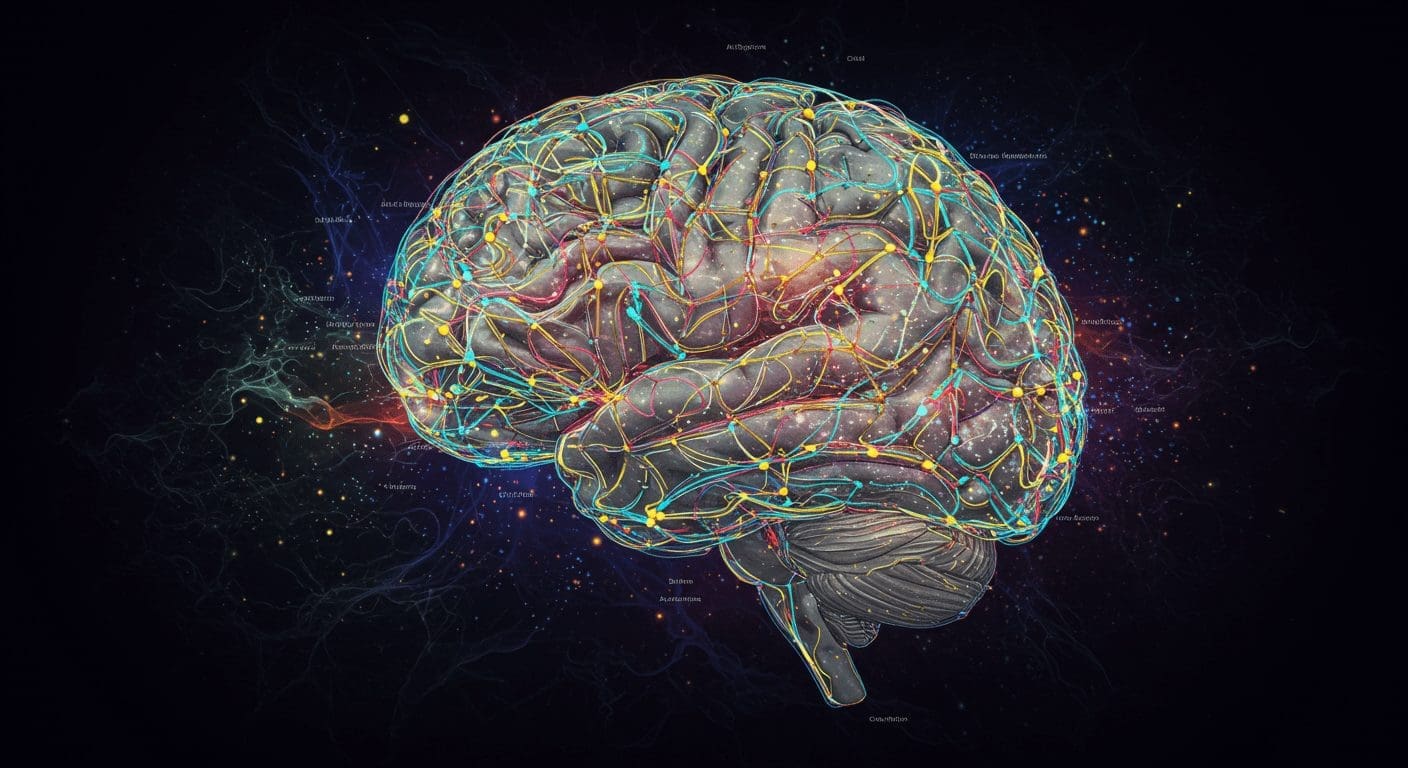
The Connectome Project has fundamentally altered our understanding of brain organization by revealing its modular structure, where specialized regions work together in a dynamic, distributed network. This challenges earlier notions of localized brain function, instead emphasizing how distinct areas interact to support consciousness and cognition. The project provides insights into the brain’s cohesive operation as a complex system by identifying key hubs for integrating sensory information and coordinating cognitive processes.
To achieve this, the initiative employs advanced technologies such as diffusion MRI and electron microscopy, enabling researchers to map neural connections at various scales—from large-scale networks to synaptic microcircuits. These methods offer unprecedented detail in visualizing brain connectivity, providing valuable data for basic neuroscience research and clinical applications. Integrating multi-modal data has revealed functional networks specialized for cognitive tasks, potentially enhancing our understanding of neurological and psychiatric disorders.
Despite its scientific advancements, the Connectome Project raises ethical concerns regarding privacy and potential misuse of detailed brain maps. As researchers explore brain connectivity further, safeguards must be developed to prevent manipulating or controlling individuals’ thoughts and behaviors. Ensuring equitable access to benefits while addressing risks related to data privacy and informed consent requires collaboration among scientists, policymakers, and society. The project’s findings may also inform debates about mind, identity, and free will, bridging empirical science with existential inquiry while driving innovations in artificial intelligence and medicine that could reshape our understanding of human cognition.
The Connectome Project: An Overview
The Connectome Project represents a groundbreaking initiative to map the intricate neural connections within the human brain. This ambitious endeavor seeks to create a comprehensive atlas of the brain’s wiring, which could revolutionize our understanding of cognition, consciousness, and neurological disorders.
To achieve this, researchers employ advanced neuroimaging techniques, such as diffusion tensor imaging (DTI) and functional magnetic resonance imaging (fMRI). DTI tracks the pathways of nerve fibers, while fMRI measures brain activity in real time. These methods provide insights into how different brain regions communicate and process information.
The significance of mapping the connectome lies in its potential to unravel the mysteries of human cognition and consciousness. By identifying patterns of neural connectivity, researchers hope to gain a deeper understanding of how thoughts, emotions, and memories are formed and processed. This knowledge could also lead to breakthroughs in treating neurological conditions such as Alzheimer’s disease, schizophrenia, and autism spectrum disorder.
Despite its potential, the Connectome Project faces significant challenges. The human brain’s complexity, with billions of neurons and trillions of connections, necessitates highly sophisticated imaging and computational techniques. Additionally, ethical considerations arise regarding the use of human subjects and data privacy in such large-scale studies.
Technologies For Mapping Neural Connections
Despite its ambitious goals, the Connectome Project faces significant challenges. The sheer complexity of the human brain, with billions of neurons and trillions of connections, poses immense technical and computational hurdles. Additionally, integrating data from diverse sources—such as structural and functional connectivity studies—requires sophisticated methodologies to ensure accuracy and reliability. Addressing these challenges is crucial for realizing the full potential of connectomics in advancing our understanding of the brain.
The implications of mapping the connectome extend beyond basic neuroscience, offering promising applications in clinical research and therapeutic development. By identifying deviations in neural circuitry associated with neurological and psychiatric conditions, such as Alzheimer’s disease or schizophrenia, researchers hope to develop more targeted interventions. Furthermore, insights from connectomics are contributing to the field of artificial intelligence, inspiring new approaches to designing neural networks that mimic the brain’s efficiency and adaptability.
Collaborative efforts between institutions worldwide have been instrumental in advancing the Connectome Project. For instance, initiatives like the Allen Brain Atlas and the BRAIN Initiative in the United States complement these endeavors by providing additional resources and expertise. These collective efforts underscore the importance of international collaboration in tackling one of science’s most complex frontiers: understanding the human brain.
Understanding Brain Function Through Connectivity Maps
One of the key methodologies employed in the Connectome Project is diffusion magnetic resonance imaging (dMRI), which tracks the movement of water molecules along white matter tracts. This technique provides a macroscopic view of neural pathways, enabling researchers to identify large-scale connectivity patterns. Complementing dMRI, electron microscopy offers unprecedented resolution at the microscale, allowing for the precise mapping of individual neuronal connections. These combined approaches provide a multi-level understanding of brain connectivity.
The project has already yielded significant insights into the organization of the brain’s networks. For instance, studies have revealed that the brain operates as a highly efficient network with modular structures and hierarchical organization. These findings challenge previous assumptions about brain function and suggest that cognitive processes emerge from dynamic interactions between distributed neural circuits. Such discoveries underscore the importance of connectivity maps in advancing our understanding of both normal and pathological brain states.
Despite its achievements, the Connectome Project faces substantial challenges. The sheer complexity of the human brain, with billions of neurons and trillions of connections, poses significant technical and computational hurdles. Additionally, ethical considerations surrounding the use of human subjects and data privacy must be carefully addressed. Collaborative efforts between neuroscientists, engineers, and ethicists are essential to overcoming these obstacles and ensuring the responsible progression of this research.
Insights Into Neurological Disorders And Mental Health
The applications of this project extend significantly into understanding neurological disorders. For instance, identifying degenerating pathways in Alzheimer’s could offer new avenues for treatment and early intervention. Similarly, insights into schizophrenia might reveal underlying connectivity issues that current treatments do not address, potentially leading to more effective therapies.
Beyond medical applications, the Connectome Project contributes to broader cognitive science by enhancing our understanding of how consciousness arises from neural networks. This knowledge can provide deeper insights into mental health issues, such as depression or anxiety, by revealing how disrupted connections might contribute to these conditions and suggesting novel therapeutic approaches.
Despite its potential, the project faces significant challenges. The brain’s immense complexity necessitates overcoming technical hurdles in data collection and analysis. Integrating diverse datasets from various sources to create a comprehensive connectome map remains a daunting task, requiring innovative solutions and collaborative efforts across scientific disciplines.
Philosophical Questions About Consciousness And Cognition
A key innovation driving the Connectome Project is diffusion magnetic resonance imaging (MRI), which allows scientists to trace the pathways of nerve fibers in vivo. By analyzing water molecule diffusion along these fibers, researchers can infer the brain’s structural connectivity. This technique has been complemented by electron microscopy, enabling unprecedented resolution of neural circuits at the synaptic level. These methods provide a multi-scale view of the brain’s architecture, from macroscopic networks to microscopic connections.
Early findings from the Connectome Project have revealed the brain’s modular organization, with distinct regions specialized for particular functions yet highly interconnected. For instance, studies have identified hubs critical for integrating sensory information and coordinating cognitive processes. These discoveries challenge earlier notions of localized brain function, instead emphasizing a distributed and dynamic network architecture. Such insights are reshaping our understanding of how consciousness emerges from the interplay of these networks.
Despite its progress, the Connectome Project faces significant challenges. The sheer complexity of the human brain—estimated to contain over 100 billion neurons connected by trillions of synapses—poses formidable technical and computational hurdles. Additionally, ethical concerns arise regarding the privacy and potential misuse of highly detailed brain maps. Addressing these issues requires scientific innovation and thoughtful consideration of societal implications.
Future Directions In Brain Mapping And Its Ethical Considerations
One of the key innovations of the Connectome Project is its use of high-resolution imaging techniques to trace individual neural pathways. Diffusion MRI, for instance, allows researchers to map the large-scale connectivity patterns of the brain by tracking the movement of water molecules along white matter tracts. This method provides a non-invasive way to study brain connectivity in living subjects. Additionally, electron microscopy has been employed to map the connections at the synaptic level, offering insights into the microcircuitry that underpins brain function. These technological advancements have significantly expanded our ability to visualize and analyze the brain’s complex architecture.
The Connectome Project also emphasizes integrating data from multiple scales, from individual neurons to entire brain networks. Researchers can construct more accurate and comprehensive representations of brain connectivity by combining information from different imaging modalities and computational models. This integrative approach has already yielded important discoveries about the organization of the brain, such as the identification of distinct functional networks that are specialized for particular cognitive tasks. These findings have implications for fundamental neuroscience and understanding and treating neurological and psychiatric disorders.
Despite its scientific achievements, the Connectome Project raises several ethical considerations. One concern is the potential misuse of detailed brain maps to manipulate or control individuals’ thoughts and behaviors. As our understanding of brain connectivity grows, so does the need for robust safeguards to protect against such abuses. Additionally, there are questions about how to ensure equitable access to the benefits of this research while minimizing risks associated with data privacy and informed consent. Addressing these ethical challenges will require collaboration between scientists, policymakers, and society.
The Connectome Project is expected to shape future directions in brain mapping and neuroscience research. Providing a detailed map of the brain’s neural connections will enable researchers to develop more accurate brain function and dysfunction models. This, in turn, could lead to breakthroughs in diagnosing and treating neurological disorders such as Alzheimer’s disease, Parkinson’s disease, and schizophrenia. Furthermore, the insights gained from the Connectome Project will likely inform the development of artificial intelligence systems that mimic human cognition, opening new frontiers in technology and medicine.