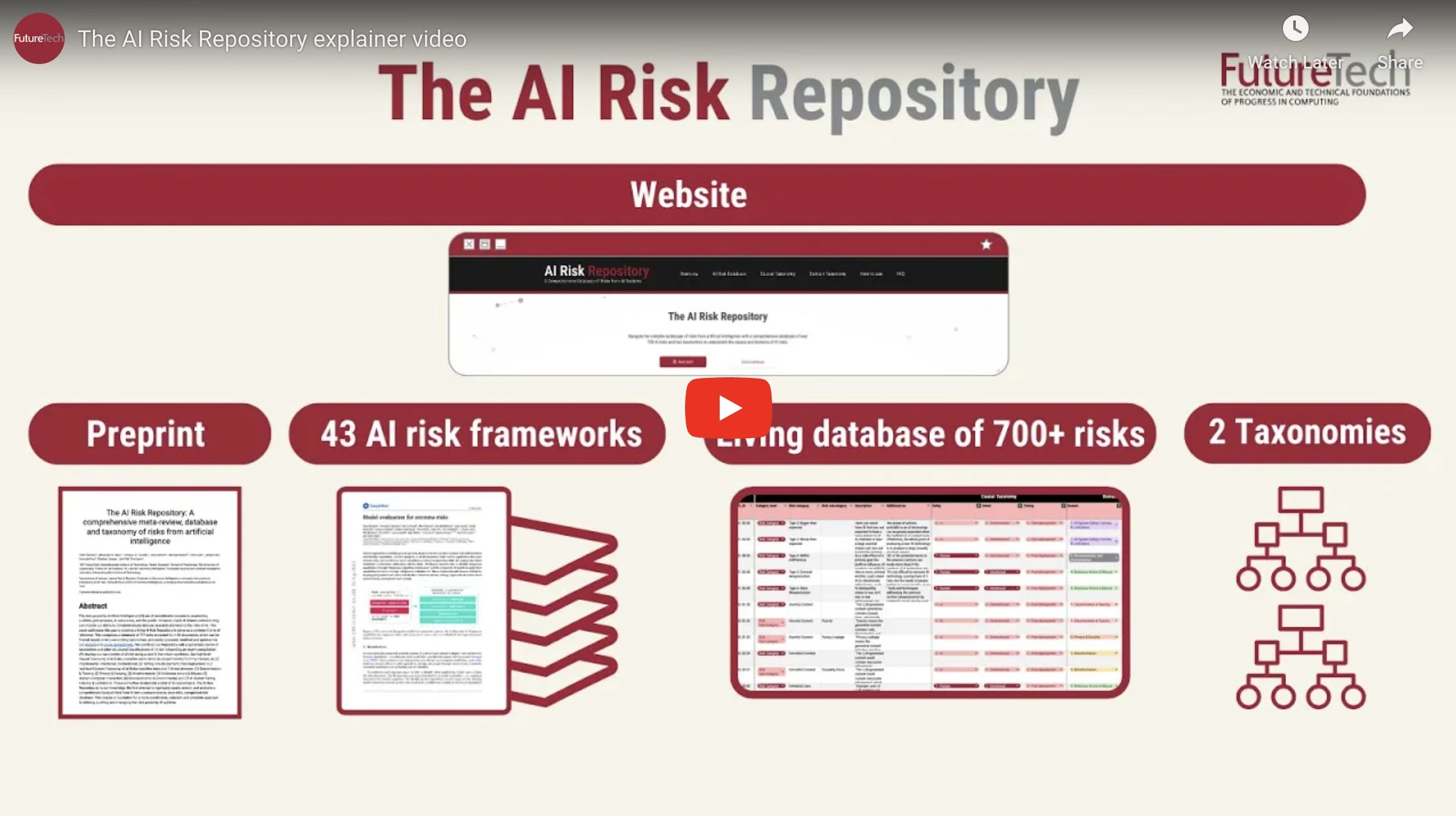
A comprehensive database of over 700 artificial intelligence risks has been compiled, categorized by their cause and risk domain. The AI Risk Repository, a collaborative effort led by researchers from MIT FutureTech, The University of Queensland, and other institutions, provides an accessible overview of the AI risk landscape.
The repository is divided into three parts: the AI Risk Database, which captures 700+ risks extracted from 43 existing frameworks; the Causal Taxonomy of AI Risks, which classifies how, when, and why these risks occur; and the Domain Taxonomy of AI Risks, which categorizes these risks into seven domains and 23 subdomains. Key individuals involved in this work include Peter Slattery, Alexander K. Saeri, Emily A. C. Grundy, and others. The repository is free to copy and use, providing a valuable resource for researchers, developers, businesses, evaluators, auditors, policymakers, and regulators seeking to understand and mitigate AI risks.
Understanding the AI Risk Repository: A Comprehensive Database of Artificial Intelligence Risks
The AI Risk Repository is a comprehensive living database that categorizes over 700 artificial intelligence (AI) risks by their cause and risk domain. This repository provides an accessible overview of the AI risk landscape, regularly updated information about new risks and research, and a common frame of reference for various stakeholders.
Database: A Treasure Trove of AI Risks
The AI Risk Database is a crucial component of the repository, capturing 700+ risks extracted from 43 existing frameworks. Each risk is linked to its source information, including paper titles, authors, supporting evidence (quotes and page numbers), and connections to the Causal and Domain Taxonomies. The database allows users to search for exact text matches in specific fields, such as “Description,” “Entity,” “Intention,” and “Timing.” This feature enables researchers, developers, businesses, evaluators, auditors, policymakers, and regulators to easily find relevant risks and research.
Causal Taxonomy of AI Risks: Understanding the Causes of AI Risks
The Causal Taxonomy of AI Risks classifies how, when, and why an AI risk occurs. This taxonomy provides a framework for understanding the underlying causes of AI risks, including entity, intention, and timing. The interactive figure allows users to explore the taxonomy up to three levels of depth, providing valuable insights into the root causes of AI risks.
Domain Taxonomy of AI Risks: Categorizing AI Risks by Domain
The Domain Taxonomy of AI Risks categorizes risks from AI into seven domains and 23 subdomains. This taxonomy enables users to understand the various areas where AI risks can occur, such as Misinformation, Discrimination & Toxicity, and Privacy. The interactive figure allows users to explore the taxonomy up to four levels of depth, providing a comprehensive understanding of AI risks by domain.
How to Use the AI Risk Repository: A Valuable Resource for Various Stakeholders
The AI Risk Repository provides a valuable resource for various stakeholders, including researchers, developers, businesses, evaluators, auditors, policymakers, and regulators. The database is free to copy and use, while the Causal and Domain Taxonomies can be used separately or together to filter the database and identify specific risks. For instance, users can identify risks occurring pre-deployment or post-deployment or related to Misinformation.
Frequently Asked Questions and Feedback
The AI Risk Repository team provides a platform for users to offer feedback or suggest missing resources or risks. The team also acknowledges the valuable input received from various individuals and organizations, including Anka Reuel, Michael Aird, Greg Sadler, and others.
In conclusion, the AI Risk Repository is a comprehensive database that provides an accessible overview of the AI risk landscape. Its components, including the Database, Causal Taxonomy, and Domain Taxonomy, offer valuable resources for various stakeholders to understand and mitigate AI risks.
External Link: Click Here For More