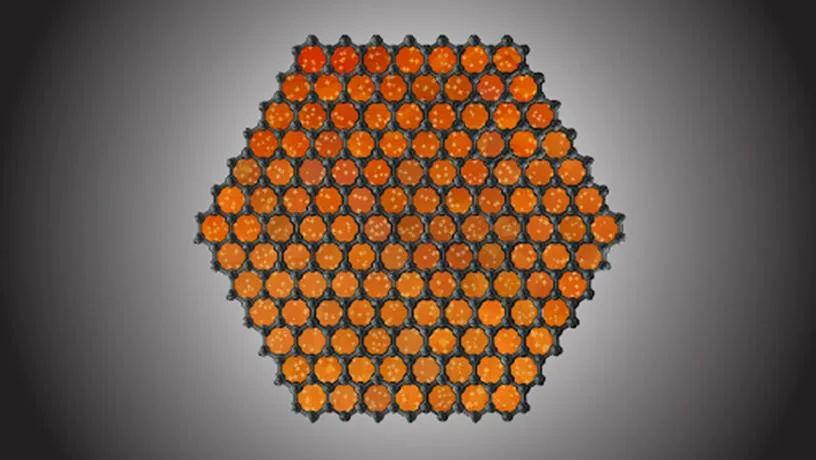
Engineers at Columbia University, in collaboration with the University of Montreal and the National Institute of Standards and Technology, have developed a method to create high-quality graphene samples at scale. The team, led by Prof. James Hone and including PhD students Christopher DiMarco, Xingzhou Yan, and Jacob Amontree, discovered that eliminating oxygen from the growth process is key to achieving reproducible, high-quality graphene synthesis. This breakthrough, published in Nature, could pave the way for large-scale production of graphene, a material with potential applications in electronics, energy storage, sensors, and biomedical devices.
Graphene Production: A New Approach
Graphene, a single layer of carbon atoms, has been hailed as a revolutionary material due to its unique properties such as ultra-high electrical conductivity and remarkable tensile strength. These properties have the potential to revolutionize various fields, including electronics, energy storage, sensors, and biomedical devices. However, the production of graphene has been plagued by issues of impurity and inconsistency. Now, a team of engineers at Columbia University, in collaboration with the University of Montreal and the National Institute of Standards and Technology, have developed a method that could potentially resolve these issues.
The Oxygen-Free Chemical Vapor Deposition Method
The team’s method, known as oxygen-free chemical vapor deposition (OF-CVD), has been shown to produce high-quality graphene samples at scale. The research, published in Nature, demonstrates how trace oxygen affects the growth rate of graphene and identifies the link between oxygen and graphene quality for the first time. “We show that eliminating virtually all oxygen from the growth process is the key to achieving reproducible, high-quality CVD graphene synthesis,” said senior author James Hone, Wang Fong-Jen Professor of Mechanical Engineering at Columbia Engineering. “This is a milestone towards large-scale production of graphene.”
The Problem with Oxygen
Previous methods of graphene synthesis have been hindered by the presence of oxygen. Co-authors Richard Martel and Pierre Levesque from Montreal had shown that trace amounts of oxygen can slow the growth process and even etch the graphene away. To address this, Christopher DiMarco, a PhD student, designed and built a CVD growth system in which the amount of oxygen introduced during the deposition process could be carefully controlled. Current PhD students Xingzhou Yan and Jacob Amontree continued DiMarco’s work and further improved the growth system. They found that when trace oxygen was eliminated, CVD growth was much faster—and gave the same results every time.
The Quality and Potential of OF-CVD Graphene
The quality of the OF-CVD-grown samples proved virtually identical to that of exfoliated graphene. In collaboration with colleagues in Columbia’s physics department, their graphene displayed striking evidence for the fractional quantum Hall effect under magnetic fields, a quantum phenomenon that had previously only been observed in ultrahigh-quality, two-dimensional electrical systems. The team now plans to develop a method to cleanly transfer their high-quality graphene from the metal growth catalyst to other functional substrates such as silicon — the final piece of the puzzle to take full advantage of this wonder material.
The Future of Graphene
The development of the OF-CVD method marks a significant step towards the large-scale production of high-quality graphene. This could potentially unlock the full potential of this revolutionary material, transforming various industries and paving the way for new technological advancements. The team’s work is a testament to the power of scientific collaboration and the relentless pursuit of innovation. As Amontree and Yan said, “We conducted countless experiments and synthesized thousands of samples over the past four years of our PhDs. Seeing this study finally come to fruition is a dream come true.”
External Link: Click Here For More