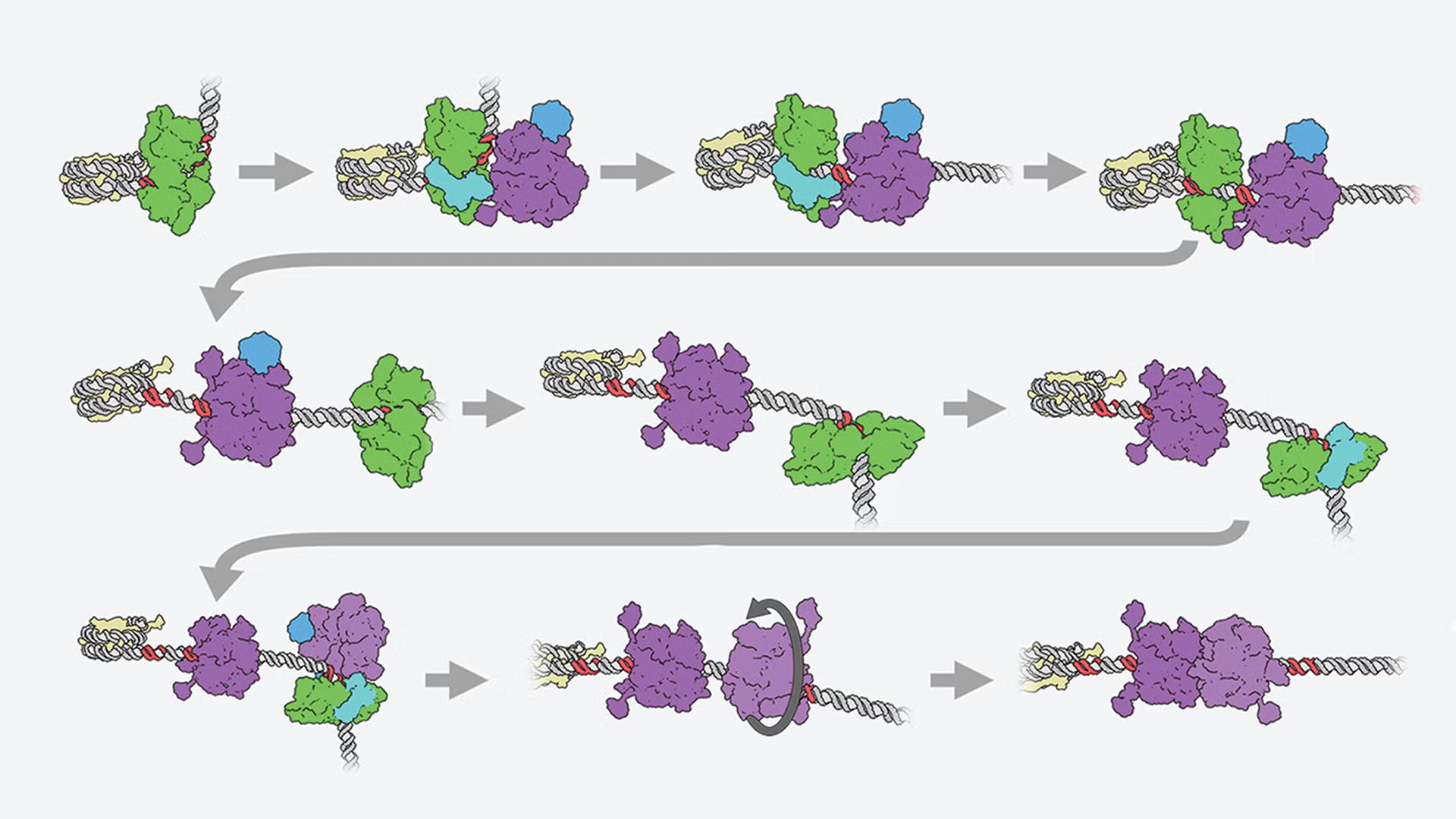
Researchers at Cold Spring Harbor Laboratory, led by Bruce Stillman, have compiled findings detailing the pre-replicative complex (pre-RC), an essential mechanism for initiating DNA replication in eukaryotic cells. This work, published June 30, 2025, in Nature Structural & Molecular Biology, identifies over 100 proteins required for genome replication across diverse organisms, building on Stillman’s 1991 discovery of the origin recognition complex (ORC). The study illustrates how the pre-RC efficiently marks multiple starting points along chromosomes, enabling simultaneous DNA segment copying and preventing re-replication within a single cell cycle, a process critical given the rapid rate of cell division—approximately 500 million cells born per minute in bone marrow alone. Visualizations created by Janet Iwasa at the University of Utah accompany the research, providing educational tools for biochemists and inspiring further investigation into pre-RC establishment across species.
Coordinating Chromosomal Duplication
The assembly of the pre-replicative complex (pre-RC) represents the crucial initial step in DNA replication, and scientists have now identified over 100 proteins required for genome replication across diverse organisms, from fungi to humans. This process involves marking various starting points along each chromosome to coordinate efficient duplication, a necessity given the scale of genomic material that must be copied during cell division. In bone marrow, approximately 500 million cells are generated each minute, each requiring the duplication of over 2 meters of DNA – a task that would take months if chromosomes were copied sequentially from end to end.
To ensure efficiency, cells copy multiple DNA segments simultaneously, utilising markers at designated starting points. These markers are then removed as sites are used, and new marks cannot be placed until after cell division, restricting each segment to a single duplication per cycle. This coordinated approach is facilitated by the origin recognition complex (ORC), a crucial component of DNA replication discovered in 1991. Recent publications, including work by Stillman and colleagues, offer comprehensive views of this licensing stage and provide tools for further investigation into fundamental processes at the molecular level.
More information
External Link: Click Here For More