The search for rare decays of subatomic particles offers a powerful way to test the limits of the Standard Model of particle physics, and the upcoming High-Luminosity Large Hadron Collider promises an unprecedented wealth of data for these investigations. Alibordi Muhammad from the University of Warsaw, and colleagues, explore the potential of the CMS experiment to identify extremely rare radiative decays, specifically focusing on a process that reveals subtle connections between fundamental forces. This research demonstrates how advanced data analysis techniques, rooted in information geometry, can unlock hidden sensitivity within the complex data produced by the collider, paving the way for more precise searches for new physics at the HL-LHC. By carefully considering the underlying structure of the data, the team proposes a framework that enhances the ability to detect these fleeting signals and potentially uncover deviations from established theory.
The research investigates the feasibility and methodology for searching rare B0s meson decays involving photons, with particular emphasis on the theoretically and experimentally challenging channel B0s →μ+μ−γ. These flavor-changing neutral current processes, proceeding through complex interactions, offer unique sensitivity to parameters bridging established theory and unobserved phenomena. The study demonstrates that collider data possesses an underlying geometric structure, enabling novel approaches to signal extraction and background suppression.
Foundational Physics, Machine Learning, and Geometry
This body of work represents a comprehensive survey spanning particle physics, machine learning, differential geometry, and related fields. It encompasses the core theoretical and experimental foundations of particle physics, with a focus on decays, symmetries, and searches for new physics. Advanced techniques for decay analysis, including sophisticated statistical methods and precise tracking of particle trajectories, are also central to this research. A strong theme emerges in the application of machine learning and deep learning techniques to particle physics problems, combining general principles with specialized methods like geometric deep learning, which leverages the inherent geometric structure of detector data.
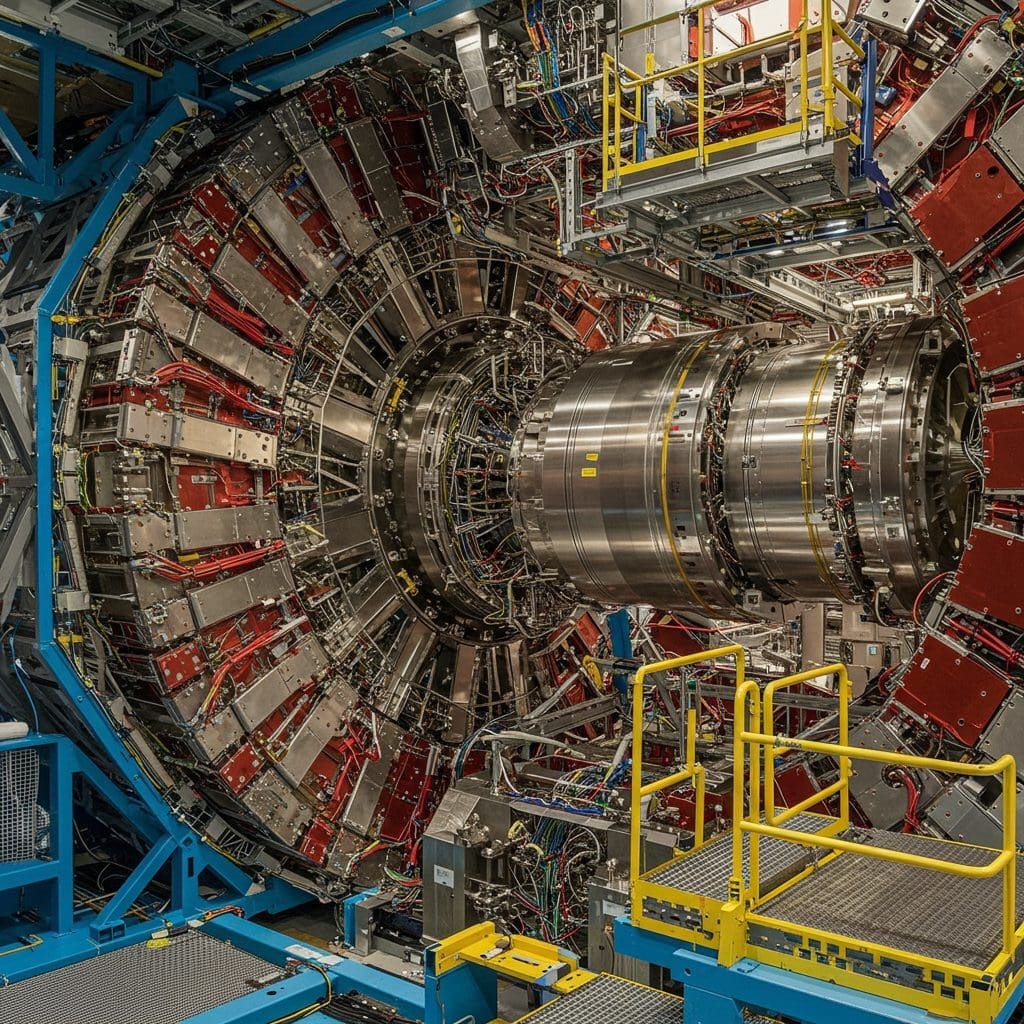
This integration of machine learning with advanced mathematical frameworks represents a significant step forward in data analysis. The research delves into the mathematical foundations of these techniques, drawing heavily on information geometry and differential geometry. Amari’s work on information geometry provides a powerful framework for connecting machine learning, statistics, and physics, utilising the Fisher information metric and Riemannian optimization to develop more effective machine learning models for particle physics. Researchers are focused on this decay as a probe of fundamental particle interactions, seeking to understand deviations from predictions of the Standard Model. The CMS experiment achieves this through a combination of detector design and advanced data analysis techniques. Measurements confirm the experiment’s ability to reconstruct low-momentum photons, even under conditions of extreme particle collisions, thanks to the high-granularity electromagnetic calorimeter, precision silicon tracker, and nearly hermetic muon system.
The 3. 8 Tesla superconducting solenoid allows for precise tracking of low-momentum particles, essential for reconstructing photon candidates formed from electron-positron pairs. The CMS collaboration has leveraged experience gained from analyzing other rare decays to prepare for these more elusive channels. Recent developments in machine-learning algorithms suggest the trigger system can adapt to the extreme collision environment, potentially recognizing rare decay topologies at the earliest stages of event selection. The ongoing CMS Phase-2 upgrade program will further enhance capabilities, with an upgraded tracker providing extended coverage and improved material mapping, and the high-granularity calorimeter in the endcaps sharpening the ability to distinguish electromagnetic showers from background noise.
Geometric Approach Enhances Rare Decay Search
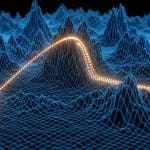
This research presents a novel framework for enhancing the search for rare radiative decays of the B0s meson, a crucial area for probing physics beyond the Standard Model. Scientists have developed a method that leverages the inherent geometric structure of collider data, shaped by conservation laws and detector characteristics, to improve sensitivity in identifying these extremely rare events. By applying information geometry and the Fisher-Rao metric, the team proposes an approach that may surpass the limitations of traditional analysis techniques, focusing on the challenging decay mode of the B0s meson, a process forbidden at the most basic level of the Standard Model. Future research directions include practical implementation and testing of the proposed methods with real data from the ongoing LHC Run 3, which will provide the necessary high luminosity to search for these elusive signals. This work lays the groundwork for more sensitive searches for rare radiative decays, offering a pathway to explore new physics in the flavor sector.
👉 More information
🗞 High Luminosity LHC data collected by CMS experiment — an excellent ground for the search of Rare Radiative meson decays: A Review
🧠 ArXiv: https://arxiv.org/abs/2509.24044