Chinese scientists from Tsinghua University have achieved the world’s largest ion trap quantum simulation, a significant step towards large-scale quantum computing, as reported in China Daily. The team successfully trapped 512 ions using cryogenic monolithic ion trap technology and a two-dimensional scheme. They also conducted quantum state measurements with single-qubit resolution across 300 ions, the largest quantum simulation. The corresponding author, Duan Luming, believes this innovation could be applied to materials and pharmaceutical development, engineering, and artificial intelligence.
“This work is the largest quantum simulation or computation performed to date in a trapped ion system. This is a milestone to be recognized,”
Reviewer of the paper.
Quantum Computing Breakthrough: Chinese Scientists Achieve Largest Ion Trap Quantum Simulation
A team of Chinese researchers has made a significant stride in the field of quantum computing by achieving the world’s largest ion trap quantum simulation with a precision of single-qubit resolution. This accomplishment, carried out by scientists from Tsinghua University, marks a substantial advancement in the quest for large-scale quantum computing capabilities.
The Promise and Challenge of Ion Trap Quantum Computing
The ion trap, a device that confines ions within a confined space using electromagnetic fields, is seen as a promising avenue for the realization of large-scale quantum computing. However, the main challenge lies in maintaining stable ion trapping while simultaneously exerting precise control over a large number of ions. Previous quantum simulations have involved approximately 200 ions, but the inability to discern the state of individual ions has hindered the extraction of crucial data, thereby posing a barrier to the development of more extensive and versatile quantum computing applications.
Cryogenic Monolithic Ion Trap Technology: A Game Changer
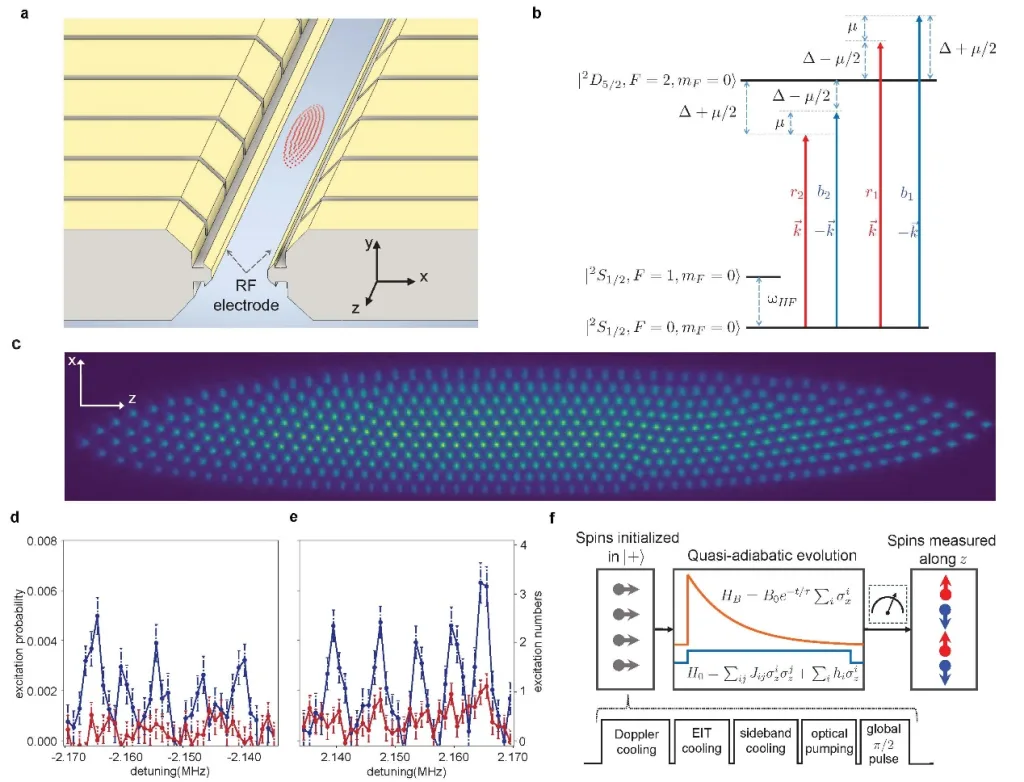
The researchers from Tsinghua University employed cryogenic monolithic ion trap technology and a two-dimensional scheme to overcome this challenge. For the first time, they achieved stable trapping of 512 ions. This technological innovation has allowed for a significant increase in the number of ions that can be effectively controlled and monitored, thereby enhancing the potential for more complex quantum simulations.
In addition to the stable trapping of 512 ions, the team also successfully conducted quantum state measurements with “single-qubit resolution” across an unprecedented 300 ions. This achievement, as noted in the study published in the journal Nature, is the largest quantum simulation or computation performed to date in a trapped ion system. The peer reviewer of the paper recognized this as a milestone in the field of quantum computing.
Implications for Future Quantum Computing Applications
The corresponding author of the paper, Duan Luming, stated that their work provides a powerful tool for exploring the complexities of quantum science and sets the stage for the advent of large-scale quantum computing. The potential applications of this innovation are vast, extending to fields such as materials and pharmaceutical development, engineering, and artificial intelligence. This breakthrough underscores the potential of quantum computing to revolutionize various sectors and paves the way for future advancements in this rapidly evolving field.
The paper is titled: “A site-resolved two-dimensional quantum simulator with hundreds of trapped ions”. Published in Nature on the 29th of May 2024.

External Link: Click Here For More