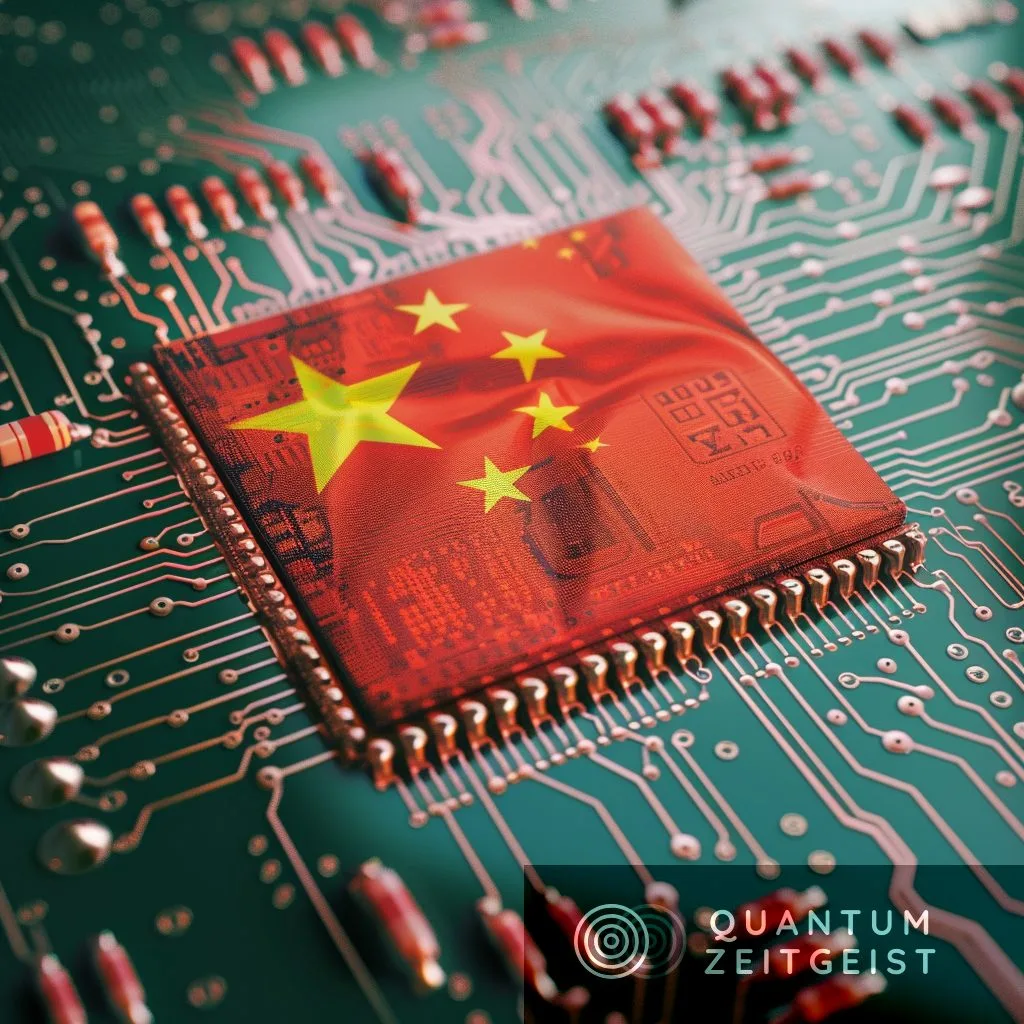
China has launched its largest-ever semiconductor investment fund, the “Big Fund III”, with a capital of $47.5 billion. This move is part of China’s efforts to achieve self-sufficiency in its semiconductor industry, despite US tech sanctions. The fund has 19 equity investors, led by China’s Ministry of Finance, state-owned China Development Bank Capital, and Shanghai Guosheng Group. Other investors include China Construction Bank, Bank of China, Agricultural Bank of China, Bank of Communications, Postal Savings Bank of China, Industrial and Commercial Bank of China, and China National Tobacco Corp.
- The 3rd phase of the China Integrated Circuit Industry Investment Fund has just under 20 equity investors (19 to be precise), led by the Ministry of Finance and state-owned banks.
- The size of the new fund is roughly on par with the US$53 billion in incentives under the US Chips and Science Act that was enacted in 2022
China’s Semiconductor Self-Sufficiency Initiative
China has recently intensified its efforts to achieve self-sufficiency in its semiconductor industry by establishing the country’s largest-ever chip investment fund. This move comes despite the increasing pressure from US tech sanctions and a history of corruption in these state-led programs. The third phase of the China Integrated Circuit Industry Investment Fund, also known as the “Big Fund”, was established with a registered capital of 344 billion yuan (US$47.5 billion).
The Big Fund III has 19 equity investors, with China’s Ministry of Finance leading with a 17% stake. Other significant contributors include the state-owned China Development Bank Capital with 10% and state-asset manager Shanghai Guosheng Group with 8%. This initiative is part of China’s broader strategy to build a self-sufficient semiconductor industry and overcome Washington’s export restrictions that have hindered the sector.
The Role of State-Owned Banks in the Big Fund III
Several state-owned banks have pledged significant investments in the Big Fund III. China Construction Bank announced it will contribute 21.5 billion yuan over a 10-year period for a 6.25% stake in the fund. Similarly, Bank of China and Agricultural Bank of China have each committed to invest 21.5 billion yuan. Bank of Communications will invest 20 billion yuan for a 5.81% stake, while Postal Savings Bank of China will provide 8 billion yuan for a 2.33% shareholding. Other enterprises that participated in Big Fund III include Industrial and Commercial Bank of China and China National Tobacco Corp.
Comparison with the US Chips and Science Act
The size of the new fund is roughly equivalent to the US$53 billion in incentives under the Chips and Science Act, which was enacted by US President Joe Biden in 2022. This comparison underscores the Chinese government’s comprehensive approach to building a self-sufficient semiconductor industry. The US Chips and Science Act was a significant move by the US government to bolster its domestic semiconductor industry, and China’s Big Fund III can be seen as a similar strategic initiative.
China’s Strategy for Technological Self-Sufficiency
The establishment of the Big Fund III is the latest effort from Beijing to achieve self-sufficiency as the US seeks to restrict its growth. The fund was incorporated on May 24, with contributions from the central government and various state-owned banks and enterprises, including Industrial & Commercial Bank of China Ltd. This move is part of a broader strategy by the Chinese government to invest heavily in technological breakthroughs and the development of the domestic chip industry.
Implications for the Global Semiconductor Industry
China’s move to establish the largest-ever semiconductor investment fund has significant implications for the global semiconductor industry. It signals China’s determination to reduce its dependence on foreign technology and develop its domestic semiconductor industry. This could potentially reshape the global semiconductor supply chain and intensify competition in the industry. However, it remains to be seen how effective China’s state-led approach will be in overcoming the technological challenges and achieving its ambitious goals.
External Link: Click Here For More