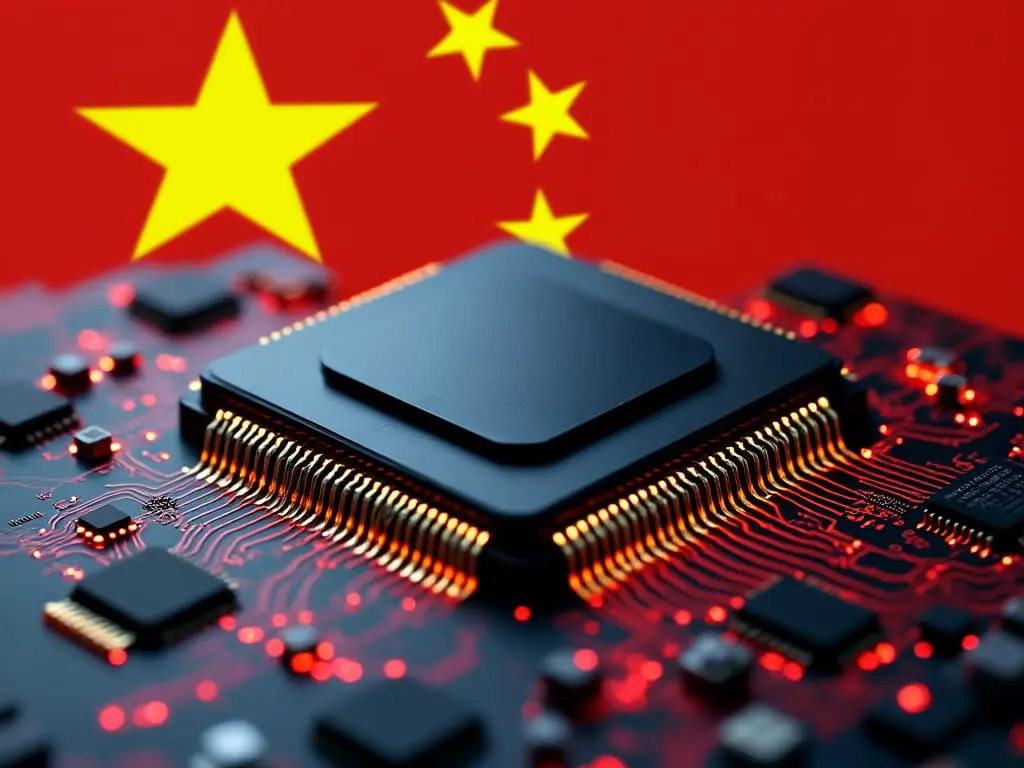
China has set a new domestic record with the launch of the “Tianyan-504” superconducting quantum computer, equipped with a 504-qubit chip called “Xiaohong.” This achievement marks a significant milestone in quantum computing, surpassing the 500-qubit chip threshold and promising to match the performance of international quantum computing platforms like IBM.
The “Xiaohong” chip was developed by the Center for Excellence in Quantum Information and Quantum Physics under the Chinese Academy of Sciences and delivered to QuantumCTek Co., Ltd., a leading quantum company based in east China’s Anhui Province. According to Liang Futian, an associate professor at the center, the chip’s key indicators are expected to reach the performance levels of leading international cloud-enabled quantum computing platforms.
The “Tianyan-504” quantum computer will be integrated into the “Tianyan” quantum computing cloud platform, making it accessible to users worldwide. Wang Zhen, deputy general manager of China Telecom Quantum Group, said that the company will cooperate with QuantumCTek to develop a quantum computer with the new chip, allowing users in various fields to conduct research efficiently and accelerate the application of quantum computing in actual scenarios.
China has made significant strides in the field of quantum computing with the delivery of a 504-qubit superconducting quantum computing chip, dubbed “Xiaohong,” to QuantumCTek Co., Ltd. This achievement sets a new domestic record for the number of qubits in a superconducting quantum chip in China. The chip is designed to verify the kilo-qubit measurement and control system independently developed by QuantumCTek.
The measurement and control system and the quantum
The measurement and control system and the quantum computing chip form the core hardware of quantum computers. According to Liang Futian, an associate professor at the Center for Excellence in Quantum Information and Quantum Physics under the Chinese Academy of Sciences (CAS), the performance of these systems will greatly influence quantum computers’ overall capabilities.
The “Xiaohong” chip’s key indicators, including qubit lifetime, gate fidelity, and quantum circuit depth, are expected to reach the performance levels of main international cloud-enabled quantum computing platforms such as IBM. However, Gong Ming, a researcher at the center, emphasized that the chip’s primary purpose is to promote the development of large-scale quantum computing measurement and control systems rather than solely pursuing higher computing power or quantum supremacy.
China is thought to be the only country to achieve a quantum computational advantage through two mainstream technical routes: photonics quantum computing technology and superconducting quantum computing technology. This milestone was achieved by developing “Jiuzhang 2.0” and “Zuchongzhi 2.1,” which have 113 detected photons and 66 qubits, respectively.
Wang Zhen, deputy general manager of China Telecom Quantum Group, announced that the company will cooperate with QuantumCTek to develop a quantum computer utilizing the new “Xiaohong” chip. This collaboration will provide global users access to the quantum computing cloud platform developed by China Telecom Quantum Group, enabling researchers in various fields to efficiently research practical problems and algorithms.
Integrating the “Tianyan-504” superconducting quantum computer into the
Integrating the “Tianyan-504” superconducting quantum computer into the “Tianyan” quantum computing cloud platform marks a significant milestone in China’s quantum computing journey. This achievement promises to match the performance of international quantum computing platforms like IBM, making it accessible to users worldwide.
The “Tianyan” quantum computing cloud platform, launched in November 2023, has received over 12 million visits from more than 50 countries. It provides convenient and straightforward quantum computing services to global users. Established in May 2023, the China Telecom Quantum Group (CTQG) is a wholly-owned subsidiary of China Telecom, focusing on quantum technology research and development.
These advancements demonstrate China’s commitment to pushing the boundaries of quantum computing, fostering international collaboration, and driving innovation in this rapidly evolving field.
External Link: Click Here For More