Chapman University’s Institute for Quantum Studies has found a remarkable new home within the meticulously restored Killefer School, a century-old landmark in Orange, California. Los Angeles-based EYRC Architects undertook the ambitious project of adapting the historic Mission Revival building for cutting-edge quantum research, preserving its rich past while creating a vibrant space for the future. The school holds a significant place in local history, notably integrating students from a nearby Mexican-American school before mandated desegregation, and had fallen into disrepair before Chapman’s acquisition. “This building is part of the neighborhood’s collective memory,” says EYRC partner Patricia Rhee, “Something people watched decline for decades and now get to see reawakened.” The redesign, featuring restored windows and original materials, establishes what architects call “a campus within a campus,” fostering collaboration among researchers at one of the nation’s few institutes dedicated to quantum studies.
Killefer School’s Historical Significance & Adaptive Reuse
The Killefer School in Orange, California, stands as a compelling example of how historical architecture can be successfully integrated with cutting-edge scientific research, demonstrating a commitment to both preservation and progress. Originally a local landmark, the century-old Mission Revival schoolhouse holds a unique place in the region’s history, notably integrating students from the nearby Cypress Street School in 1944—three years before mandated California school desegregation and a decade before national standards. When Chapman University acquired the severely dilapidated property, they tasked Los Angeles-based EYRC Architects with a challenging restoration, balancing the building’s “palpable sense of history” with the needs of the Institute for Quantum Studies. The restoration wasn’t merely cosmetic; it was a meticulous process, with specialists restoring original windows dating back to the 1920s, ensuring that the building retained its “tactile quality,” as described by EYRC designer Chad-Jamie Rigaud.
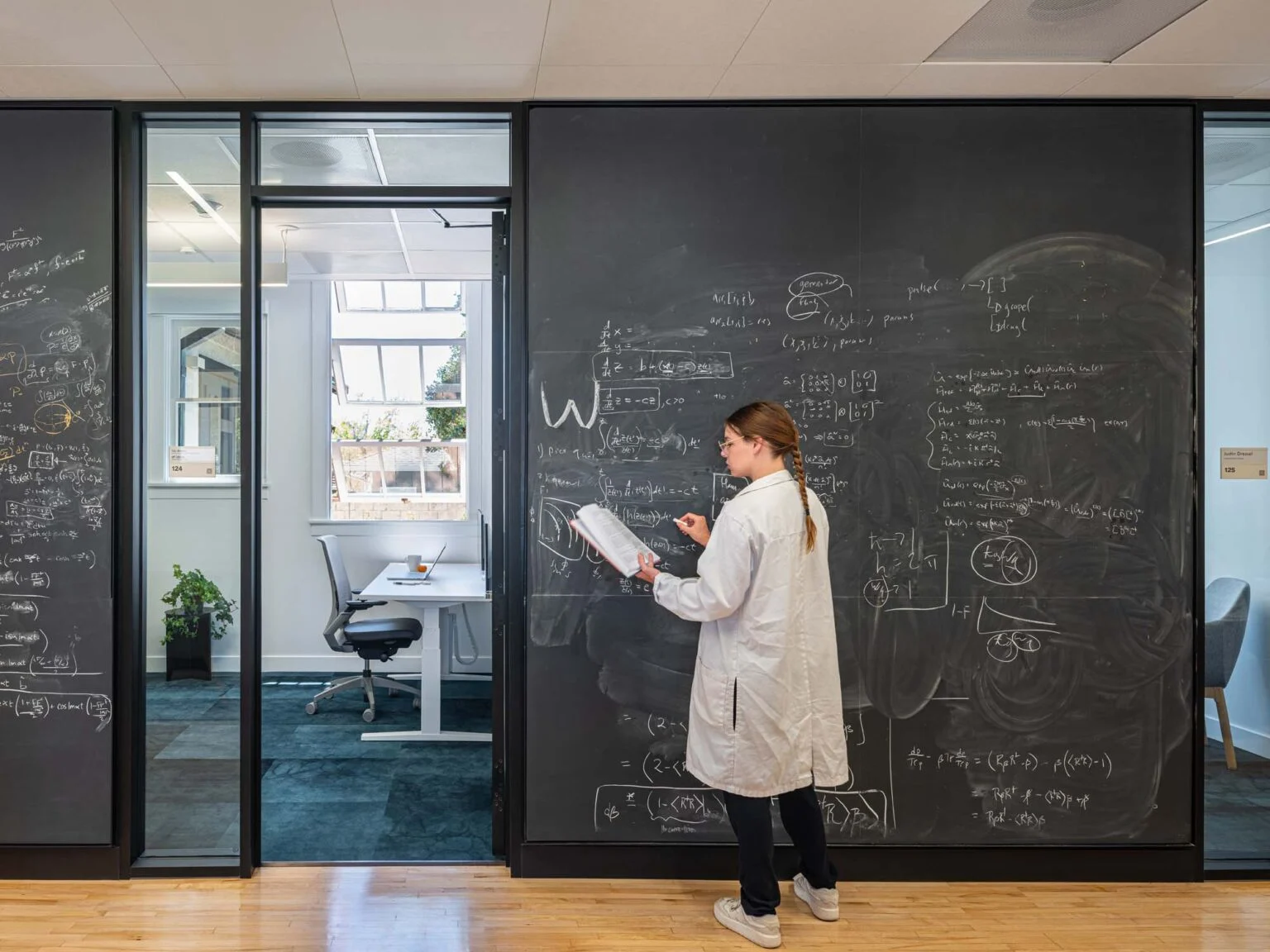
Salvaged materials from other campus buildings were incorporated, and original features like decorative gates and blackboards were repurposed, creating a space that feels both familiar and innovative. Central to the redesign are three courtyards, forming what partner Patricia Rhee calls “a campus within a campus,” offering spaces for public events, quiet reflection, and social interaction. The interior, once defined by abandoned classrooms, now houses open offices and research spaces, with the former library and assembly hall—the apse—transformed into a flexible gathering space.
EYRC Architects’ Preservation of Original Building Elements
Beyond simply renovating a century-old Mission Revival structure, the firm prioritized retaining the building’s historical fabric, a commitment keenly felt by local preservationists who closely monitored the process. This dedication extended to the restoration of original windows—including wood sash and awning units dating back to the 1920s—with specialists ensuring the preservation of their tactile qualities. “We wanted to keep that tactile quality—the slight creak when they open, the way the light catches the glass differently throughout the day,” explains EYRC designer Chad-Jamie Rigaud. The preservation efforts weren’t limited to architectural features; salvaged pine flooring from another campus building was incorporated, while decorative gates discovered in the basement were refurbished and repurposed as sculptural elements. Even blackboards were reinstalled, acknowledging the preferences of physicists who favor traditional methods.
This careful integration of the old with the new extends to the building’s exterior, where the eight-sided bell tower and red asphalt tile roof remain prominent features, anchoring the structure to its historical context. The project demonstrates a commitment to sustainability by minimizing embodied carbon through the reuse of the existing building shell and maximizing natural light and ventilation through the restored windows.
We wanted to keep that tactile quality-the slight creak when they open, the way the light catches the glass differently throughout the day.
Chad-Jamie Rigaud, EYRC designer
Chapman University’s Institute for Quantum Studies Courtyard Design
The century-old Killefer School, a Mission Revival landmark, underwent a meticulous restoration, extending far beyond simply updating the infrastructure to actively preserving its layered past. The Central Courtyard now functions as a flexible green space for public events, while a quiet garden, anchored by a century-old oak, provides a space for walking and reflection, featuring a looping path of decomposed granite and low benches. In contrast, the north courtyard serves as a social hub, equipped with picnic tables and barbecue grills, designed to foster collaboration between theorists who, as Rigaud noted, “were scattered all over before,” and now “finally have a home base.” The design prioritized sustainability through material reuse, minimizing embodied carbon by preserving the building shell and incorporating salvaged materials like pine flooring from another campus building, alongside refurbished decorative gates. This approach, coupled with restored windows and strategic landscaping for stormwater capture and passive cooling, creates a workspace that feels more akin to an academic retreat than a conventional research complex, demonstrating that “Research doesn’t have to happen in a white box,” Rhee stated, “It can happen in a place with memory.”
Restored Killefer School Minimizes Carbon & Maximizes Efficiency
Beyond providing a novel research environment for Chapman University’s Institute for Quantum Studies, the restoration of the century-old Killefer School demonstrates a commitment to sustainable practices through adaptive reuse. By retaining nearly the entire building shell and a significant portion of its original materials, EYRC Architects substantially minimized embodied carbon—a critical factor in reducing the environmental impact of construction. This approach extended the building’s lifespan, diverting demolition waste and conserving resources, while simultaneously breathing new life into a local landmark. The design prioritized passive strategies for climate control, capitalizing on the building’s inherent characteristics. Restored windows, meticulously maintained with the assistance of local heritage glazing specialists, facilitate natural daylighting and cross-ventilation, lessening reliance on energy-intensive mechanical systems. Thick plaster walls and strategically positioned courtyards further contribute to temperature moderation, reducing the need for artificial heating and cooling.
Landscape design reinforces these goals with stormwater capture, native planting, and tree canopies that provide passive cooling through shade and permeable surfaces. This project exemplifies Chapman University’s broader strategy of finding “the future inside the past,” as articulated by Rhee, and solidifies the institution’s growing cultural footprint through thoughtful adaptive reuse.