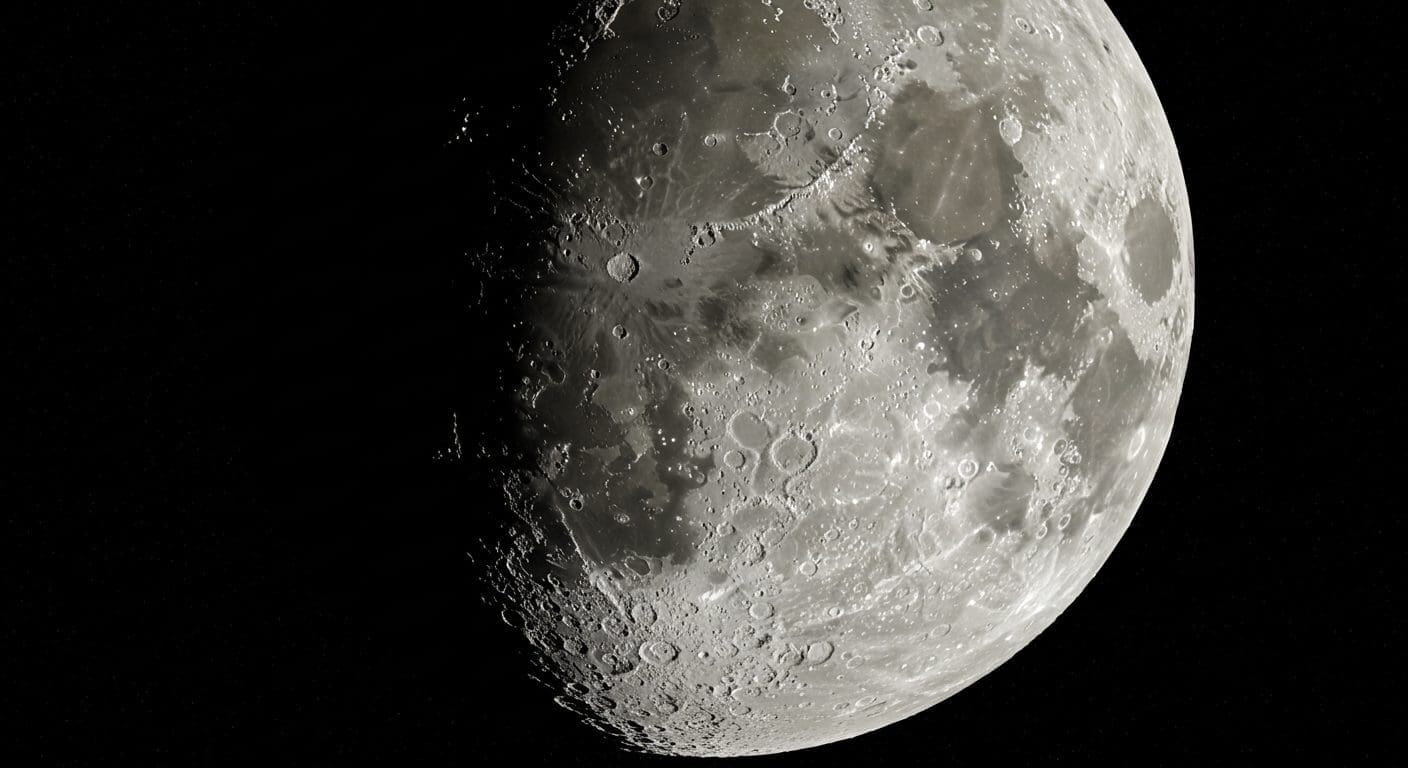
A research team led by Prof. CHEN YI from the Institute of Geology and Geophysics of the Chinese Academy of Sciences has determined that the Moon’s South Pole-Aitken (SPA) basin, its most prominent and oldest impact crater, formed approximately 4.25 billion years ago. This conclusion was reached by analysing rock samples collected by China’s Chang’e-6 mission from the SPA basin, marking the first direct dating of this ancient lunar feature using lead-lead isotopic ages of zirconium-bearing minerals in norite clasts.
The findings provide critical insights into the early history of the Moon and the Solar System. Establishing a definitive age for the SPA basin will help refine lunar cratering chronology and illuminate the tumultuous period of asteroid impacts during the Solar System’s infancy.
Change-6 Mission Uncovers Lunar Samples
The Chang’e-6 mission has significantly contributed to lunar science by successfully retrieving rock samples from the South Pole-Aitken basin on the Moon. These samples have been analyzed using advanced techniques, providing critical insights into the Moon’s geological evolution.
The mission has confirmed that the basin was formed approximately 4.25 billion years ago during a period of intense asteroid bombardment known as the lunar cataclysm. This event coincided with a broader phase of planetary formation in the early Solar System, where impacts played a significant role in shaping the surfaces of terrestrial planets and moons.
By analyzing the returned samples, researchers have identified distinct layers within the basin’s impact melt rocks, providing evidence of multiple stages of crystallization and cooling. These findings enhance our understanding of how large impact events influence planetary geology and contribute to the formation of diverse rock types.
The Chang’e-6 mission has also highlighted the importance of direct sample analysis in unraveling the geological history of celestial bodies. The insights gained from these samples are essential for refining models of lunar evolution and improving our understanding of asteroid impacts during the early stages of Solar System development.
Overall, the findings from Chang’e-6 underscore the Moon’s role as a key witness to the dynamic processes that shaped the inner Solar System. These discoveries not only advance lunar geology but also provide valuable context for studying the broader history of planetary formation and evolution.
Dating Methods Reveal Two Impact Events
The Chang’e-6 mission returned rock samples from the South Pole-Aitken basin, which were analyzed to study their composition and history. Researchers identified two distinct impact events: one occurring approximately 4.25 billion years ago during the lunar cataclysm, and another at around 3.87 billion years ago.
The older norites, dated to 4.25 billion years ago, exhibit structural and compositional features consistent with crystallization within a common impact melt sheet formed by the basin’s creation. These findings align with the timing of the lunar cataclysm, a period marked by intense asteroid bombardment in the early Solar System.
The younger impact event at 3.87 billion years ago provides additional evidence of subsequent geological activity within the basin. This dual dating offers insights into the dynamic processes that shaped the Moon’s surface over time and contributes to our understanding of large-scale impact events in the inner Solar System.
Implications for Lunar and Solar System History
The Chang’e-6 mission has revealed critical details about the Moon’s geological history, confirming the formation of the South Pole-Aitken basin during the lunar cataclysm. This event coincided with a broader phase of planetary formation in the early Solar System, where impacts significantly influenced the surfaces of terrestrial planets and moons.
Analysis of the returned samples has identified distinct layers within the basin’s impact melt rocks, indicating multiple stages of crystallization and cooling. These findings enhance our understanding of how significant impact events shape planetary geology and contribute to the diversity of rock types observed on celestial bodies.
The mission underscores the Moon’s role as a key witness to the dynamic processes that shaped the inner Solar System. The insights gained from Chang’e-6 advance lunar geology and provide valuable context for studying the broader history of planetary formation and evolution.
Prof Chen’s Team Provides Direct Evidence
The Chang’e-6 mission returned rock samples from the South Pole-Aitken basin, which were analyzed by Prof. Chen Yi and colleagues. Their research identified two distinct impact events: one occurring approximately 4.25 billion years ago during the lunar cataclysm, and another at around 3.87 billion years ago.
The older norites, dated to 4.25 billion years ago, exhibit structural and compositional features consistent with crystallization within a common impact melt sheet formed by the basin’s creation. These findings align with the timing of the lunar cataclysm, a period marked by intense asteroid bombardment in the early Solar System.
The younger impact event at 3.87 billion years ago provides additional evidence of subsequent geological activity within the basin. This dual dating offers insights into the dynamic processes that shaped the Moon’s surface over time and contributes to our understanding of large-scale impact events in the inner Solar System.
More information
External Link: Click Here For More